NSR-WORLD.COM

NSR-WORLD.COM
The NSR250R supension is rather basic by modern standards, and HRC upgrades are both rare and expensive.
Some tweaking of the standard suspension with aftermarket components can help sharpen things up.
The suspension of every NSR250R can be improved upon, but some more easily than others.
Generally, fitting components from a later, or higher spec model is the path of least resistance.
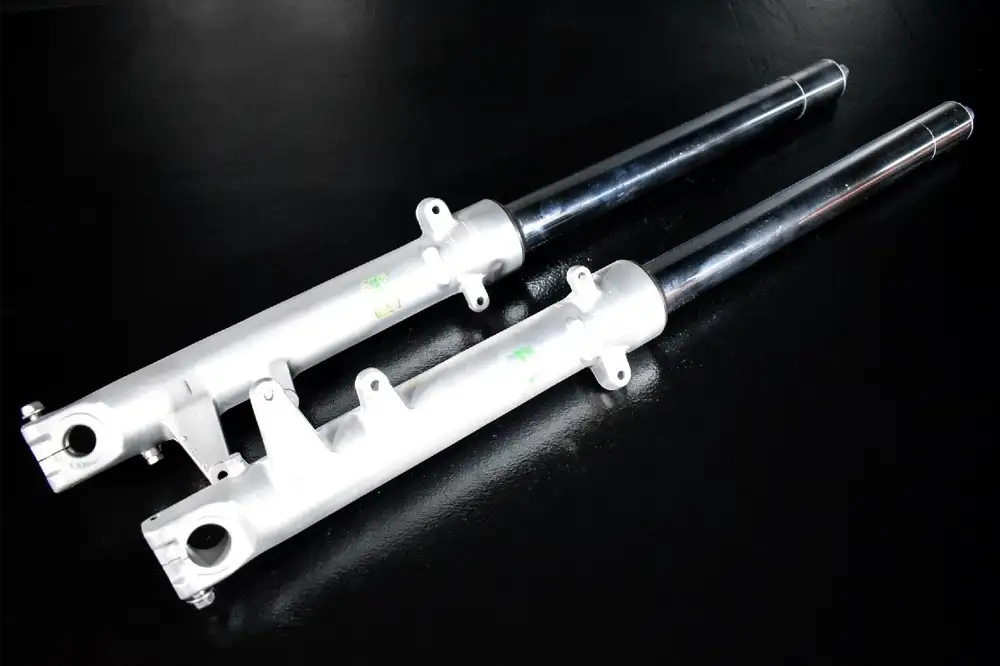
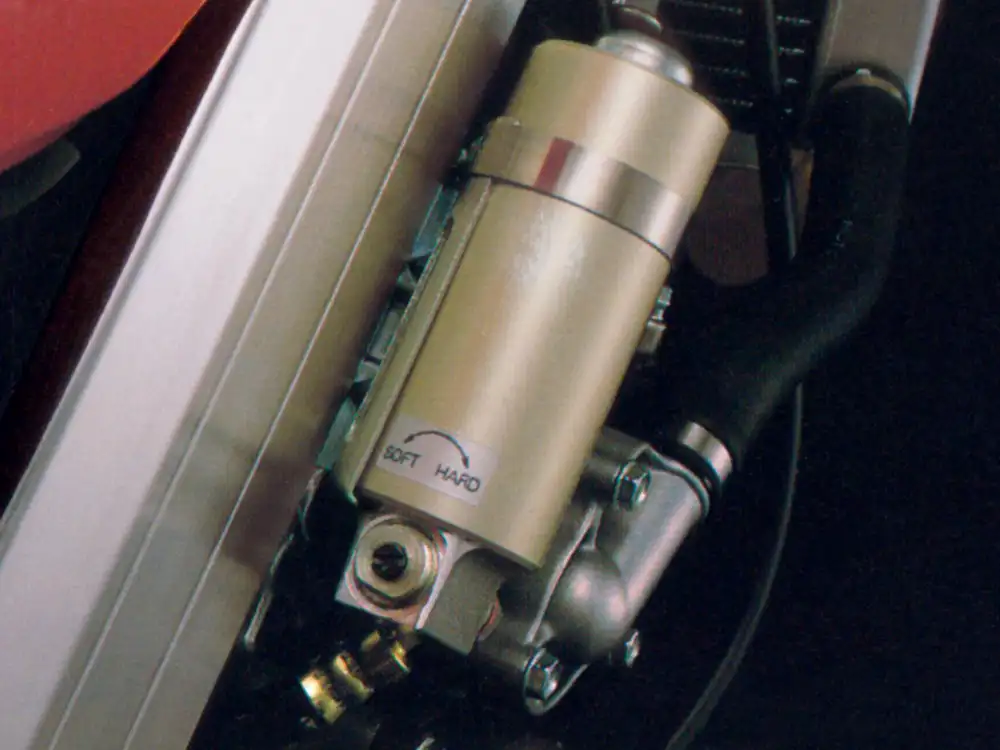
For the MC21 & 28 R models, an exchange for SE/SP suspension adds compression & rebound damping for the rear shock, and spring preload & rebound damping for the front.
The MC28 SE/SP forks are arguably an upgrade for the MC21, given their stiffer caliper mounts and use of 2ng generation Nissin calipers. The MC28SP front forks are naturally the most refined of all models, but are very expensive on the second-hand market.
Similar can be said for both the ’88 and ’89 MC18s. The 1989 R5K can benefit from R6K SP front forks and rear shock, but for the 1988 R2J, while a fully adjustable rear shock can be swapped out for the R4J SP variant, the ’88 SP front forks only have limited preload adjustment, so the ’89 SP is the better upgrade.
Note:
MC21 and MC28 suspension is interchangeable, however note that the MC21 and MC28 front calipers differ in their fitment, so must be used in conjunction with their respective forks legs.
From 1988 until the final production year of 1996, all NSR250R models were fitted with 41mm [conventional] forks. All have the same disc/caliper offset, and even the same front fender, so fitting fully adjustable forks from any later model is more-or-less a straight swap.*
1987 MC16
The 1987 MC16 is the one anomaly in the model range, having no SP variant to source suspension from.
An ’88 MC18 R4J SP shock can be made to fit fairly easily though, but unlike later models, the MC16 was equipped with smaller 39mm forks. Luckily, later model triple clamps drop right into the MC16 headstock.
An upgrade to ’88~ forks not only gives access to a better range of [41mm] suspension components, but also means an increase in stiffness, plus an upgrade to 276mm discs & 4-pot calipers. The wider triples also allow for the option to run a 3″ 6-spoke wheel.
While the MC28SP forks could be considered an upgrade for the MC21, it’s not really practical. The cost and scarcity of MC28SP forks makes upgrading the MC21 parts a far more realistic proposition.
The standard R [front & rear] suspension can be improved by the use of modern cartridge emulators, and all models improved with progressive springs. Cartridge emulators are available from YSS and Race Tech (Gold Valves), and progressive springs from Hyperpro.
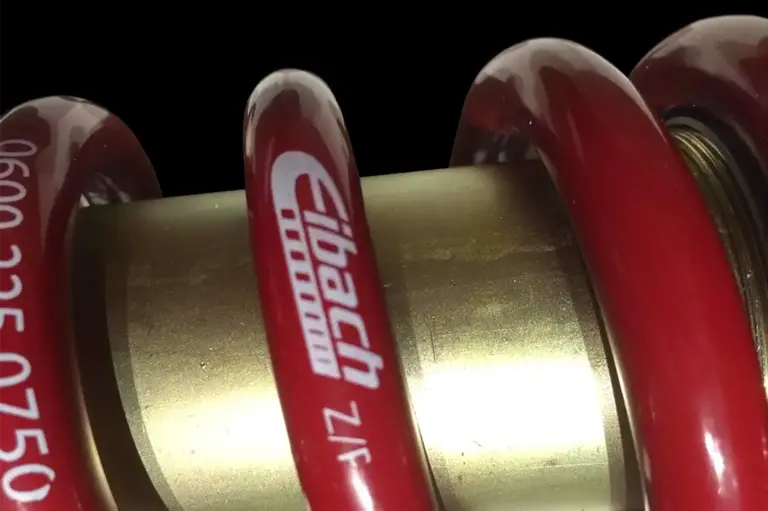
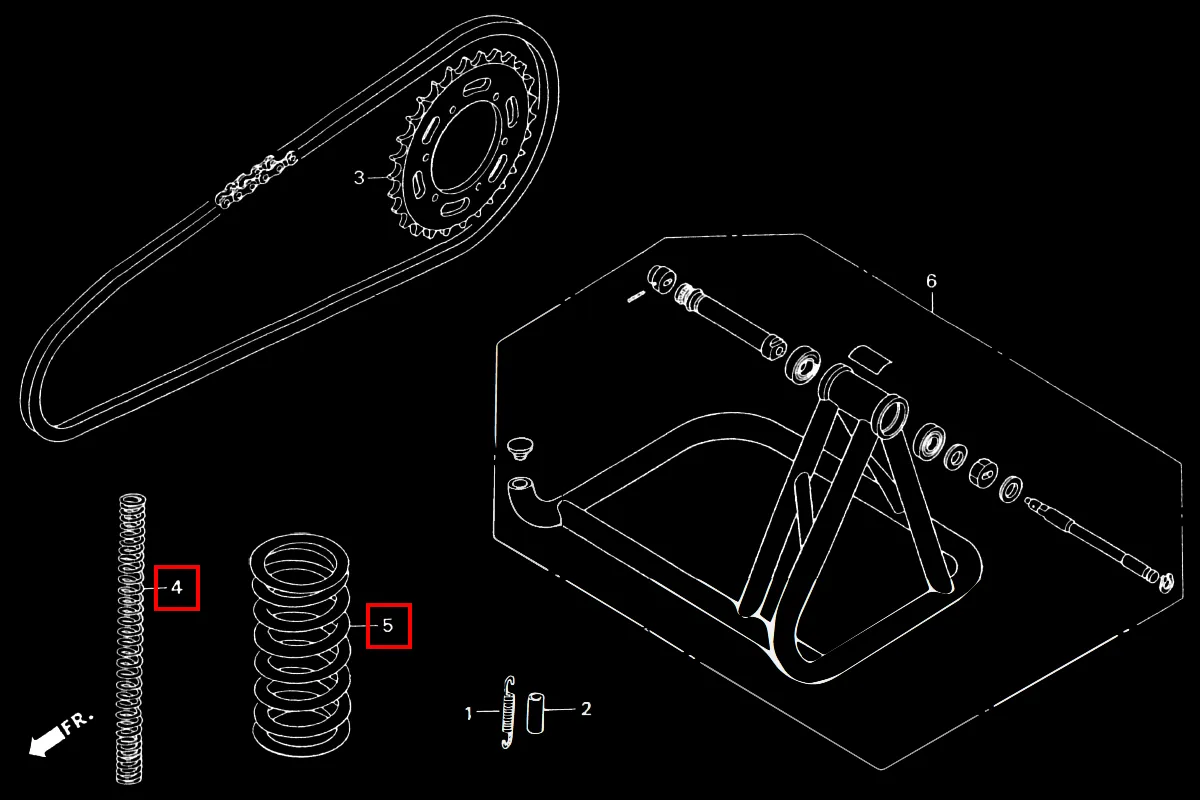
Another great option for the standard rear shock is an uprated spring from Eibach [part# 0600.225.0750]. At 13.39 kgf-mm, the Eibach spring is a little softer than the MC21 HRC spring (14 kgf-mm), but a little harder than the MC28 HRC spring (13 kgf-mm). The Eibach is a little longer than the MC21/28 SE/SP spring, and a great balance of performance vs. price.
Info:
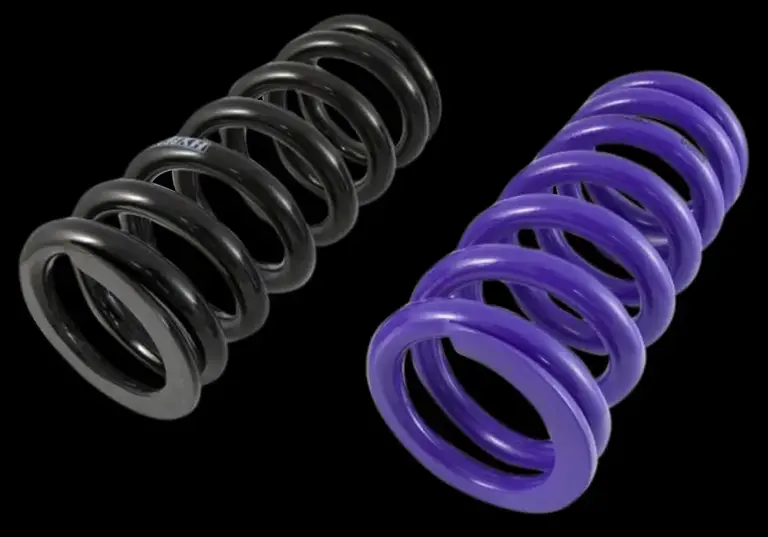
Both Hyperpro progressive front springs and Eibach rear springs have been used by, and are recommended by NSR-WORLD.COM for the MC21 and MC28.
Note:
It should be remembered, that while the standard SP [and SE] suspension is more than suitable for most riders, best case scenario is that it’s already around 30 years old, so expect it to require rebuilding at the very least.
Also be aware that the suspension was generally designed for a lighter rider than many western owners. Both shocks and forks can benefit from uprated springs, and slightly heavier suspension fluid in the forks can be beneficial, however oil weight changes should be discussed with a suspension specialist.
Tip:
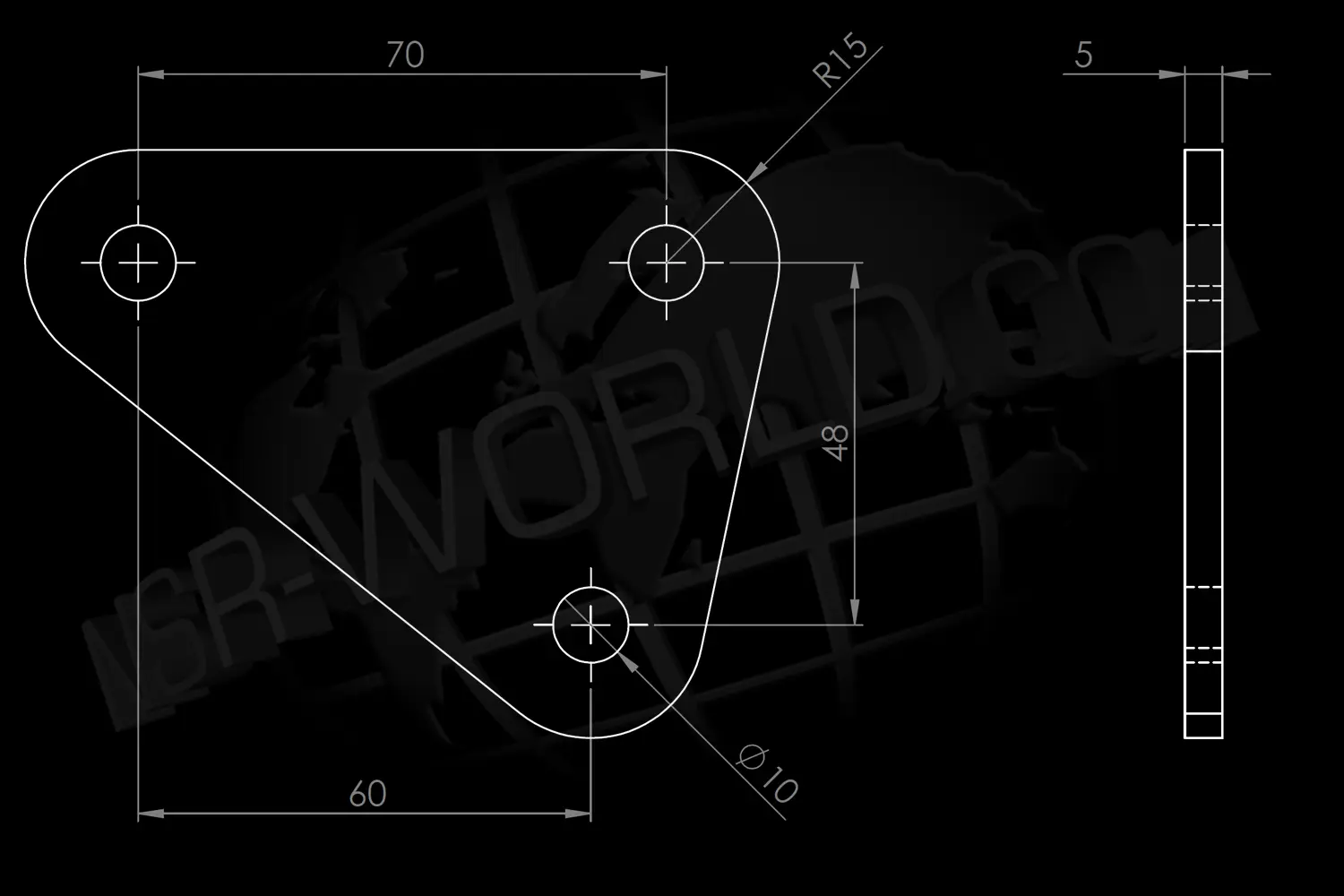
A simple update for the ’88 & ’89 MC18 models, regardless of R or SP model, is the fitting of HRC link plates. These are a direct replacement for the OEM parts and not only raises the standard rear ride height & increases the rising rate of the shock linkage, but also steepens the steering angle.
Click the image for a template »»
HRC TT-F3 - The next level
HRC TT-F3
The next level
From the MC16 through to the MC21, HRC produced both front and rear suspension for the TT-Formula 3 racing class, and are the best parts for period authenticity. They also function as intended perfectly, even when compared to modern components!
All MC16 HRC parts are incredibly rare, so as with the OEM upgrade path, the easiest approach is to try source more common MC18 parts. They’re still expensive and rare, but nowhere near that of the MC16!

For the MC16, HRC made alternative springs and replacement caps for the fork tubes, incorporating preload adjusters. No parts were made for the rear suspension.
HRC produced both complete front fork assemblies and rear shocks from 1988. The rear shocks had aluminium bodies and ride height adjustment. MC18 HRC rear shocks came with a bespoke tie-rod and link plates to give additional clearance for expansion chambers, and alter the suspension geometry and shock absorber spring’s rising rate.
No HRC forks or shocks were produced for the MC28, however kit springs for both front and rear were made available for the SE and SP models.
Info:
Although NLA (no longer available), HRC springs can sometimes be found as NOS (new old stock) or on Yahoo! Auctions in Japan. Use the following part numbers to search for them.
- NSR250R MC28 HRC fork springs (K=0.95): 51401-NKD-970
- NSR250R MC28 HRC rear spring (K=11.0): 52401-NKD-970
NSR250R MC28 HRC rear spring (K=13.0): 52401-NKD-980
HRC RS250R
From '88 to '91, the RS250R NF5 was fitted with 41mm RWU (conventional) forks, changing to USD (inverted type) in 1992.
The frame geometry of the NF5 differs significantly to the NSR250R, and as a result the NF5 forks are substantially shorter than the NSR’s. The difference can only be partially compensated for by using an NF5 top yoke (triple clamp), but it’s not the perfect solution for a number of reasons.
While the RS250R top yoke is gull-shaped, the drop isn’t enough to entirely compensate for how much shorter the NF5’s forks are, so the resulting steering angle is very steep, and on full compression, there is a likelihood of the front fender contacting the underside of the nose fairing.
The NF5 stem is considerably larger in diameter than that of the NSR, so a collar will also need machining and pressing into the yoke to reduce the ID to match.
Finally, being a race bike, there’s no provision for an ignition switch on the NF5 top yoke, so it will either need to be modified, or the ignition switch relocated.

The RS250R forks are naturally far superior in both construction and operation to any NSR250R forks. In 1991, HRC also added compression dampening adjustment; something the NSR never received.
An RS rear shock can be adapted to fit the NSR, but will not work without extensive modifications, and therefore is extremely impractical.
Caution:
While the ’88~’93 NSR250R look similar to the RS250R calipers, they do differ. 1988 models are interchangeable due to the 276mm discs, but when using 296mm discs, NF5 calipers must be used.
Alternatively, due to the scarcity and cost of RS250R NF5 calipers, VFR400R NC30 calipers can be used instead.
Note:
Like the ’88-’96 NSR250R, the 1988 RS250R NF5 uses 276mm discs, with the same offset as the NSR250R. However, while retaining the same 17.5mm offset, from 1989 the NF5 disc diameter increased to 296mm.
The NSR250R wheels (Enkie or Magtek) can be used with the RS forks, or an HRC magnesium wheel, as the disc mount PCDs are all the same.
In 1992 the NF5 switched to inverted forks. All information regarding the transplant to an NSR250R remains the same as above, except the RS250R lower yoke is now also required, and will need either a [preferred] custom stem machining, or the NSR stem and custom collar pressing into it. Alternatively, an RVF400 NC35 steel bottom yoke can be used, again with either the NSR stem, or a custom one.
Although a definite update on the conventional front setup, a major issue with any USD conversion is the reduction in steering lock. The larger diameter (usually 52mm) fork legs dramatically reduce the clearance to the radiator.
From the 1993 NX5 model onwards, HRC swapped to 40mm pitch Brembo calipers. The disc OD and offset remained the same at Ø296mm and 17.5mm respectively though, so conversions are still relatively painless.
Keeping it Honda
If your budget doesn't stretch to the often outrageous cost of HRC parts, or you don't have the patience to search high and low for them, but want to keep everything Honda, there are some alternatives.
VFR400R NC30
The simplest non-NSR upgrade is the fitment of a complete VFR400R NC30 front-end. There are a number of benefits to an NC30 upgrade. Most immediately noticeable are the bigger brakes; the NC30 comes as standard with 296mm discs, the same as the ’89~ RS250R.
The NC30 forks are a cartridge style fork, and work very well with the NSR250R. The springs are a little heavier, to support the weight of a 4-stroke V4 motor, so act as an upgrade to the notably soft NSR springs. The NC30 forks are shorter than the NSR items though, so to maintain the original ride height, an ’88~’91 NF5 top yoke [with collar, as mentioned above], or aftermarket equivalent is required.
An added bonus of the NC30 forks is their similar appearance to the 1990 MC21 HRC TT-F3 parts!
RVF400 NC35
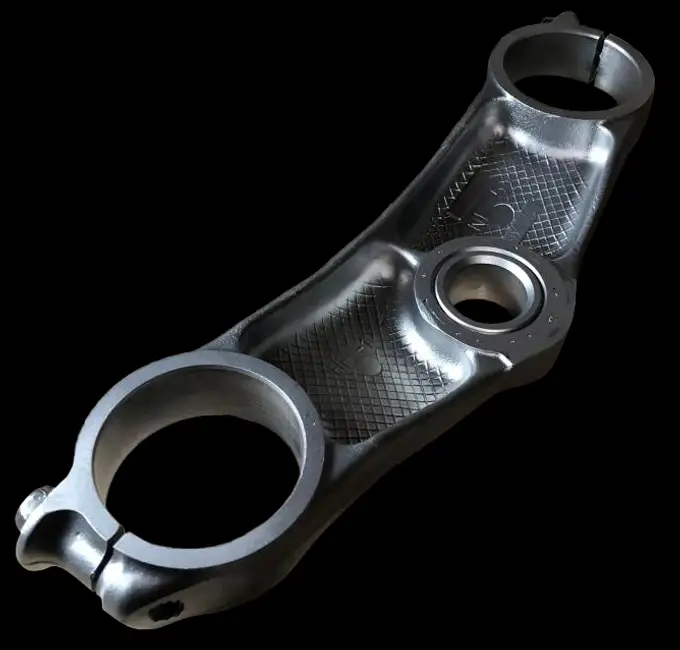
A popular conversion in the late ’90s and early 2000s was the “upside down” RVF400 front-end, most notably as a complete kit available from the legendary tuning shop Jha.
As with the RS250R, in fact, any USD conversion, things require a little more jiggling to make it all fit (unless you were lucky/rich enough to afford the Jha kit!), and expect a reduction in steering lock. The NC35 triple clamps (both top and bottom) can be used for the conversion, however, once again either a custom stem needs machining, or the NSR stem pressed into the RVF bottom clamp.
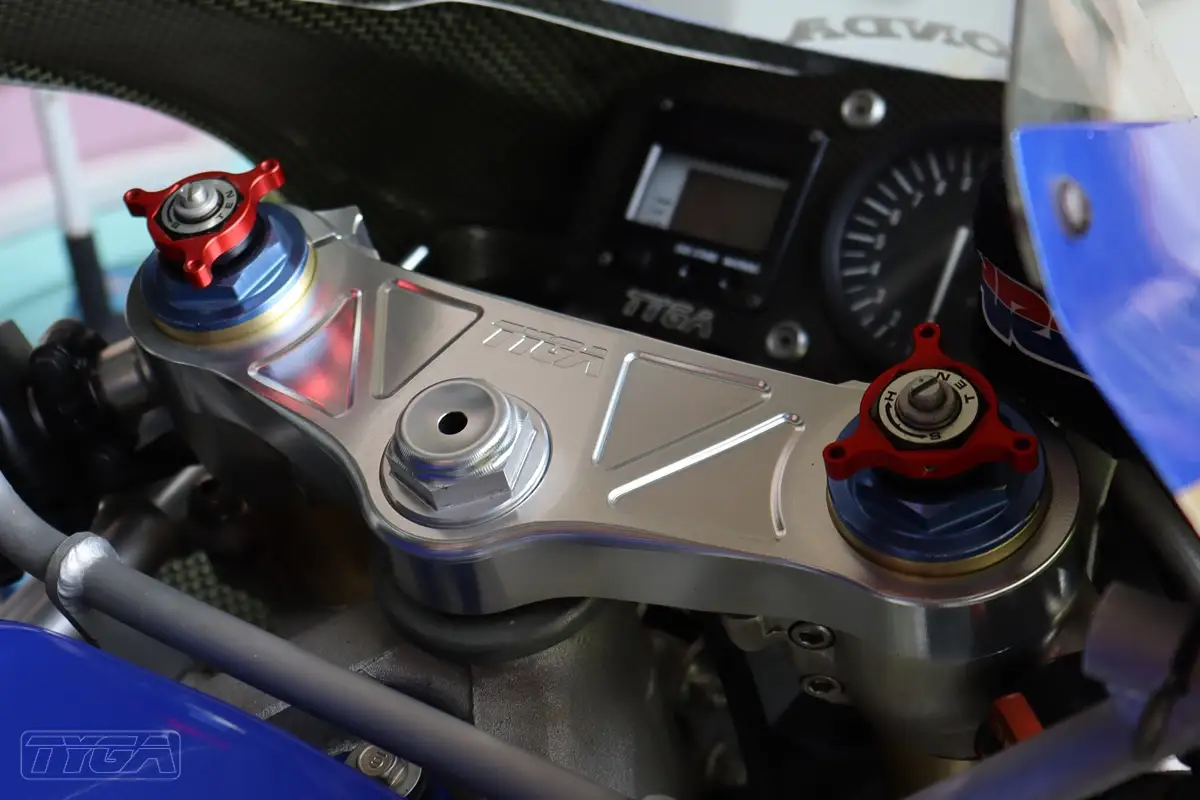
Today, TYGA Performance offer a triple-clamp set specifically for the RVF400 NC35 conversion, to make life easier.
CBR600RR PC37
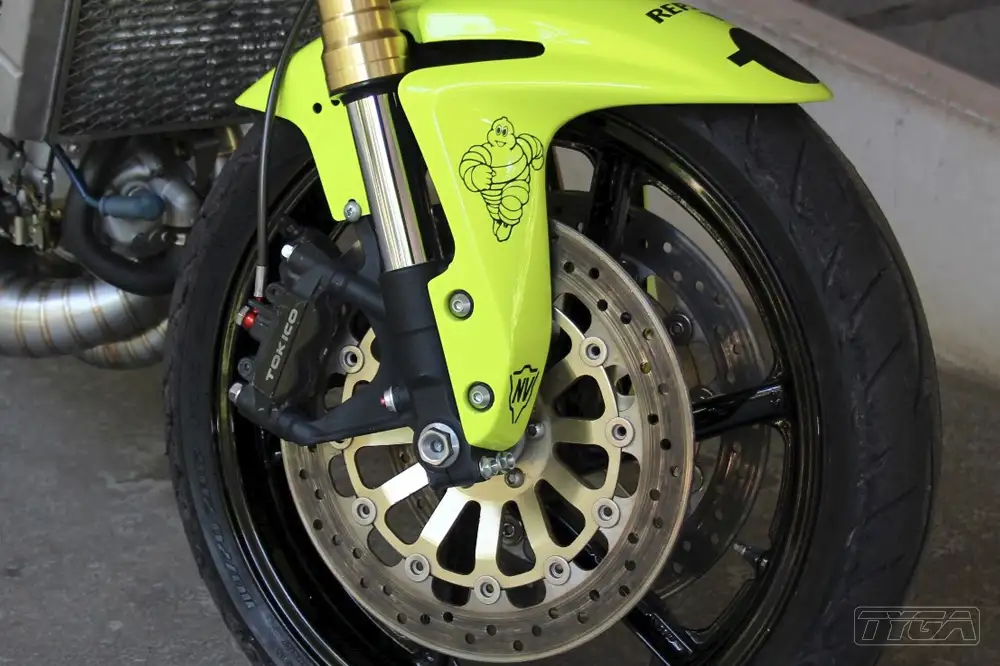
The CBR600RR PC37 front-end brings modern components and styling to the NSR250R. Not only are the forks supported by a vast number of suspension tuning companies, but they also have radial caliper mounts, allowing the fitment of any 108mm radial calipers you choose.
Once again, this conversion is made very easy by TYGA Performance, who produce lower clamps suitable for both PC37 and the later PC40 CBRs.
See more of TYGA’s 1989 MC18 Rossi Test homage in our Gallery »
Aftermarket - Best of the rest
Aftermarket
Best of the rest
There are plenty of Honda/HRC options for the front suspension, but things are rather limited at the rear unless you choose aftermarket.
Several manufacturers make bespoke rear shocks for the NSR250R. Probably the most sought-after, and certainly the most expensive, is made by Öhlins. The Öhlins shock is a direct replacement for the MC21 and MC28 models, and is suitable for both the R and SE/SP models. Like the HRC TT-F3 shock, it has the full range of adjustment; spring preload, compression & rebound setting, and ride-height adjustment.
The next offering on our list comes from Nitron. Nitron offers two shocks, but unlike Öhlins, who only offers a unit suitable for the later MC21/28 models, Nitron will also build a shock for the ’88 & ’89 MC18s by special order. They offer shocks both with and without a remote gas reservoir, the latter being both notably more expensive, but also open to much finer tuning, with both high and low speed compression damping. Both types also feature ride-height adjustment.
Last, but no means least, are YSS. Like Nitron, YSS supports both the MC18 and MC21/28. They also offer shocks with or without a remote reservoir to suit differing applications and/or budgets.
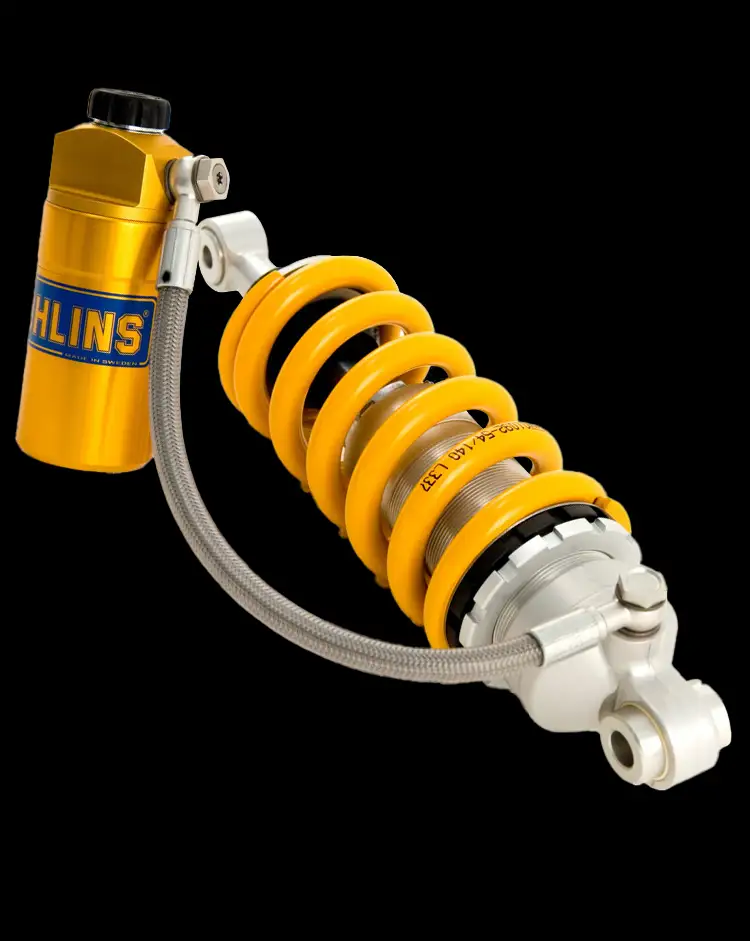
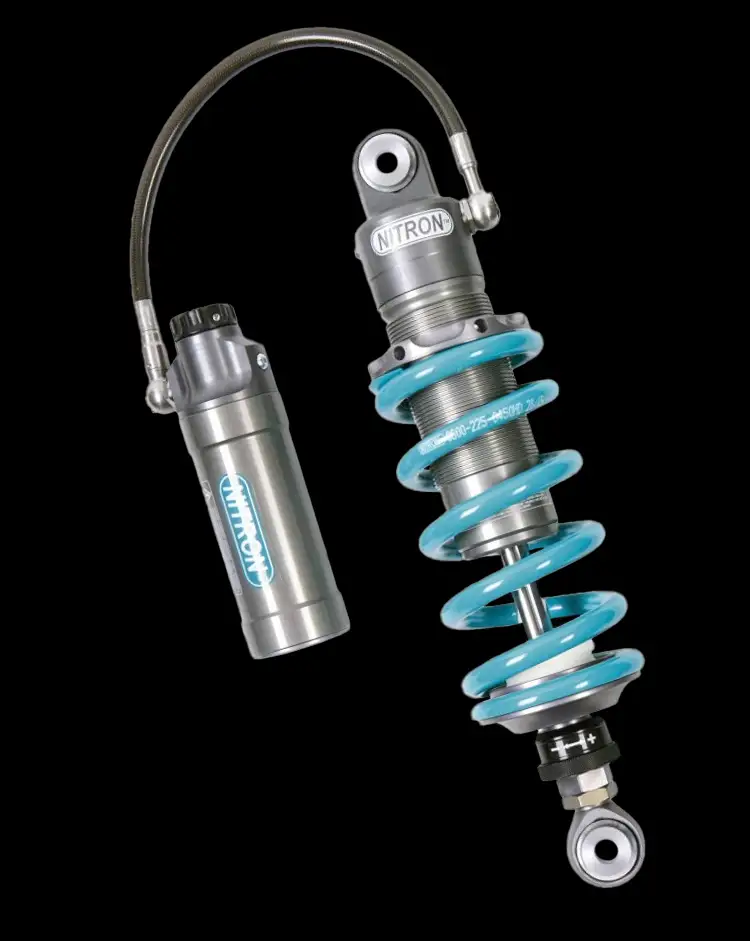
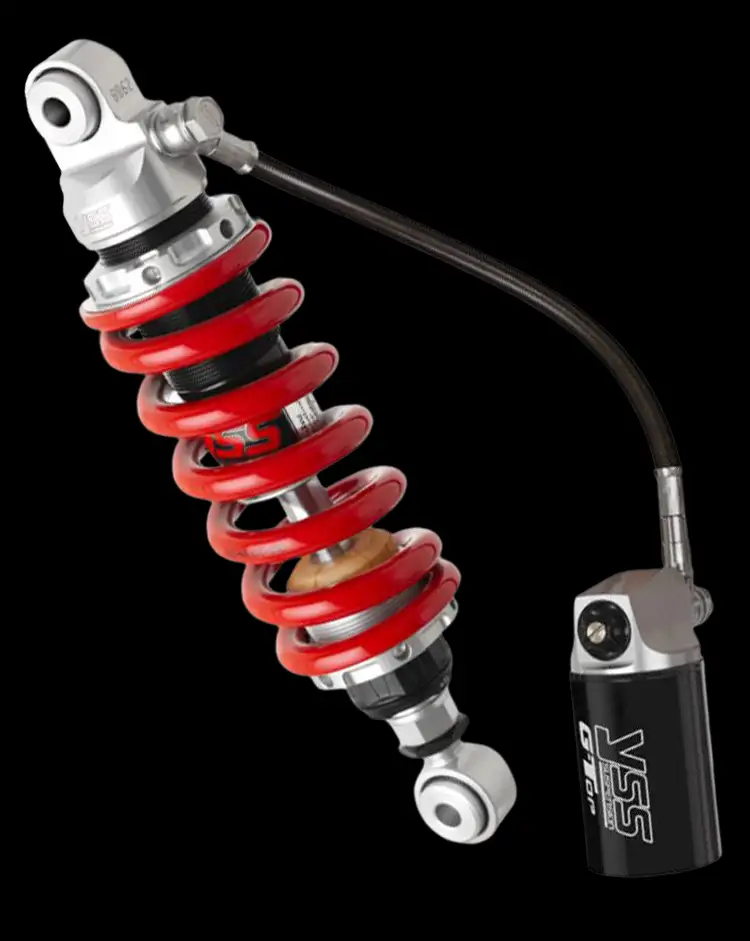

YSS also offer adjustable cartridge emulators for the stock 41mm front forks, which are huge improvement, especially for R models with no previous adjustability.
Another offering for upgrading the standard suspension comes from Hyperpro, who offer replacement progressive springs for both the front forks and rear shock. The rear spring is offered in either black, or their trademark purple.
Steering dampers
From 1988, all NSR250R frames came as standard with a welded and tapped boss to accept a steering damper.
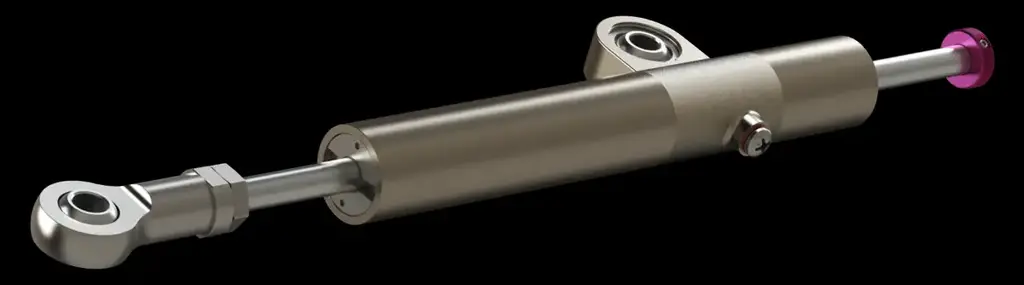

As standard the NSR250R chassis is very compliant and forgiving, even when pushed on the street, it will rarely complain. However, once the suspension is stiffened up, or the steering angle altered by adjusting the fork protrusion and/or increasing the rear ride height, handling can start to become notably more twitchy.
The addition of a steering damper can dramatically reduce nervousness, but be aware of the potential consequences of fitting one to a street bike. The most serious issue can be leaving the damper set to a high position typically reserved for track use. Unlike modern electronically controlled dampers that “loosen up” at slow speeds, manually adjusted dampers can make the steering incredibly heavy if left in a high setting, potentially catching the rider out during slow manoeuvres. For this reason, all period HRC dampers are labelled “NOT FOR HIGHWAY USE”.
Popular damper kits are available from numerous vendors such as Öhlins, WP, and YSS, although many generic dampers can be adapted for the NSR250R with simple fitting kits.
Base Settings
Although HRC supply uprated springs for the front forks and the rear shock with the race kit, their basic settings can still be used with the standard suspension.
The set-up may be a little harsh for normal road use, especially on bumpier UK roads, and may need to be “backed off” a little, but it is a good starting point.
A useful note here is that the coil spring on the ‘R’ shock is longer than the SE/SP spring. This makes a for a good cheap upgrade when the “R’ spring is fitted to the SE/SP.
Again, bear in mind that HRC assumes your suspension is both kitted with uprated springs and rebuilt with fresh oil to their race specifications.
Note:
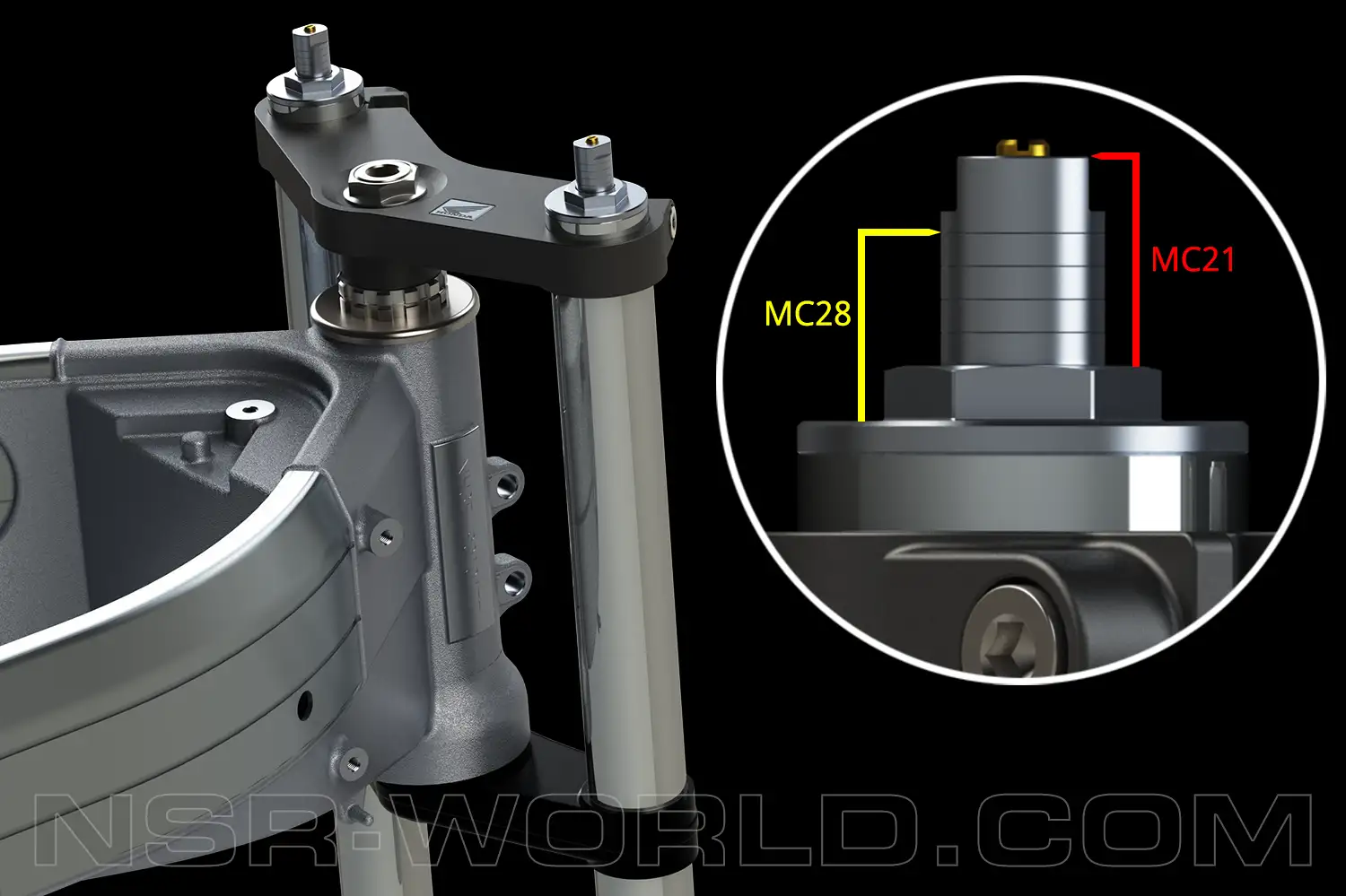
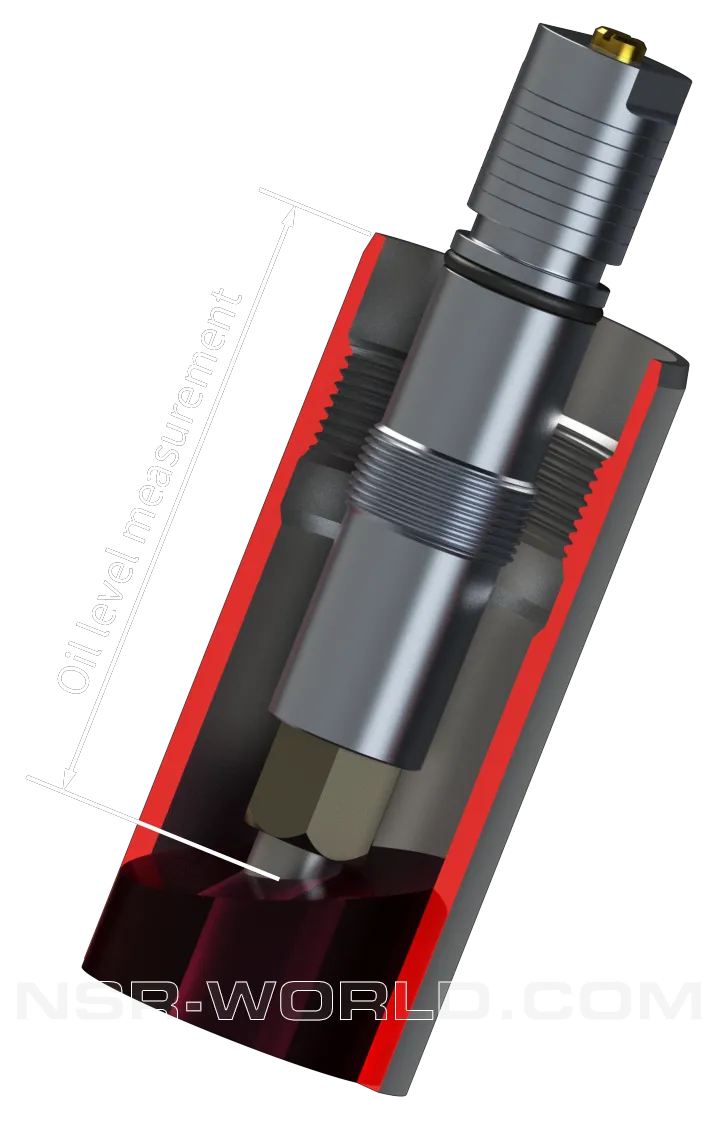
For the MC28 measure from the top ring groove to the bottom face of the locknut (A), as demonstrated in the diagram; but on the MC21, HRC measure from the top face of the preload adjuster to the top face of the locknut to set preload (B).
1987 NSR250R MC16
| NSR250R | NSR250RK [TT-F3] | |
|---|---|---|
| Oil capacity | 383cc | — |
| Oil level | 108mm | — |
| Preload [Position] | N/A | — |
| Preload [Scale] | N/A | — |
| Rebound [Position] | N/A | — |
| Oil type | ATF | Honda Ultra Cushion Oil #10 |
1988 NSR250R MC18-I
1988 HRC TT-FIII
| NSR250R | NSR250RK [TT-F3] | |
|---|---|---|
| Oil capacity | 429cc | No data |
| Oil level | 128mm | 150mm |
| Preload [Position] | No data | No data |
| Preload [Scale] | No data | No data |
| Rebound [Position] | N/A | No data |
| Oil type | ATF | Honda Ultra Cushion Oil #10 |
1989 NSR250R MC18-II
1989 HRC TT-FIII
| NSR250R | NSR250R6K-SP | NSR250RK [TT-F3] | |
|---|---|---|---|
| Oil capacity | 429cc | 374cc | No data |
| Oil level | 128mm | 150mm | No data |
| Preload [Position] | No data | No data | No data |
| Preload [Scale] | No data | No data | No data |
| Rebound [Position] | N/A | No data | No data |
| Oil type | Honda Ultra Cushion Oil #10 | Honda Ultra Cushion Oil #10 | Honda Ultra Cushion Oil #10 |
'90-'93 NSR250R MC21
1990 HRC TT-FIII
| NSR250RK [TT-FIII] | NSR250R-SE/SP [SS] | |
|---|---|---|
| Oil level | 161mm | 161mm |
| Oil capacity | 384cc | 384cc |
| Spring rate | 0.6-0.85Kgf-mm (OP. 0.7-09Kgf-mm) | 0.6-0.85Kgf-mm (OP. 0.7-09Kgf-mm) |
| Preload [Scale] | 21mm | 21mm |
| Rebound [Position] | H-5 | H-5 |
| Fork protrusion | 14mm | 14mm |
| Oil type | Honda Ultra Cushion Oil #10 | Honda Ultra Cushion Oil #8 |
'91-'93 HRC SS
| NSR250R-SE/SP | |
|---|---|
| Oil level | 161mm |
| Oil capacity | 384cc |
| Spring rate | 0.6-0.85Kgf-mm (OP. 0.7-09Kgf-mm) |
| Preload [Scale] | 21mm |
| Rebound [Position] | H-5 |
| Fork protrusion | 14mm |
| Oil type | Honda Ultra Cushion Oil #10 (OP. #8) |
'92-'93 HRC SP
| NSR250R | NSR250R-SE/SP | |
|---|---|---|
| Oil level | 120mm | 160mm |
| Oil capacity | 425cc | 384cc |
| Preload [Position] | No information | No information |
| Preload [Scale] | No information | No information |
| Rebound [Position] | No information | No information |
| Fork protrusion | 0-10mm | 0-10mm |
| Oil type | Honda Ultra Cushion Oil #10 | Honda Ultra Cushion Oil #10 |
'94-'97 NSR250R MC28
1994 HRC SP
| NSR250R | NSR250R-SE | NSR250R-SP | |
|---|---|---|---|
| Oil capacity | 450cc | 383cc | 383cc |
| Oil level | 105mm | 145mm | 145mm |
| Preload [Position] | 9mm [3 Rings] | 12mm [3 Rings] | 9mm [4 Rings] |
| Preload [Scale] | 0-15mm | 6-21mm | 3-19mm |
| Rebound [Position] | — | H-7 | H-7 |
| Oil type | Honda Ultra Cushion Oil #10 | Honda Ultra Cushion Oil #10 | Honda Ultra Cushion Oil #10 |
Note:
- The kit springs can only be used for the SE/SP models due to their length.
- Adjust R model forks by varying the oil level.
- Standard fork projection is 0mm.
2 Comments
Cheers Andy
Great read and very informative- planning to change to a progressive front spring over winter and info very helpful
Off to check which plate I’ve got fitted to the rear
Glad you found it helpful, Nick.
We’ve used the Hyperpro progressive front springs in a number of MC21s and MC28s with great results.
I don’t know if they specifically list them for the MC18, but well worth asking.