NSR-WORLD.COM

NSR-WORLD.COM
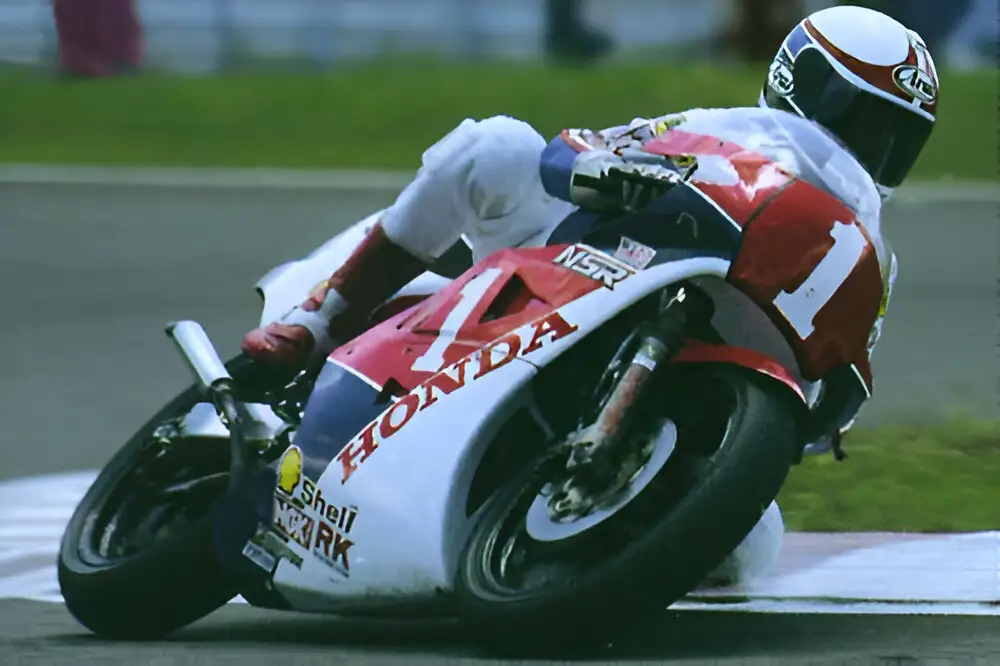
1985 was an historic year for Honda, HRC, and Freddie Spencer.
In sensational style, never to be repeated, Spencer took both the 250cc and 500cc titles in the same season.
1985 NSR500 [NV0B]
In an epic season for HRC, Fast Freddie secured both the 250cc and 500cc World Riders' championships, and with Honda claiming over 70% of wins, HRC dominated both Constructors' Championships.
Honda claimed 2/3rds of all the premier class wins in the 1985 season, and took an astounding 3/4 of the 250cc class wins.
Returning to a conventional layout, the 1985 Rothmans Honda NSR500 NV0B dominated the season in the hands of Fast Freddie, with an incredible 7 wins out of 12 rounds, and two 2nd place finishes.
From the outside, the 1985 NSR500 V4 motor, visually, looked relatively unchanged from the 1984 model. Internally the most significant change was the primary drive being moved from the left-hand side of the crankshaft to the right, eliminating the driveshaft running across the back of the motor, and directly driving the clutch.
The crankshaft now rotated counter-clockwise, & the firing order was altered from 1-4-3-2 to 1-2-3-4. The V-angle and ignition interval remained the same [both 90°], as did the 34mm oval venturi magnesium Keihin PE carbs, athough no longer fitted with the multi-position main jets.
Major changes were made to the chassis. The ULF [Ultra Light Frame] developed in 1984 for the RS250RW was implemented for the first time on the 500, with heavy cross bracing and additional sheet metal gussets welded in around the headstock to increase stiffness.
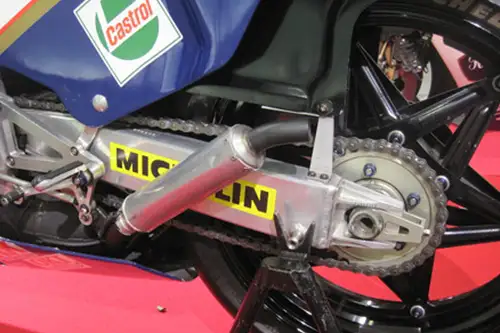
With the fuel tank back in its conventional position, and the expansion chambers snaking underneath the motor, twin low-slung silencers exited each side of the new, now unbraced, box-section swingarm.
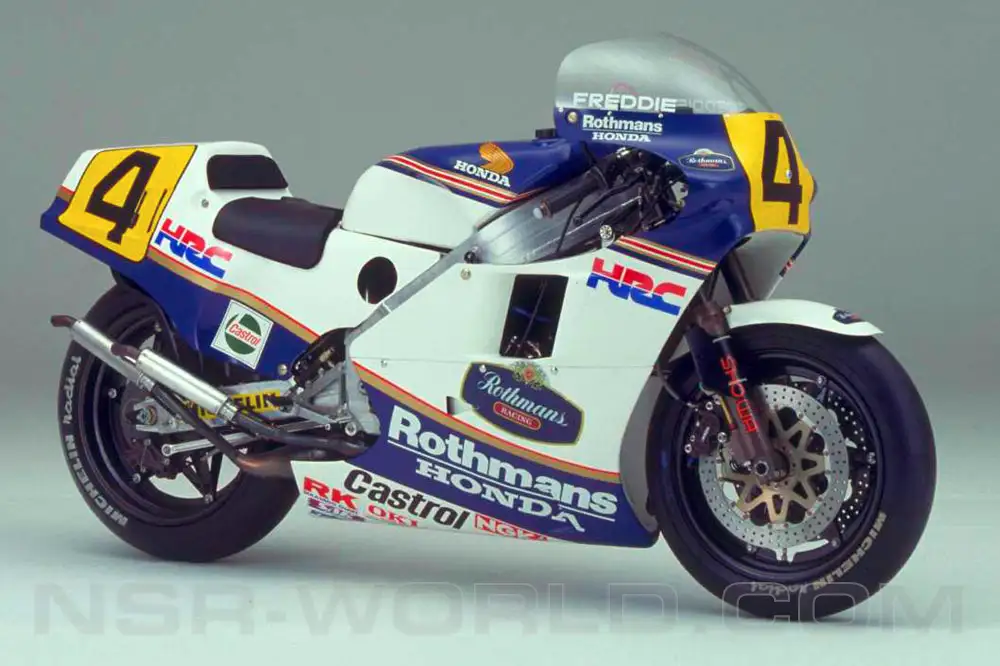
1985 NSR500 [NV0B]
Developed at a blistering pace after the disappointment of the 1984 season, HRC made a number of critical changes for Freddie Spencer’s dual 500/250 championship assault.
With the internal engine updates and clever construction and routing of the new expansion chambers, the changes added up to a gain of around 5ps over the NV0A.
With the internal engine updates and clever construction and routing of the new expansion chambers, the changes added up to a gain of around 5ps over the NV0A.
1985 RS250RW [NV1A]
The RS250RW NV1A was more than just a factory supported RS250R. It was effectively the first NSR250, & technically "half an NSR500". Nothing was interchangeable with the consumer RS250R ND5B.
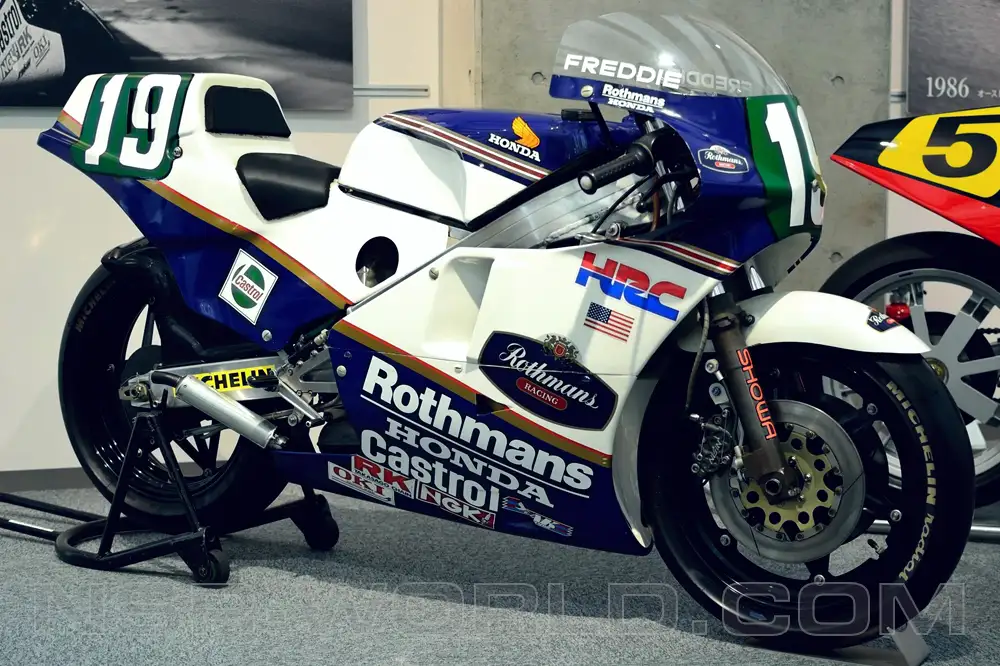
1985 RS250RW [NV1A]
Developed at a blistering pace after the disappointment of the 1984 season, HRC made a number of critical changes for Freddie Spencer’s dual 500/250 championship assault.
With the internal engine updates and clever construction and routing of the new expansion chambers, the changes added up to a gain of around 5ps over the NV0A.
With the internal engine updates and clever construction and routing of the new expansion chambers, the changes added up to a gain of around 5ps over the NV0A.
For the first time, all of HRCs 1985 GP bikes featured the same ULF “I-beam” frame technology, developed during the second half of the 1984 season for the RS250RW Prototype. Constructed from triple-chamber square box-section extrusions, with cast headstock and swingarm pivot, the NV1As frame weighed in at just under 6.4kg.
As with the NSR500, the 250 NV1A motor had an all-new “square” 54×54.5mm bore & stroke, and featured a 180° crankshaft, firing at 90° & 270°. Two 38mm magnesium Keihin PE carburettors, the same type as those used on the NSR500 V4, although significantly larger, were built into a compound assembly and fed directly into the crankcases (crankcase reed valve induction).
The 1985 motor was slightly improved upon over the 1984 prototype, benefitting from advances gained during off-season development of the NSR500 NV0B power unit, seeing small increases in both power & torque, and weighed in at just 27.0kg including ancillaries.
As with the prototype and NV0B, the NV1A exhausts both exited the barrels to the front, then weaved under the motor, and were finished off with stubby low-slung silencers, exiting each side of the swingarm.
In addition to the new engine configuration, once again the factory bike featured ATAC on both cylinders, whereas the ND5B only had a single chamber on the lower cylinder.
At the rear, a 555mm long fabricated swingarm brought the wheelbase to 1328mm. To further minimise weight, rear braking was handled by a 182mm carbon fibre disc and tiny underslung Nissin twin-pot magnesium caliper, braced by an alloy torque arm affixed to the frame. The chassis was finished off front and rear with 16×3.50″ & 17×4.50″ NSR500 syle Comstar wheels respectively, with the rear shrouded in a carbon fibre hugger to assist with aerodynamics.
The complete package actually weighed in at less than 90kg, which at the time was the minimum weight for the class, so ballast was added to bring it back within regulation.
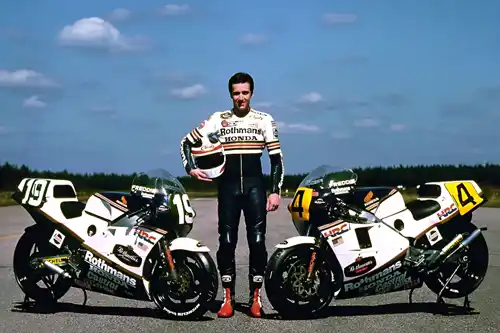
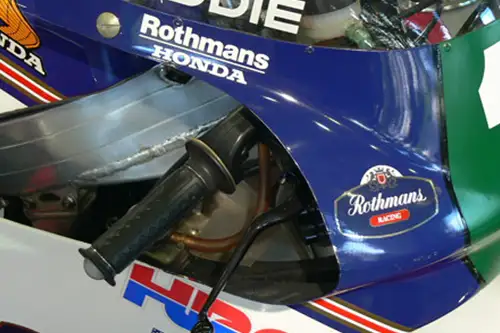
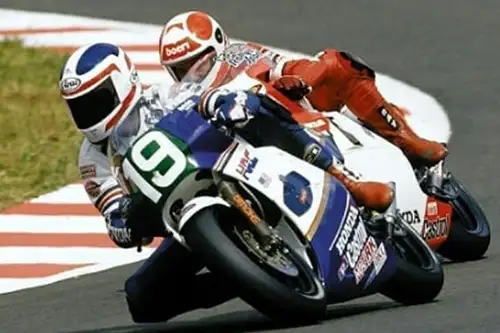
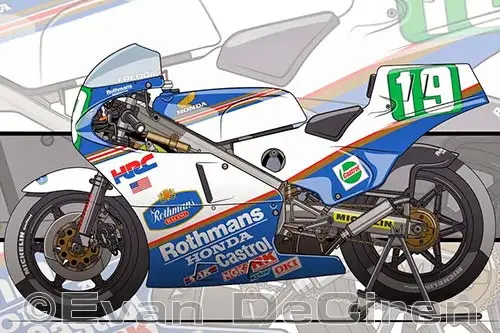
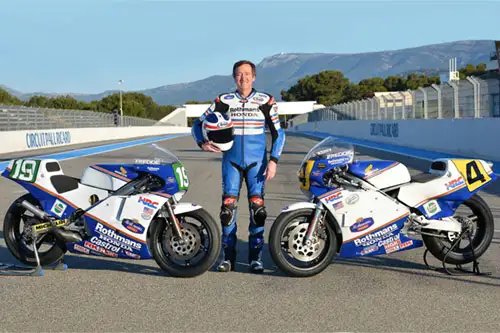
With seven wins and a 2nd place, Freddie Spencer won the 1985 250cc World Championside with two rounds remaining. He didn’t participate in the final two rounds to limit the possibility of injury, as the 500cc crown was also within his grasp.
Not only did Spencer achieve 7 wins in the premier class, he also achieved 7 wins on the RS250RW NV1A, going down in history as the only rider ever to secure world championships in the 250cc and 500cc classes in the same season.
SPEC: 1985
NSR500 [NV0B]
Power: 147PS @11,500rpm
Torque: 9.2kgm @11,000rpm
Weight: 125kg
RS250RW [NV1A]
Power: 75PS @11,500rpm
Torque: 4.7kgm @11,500rpm
Weight: 90kg
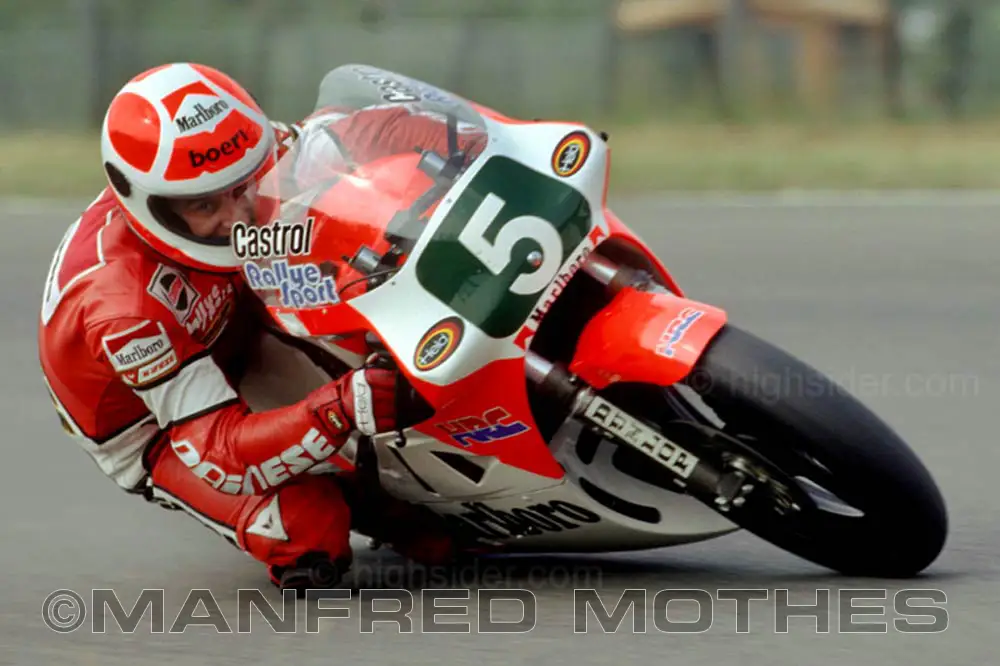
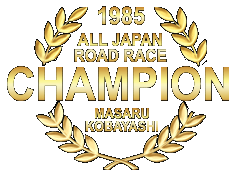
Often overlooked outside of Japan, and due to the double championship success of Freddie Spencer, with four wins and two 2nd places, Masaru Kobayashi won his second [and consecutive] All-Japan 250GP Road Race championship on an RS250RW in 1985.
However, his RS250RW NW2A was very different from the bike Freddie rode...
1985 RS250R [ND5B-I]
The RS250R gained the official designation of ND5B for its second incarnation in 1985, and received some RS250RW inspired updates.
Immediately noticeable was the new triple-cell box-section "ULF" (Ultra Light) frame, similar to that of the factory RS250RW prototype from 1984.
The ULF format would become the standard configuration for Honda race bikes (and many production bikes) for many years to come. However, the specification was otherwise somewhat basic in comparison to the RS250RW.The motor was still based on the ND5A, derived from the 1984 NS250R, but now featured all-new, purpose built, smaller race-spec crankcases.
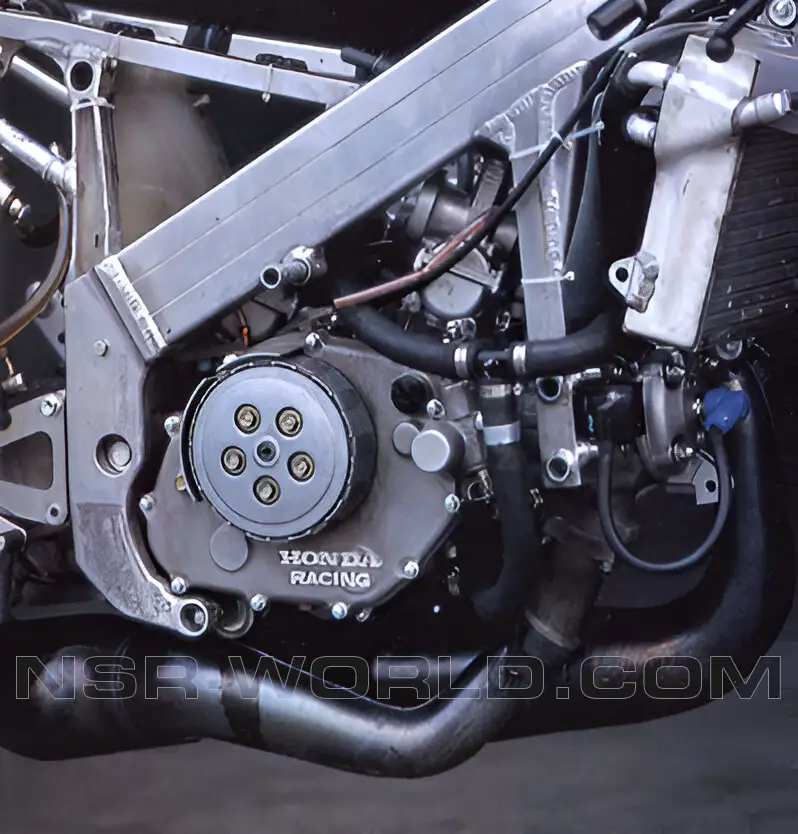
The all-new clutch, based on the ’83-’84 CR125 unit, and transmission cover were overtly different to the previous model though, and similar in appearance to that which would be later used on the more commonly recognised ’87-’92 RS250R NF5.
However, while the setup looks similar that of the NF5, the ND5B crankcases still required splitting to access the transmission and change the internal gearing, just as the NS250R and ND5A.
Bore and stroke remained the same at 56×50.6mm, and the barrels were still similar to the reed valve piston ported items from the NS250R, but were now sand cast, and featured greatly revised porting. The vertical barrel was rotated 180 degrees, so both exhaust manifolds now faced forward like the RS250RW, and the expansion chambers were conventionally routed under the motor. A low-slung silencer now exited either side of the swingarm, just above the rear axle.
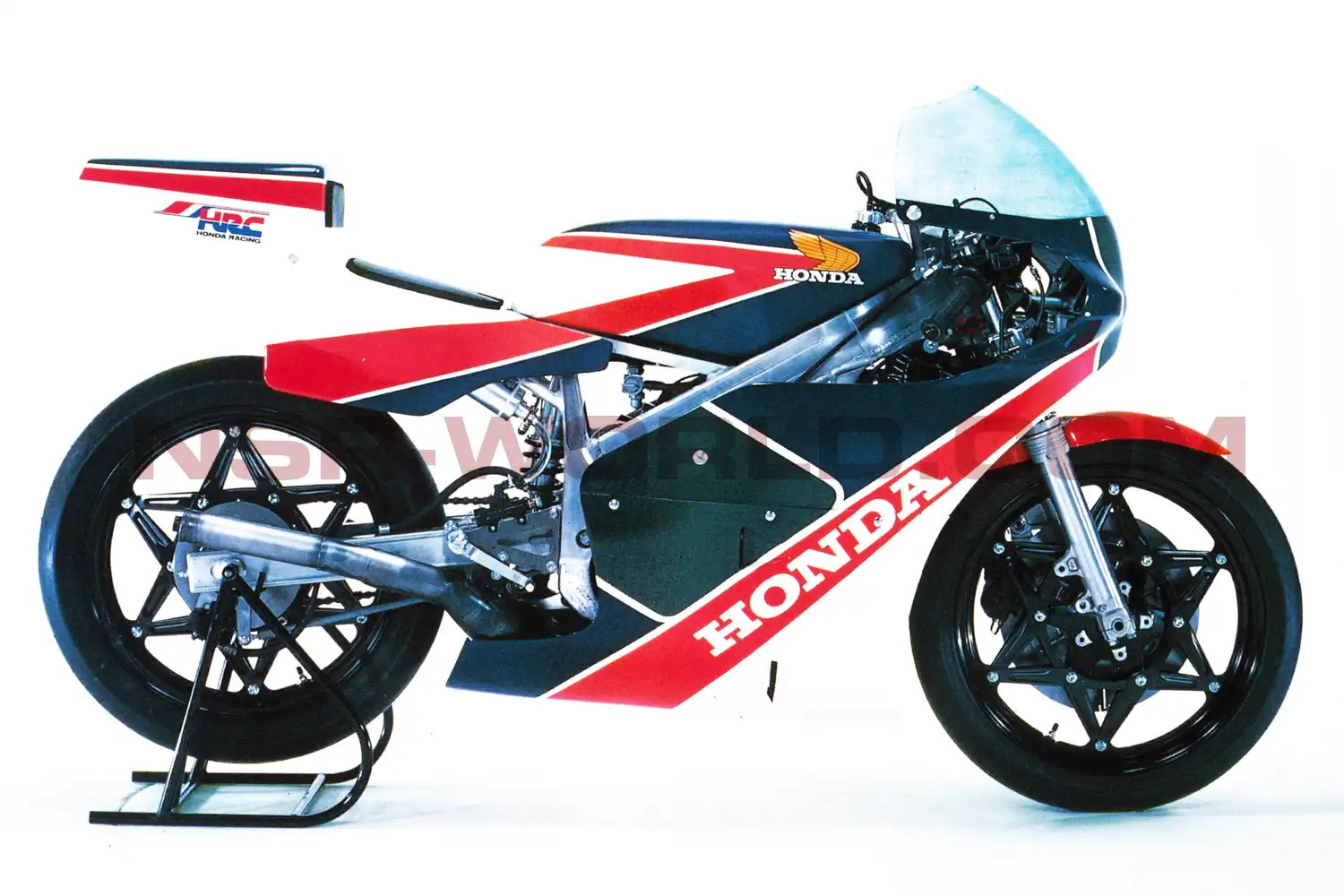
1985 RS250R [ND5B]
Despite the ND5B’s bespoke crankcases, the motor’s origins were still unmistakably NS250R MC11 upon close inspection.
However, the bike now featured the ULF frame, conventionally mounted cylinders & expansion chambers, and PJ carbs, and was a considerable step away from the production bike towards a dedicated race bike.
However, the bike now featured the ULF frame, conventionally mounted cylinders & expansion chambers, and PJ carbs, and was a considerable step away from the production bike towards a dedicated race bike.
For the first time, fuelling was handled by two independent aluminium alloy oval-slide 36mm Keihin PJ carburettors, each fed individually from the fuel tank via their own dedicated fuel taps.
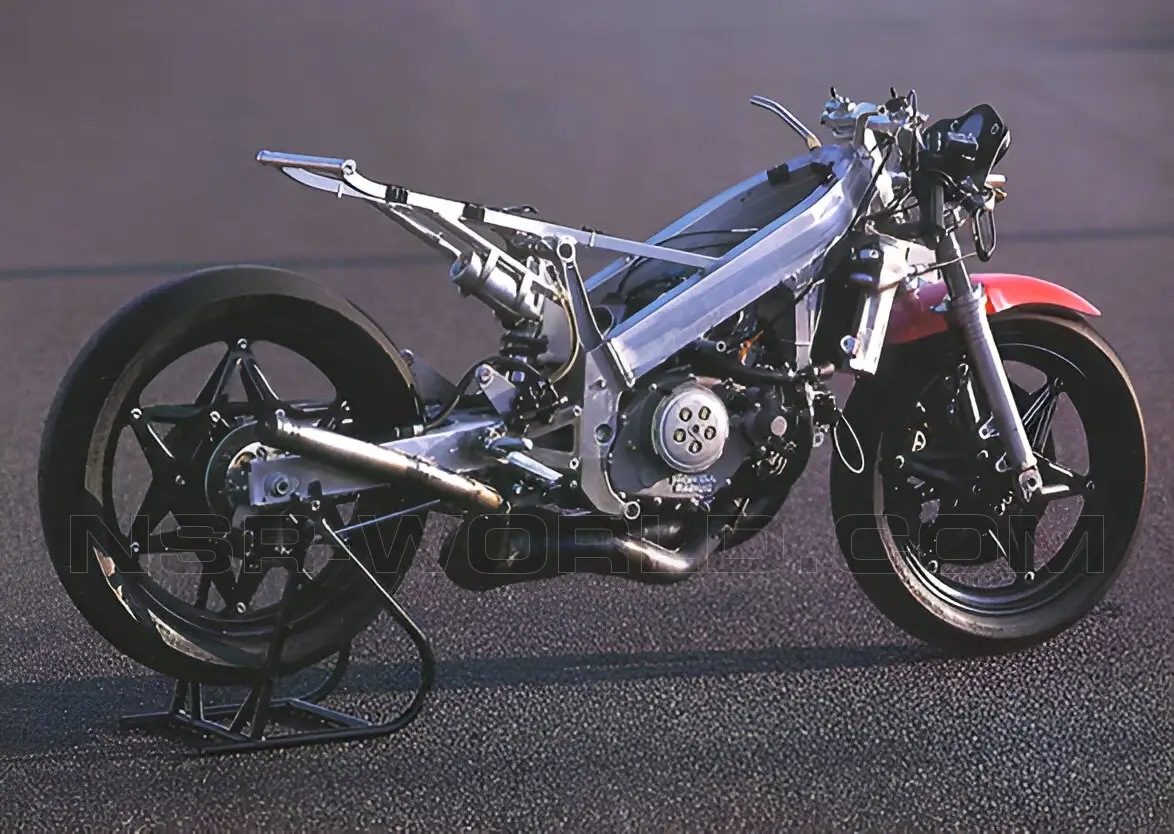
A single ATAC chamber was fitted to the lower cylinder, and the valve was driven by a take-off on the RHS transmission cover, forward of the clutch assembly. Many teams soon retro-fitted ATAC to both barrels, as per the 1984 factory bikes in an attempt to bolster the poor bottom-end and mid-range.
The improvements to the new ND5B motor saw the rev limit rise to a little under 12,500rpm, but in testing Anton Mang still complained that it lacked outright top speed. Power was claimed to be “over 70PS”, but in reality, given the performance differential to the contemporary TZ250, was likely measurably lower.
The 16″ front and 18″ rear Comstar wheels from the RS250RW were carried over, but with only a single, albeit substantially larger, disc brake for the front. A 17″ wheel and smaller twin discs were made available as options, and would become standard equipment in 1986. The air assisted forks, based on those fitted to the RW, were aluminium alloy, unlike the factory’s magnesium parts, but retained the works style TRAC anti-dive system as seen on the RS500, NSR500, and RS250RW NV1A.
HRC works rider Masaru Kobayashi rode the new MC11 based RS250R ND5A for the first half of the season, but the bike didn’t perform as well as expected, so mid-way through the season ATAC was fitted, and the front wheel diameter increased to 18″, to match the rear and increase stability.
As the front brake setup was only a single disc, the ND5B TRAC anti-dive was only fitted to one side. This helped reduced both cost and weight. The ND5B engine casings and barrels were finished in self-colour aluminium, further distancing the motor from its NS250R origins.
SPEC: 1985
NS250RK [NE8]
Bore & Stroke: 56×50.6mm
Power: 55PS @10,500rpm
Torque: 3.5kg-m @10,000rpm
Weight: Under 120kg
RS250R [ND5B]
Bore & Stroke: 56×50.6mm
Power: 65PS @11,500rpm*
Torque: N/A
Weight: Under 120kg
*Estimated
NOTE
*Despite a number of improvements and refinements in 1985, the package still lacked the competitivness of its contemporary TZ250, and a number of riders were extremely vocal about the RS250R’s shortcomings.
The majority of improvements can be attributed to weight reduction and chassis stiffness, rather than engine power.
1985 RS250RW [NW2A]
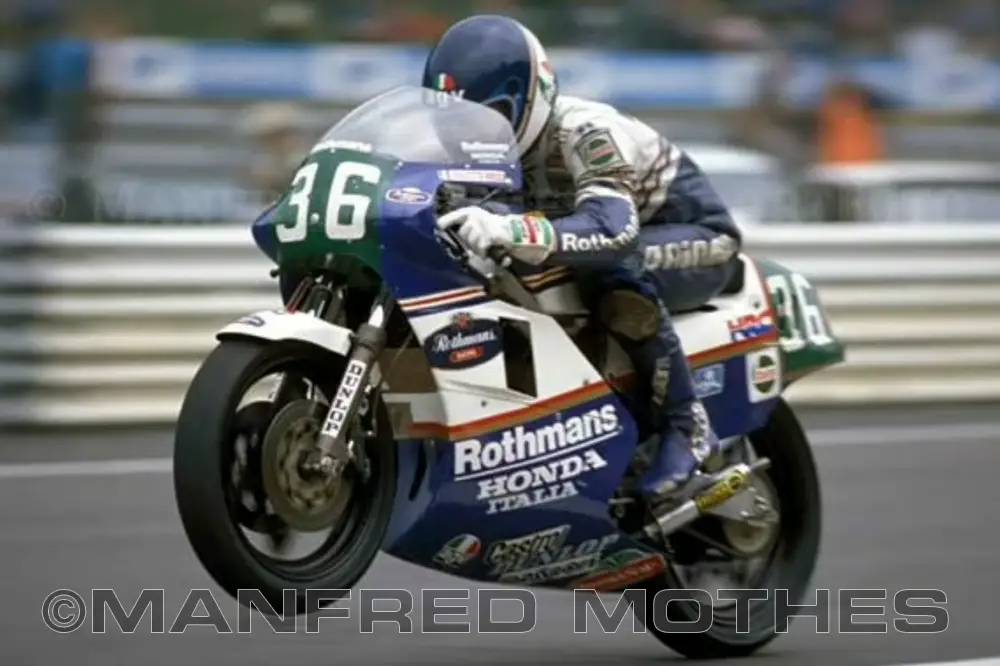
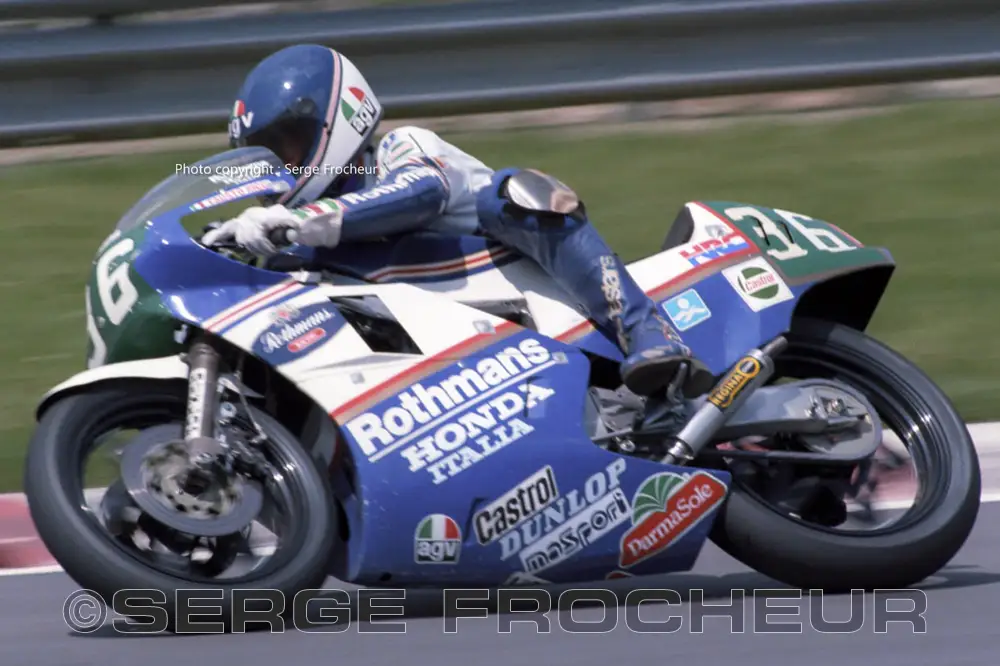
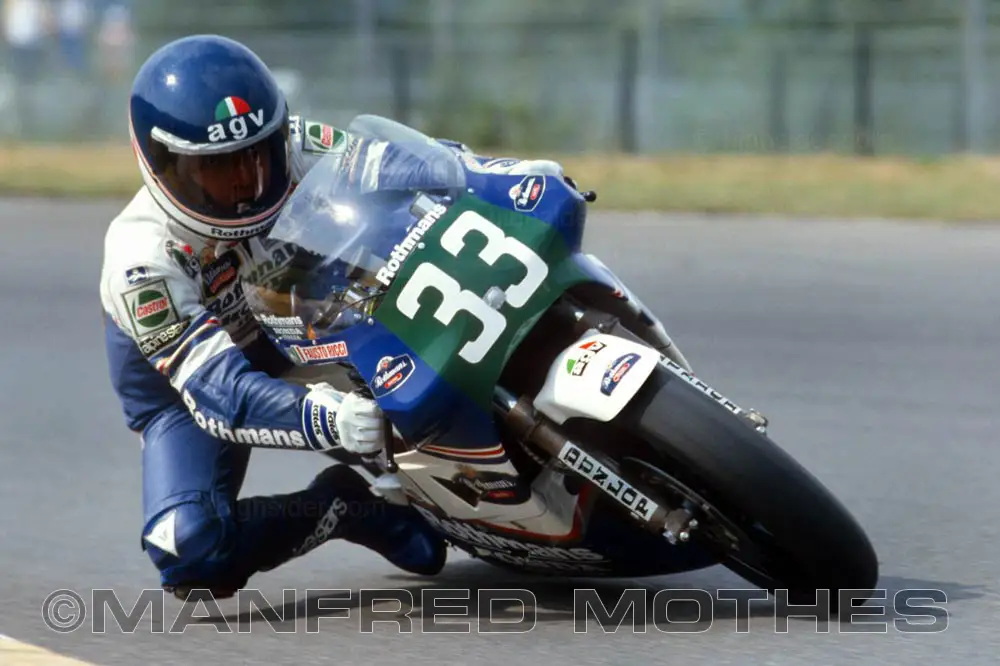
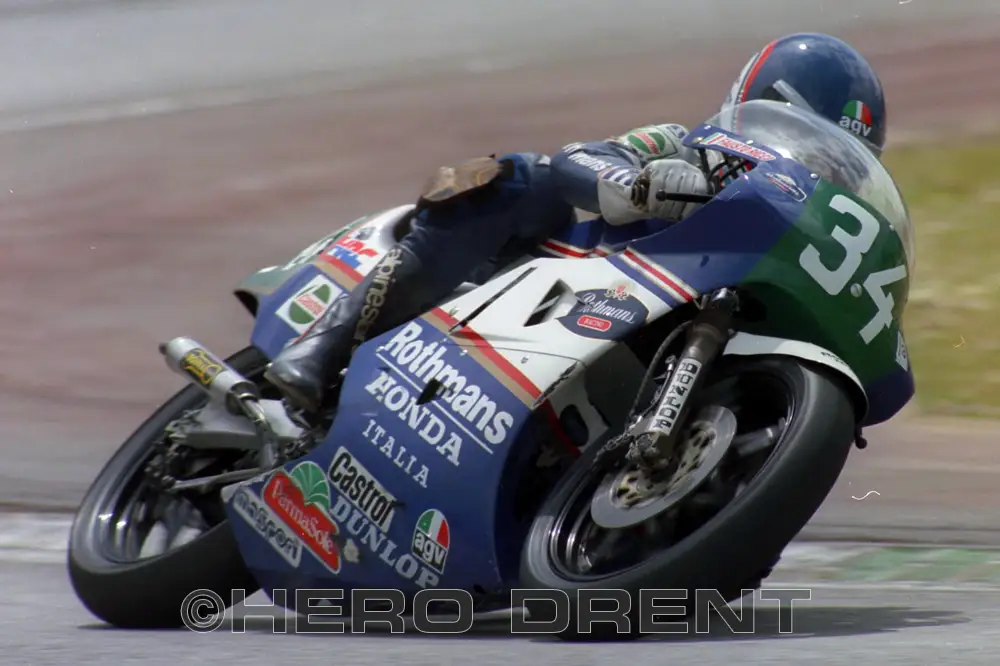
A little known third RS250R model was run by HRC in 1985, also known within the paddock as an RS250RW, but designated internally as an NW2A, and was effectively a fully factory-supported ND5B.
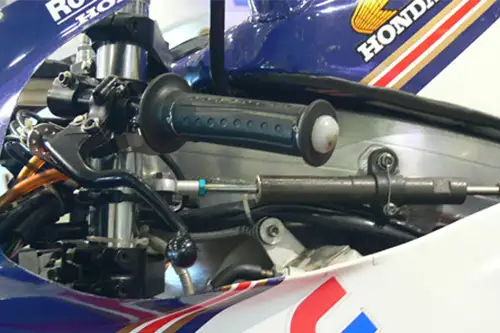
The frame and motor were modified RS250R items, upon which were hung the RS250RW magnesium forks and fabricated swingarm. The latter held in place with an NV1A style [although once again, not the same] magnesium shock, complete with magnesium piggyback remote reservoir. A magnesium steering damper helped keep tank slappers to a minimum.
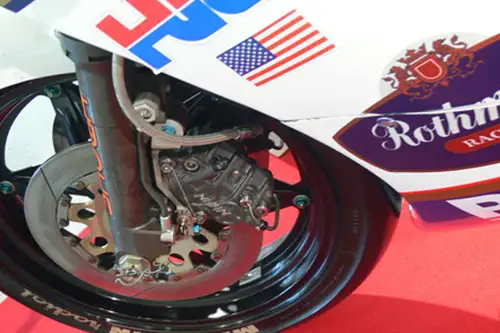
Tied to the magnesium forks by alloy mounting brackets were a pair of magnesium NISSIN calipers, similar to those seen on the NV1A and NSR500 NV0B, which actuated the TRAC anti-dive system. Fully floating front discs were the same as the NV1A items, but unlike the NV1As carbon fibre rear disc, the NW2As was a conventional steel item. RS250RW Comstar wheels finished off the rolling chassis.
The motor sported an NV1A style “innie” rotor and stator, but there the similarities ended. The motor was clearly derived from the piston ported 56×50.6mm bore & stroke RS250R ND5 unit, complete with the old tell-tale NS250R style gearshift cover depicting the street-style shift pattern of “1-down 5-up”. Unlike Spencer’s NV1A, with its “over-the-rad” inlet for the airbox, the NW2A had twin side-mounted intakes, fed by NACA ducts on either flank of the fairing.
The NW2A was essentially the first A-kit RS250R!
At first glance, the NW2A looked remarkably similar to Freddie Spencer’s NV1A, but upon closer inspection, not only did the differences become more apparent, but the more obvious it became that the bike was actually a heavily modified ND5B!
While many parts were RS250RW specific, they were NW2A specific. They were not the same parts as used on Spencer’s NV1A, despite looking almost identical in many cases. In fact, the two RS250RWs were developed completely independently of one another.
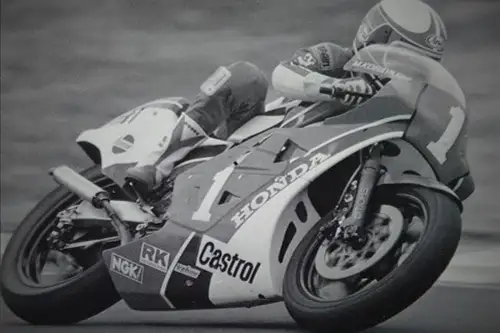
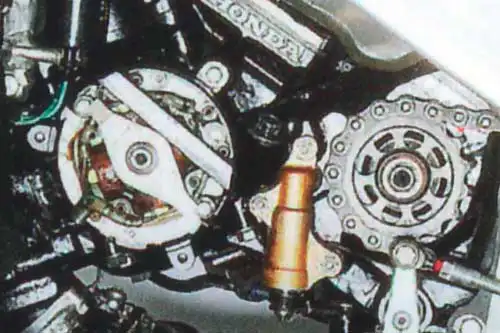
'85 NV1A Motor
The NV1A motor was unique to Freddie Spencer, featuring a 54×54.5mm bore & stroke, crankcase induction, & cassette transmission, all based heavily on the NSR500 NV0A.
Power has been quoted around the 75PS mark.
Power has been quoted around the 75PS mark.
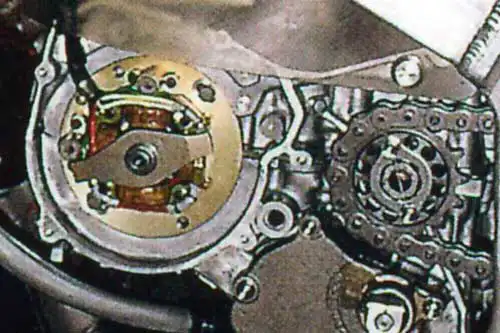
'85 NW2A Motor
The NW2A motor was essentially an ND5B item with factory upgrades, including a special crankshaft and NV1A style ignition.
Peak power was reputedly comparable to the NV1A, although Freddie’s bike would always maintain an advantage.
Peak power was reputedly comparable to the NV1A, although Freddie’s bike would always maintain an advantage.
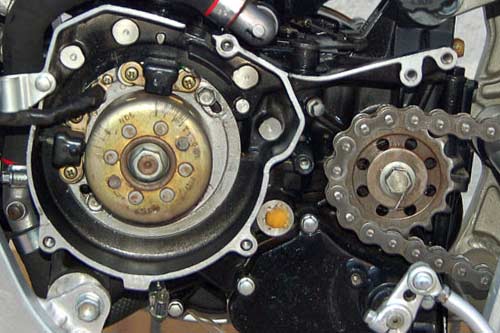
'84 ND5A Motor
The 1984 ND5A motor shown here was essentially a modified NS250R power unit, and is immediately identifiable by the black painted casings.
The origins of the ’85 [and ’86] ND5B, and consequently NW2A however, are clear to see.
The origins of the ’85 [and ’86] ND5B, and consequently NW2A however, are clear to see.
NW2As were most notably campaigned by Anton Mang and Fausto Ricci in WGP250, and by Masaru Kobayashi in the domestic All-Japan Road Race Championship, on which he won his second successive title.
NSR-WORLD recently had the chance to ask Fausto Ricci about his time working with the HRC engineers, the RS250RWs, and general experiences riding 250s at World Championship level.
NSR-WORLD
I was never really aware of the 1985 RS250RW NW2A, and until I started my research I thought Spencer rode the only bike with the name. I have since found out both you and Anton Mang rode RS250RW NW2As in GP, and Masaru Kobayashi & Takao Abe each rode one in the All Japan championship. I was hoping you could tell me a little about what it was like to ride the RS250RW compared to the regular RS250R ND5, if you had much support from HRC engineers, and just generally how it compared on track to Freddie’s bike and the rest of the grid?
Edited for clarity.
Fausto Ricci
In 1985 an Italian technical team supported me, while in 1986 I was supported by the official HRC team [riding an NSR250 NV1B].
In early 1984 Honda sent to Italy two RS250RW RS250R [ND5A] bikes for me to test. Those bikes had many problems in terms of chassis and engine and were not used [by me] in any GP.
At the end of 1984 Anton Mang and I went to Japan to test a new RS250R version [RS250RW NW2A] and worked with Honda HRC engineers to modify and improve the bike.
We spent one month in Japan and tested the bikes at Sugo and Suzuka circuits.
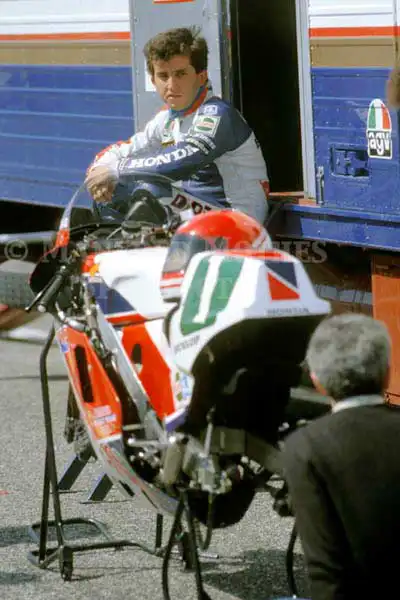
The Honda engineers were very collaborative and fast in implementing the modifications we suggested, it had been a pleasure working with them. I remember that during the first test ride, the bike engine broke and I fell. Fortunately, I did not injure myself. After one month, when they took me to the airport, they were still apologizing for the accident.
NSR-WORLD
Did you ride the new consumer RS250R NF5A in 1987? I’m interested to know how that compared to the factory backed bikes in competition.
Fausto Ricci
I rode that bike [RS250R NF5A] and there are many differences with the factory backed bikes. The chassis, the engine and the suspension are different. The factory backed bike has racing setup, is very fast and reactive. The 1987 consumer bike had more or less 10 horsepower less than the factory backed version, which is a lot considering the weight of those bikes was approximately 100 kg.
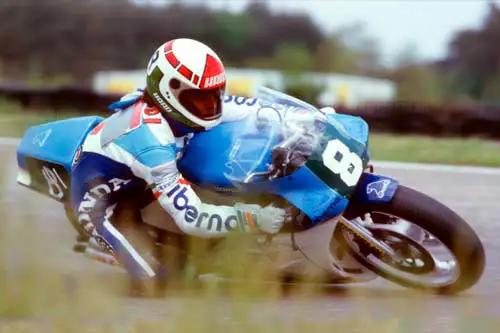
NSR-WORLD
Finally, for now, the feeling of winning your home GP on the Yamaha must have amazing! What was it like to work with Honda after riding a Yamaha, and how did the Honda feel, both chassis and engine, compared to the Yamaha? Anything special that sticks in your mind from those times?
Fausto Ricci
The feeling of winning my home GP was amazing! In 1984, except for my home GP, I did not win any other GP podium as Yamaha TZ250 bike had many technical problems.
At that time I had already signed the contract with Honda to be an official rider in 1985 Grand Prix. Seeing that I was not winning any race, they came to Italy to check on my capacity as a bike rider and make sure they did the right choice. I was relieved when they saw the problem was with the bike [and not me].
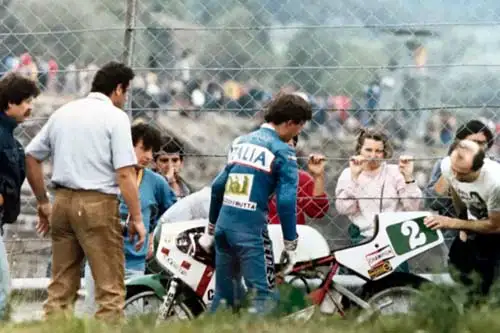
This picture is about September 1984, at Mugello during the Italian Championship. I was leading the race but the chain gear broke and I had to stop. It’s the race the Japanese Honda team came to watch.
The Honda chassis and engine was better than the Yamaha’s, but you have to consider in [1985 and] 1986 I was working with the HRC engineers, while with Yamaha I was part of an Italian private team, and did not work with the official Yamaha team.
SPEC: 1985
RS250RW [NW2A]
Bore & Stroke: 56×50.6mm †
Power: 70PS @11,500rpm*
Torque: N/A
Weight: 98kg ‡
*Estimated
INFO
†The bore and stroke is what ultimately set the NW2A apart from Freddie Spencer’s RS250RW NV1A, allowing him just enough of an edge in performance to maintain a lead over his rival Honda pilots.
‡While the RS250RW NW2A employed some similar magnesium components, such as fork lowers and rear shock, they differed to the NV1A items. Spencer’s bike also saw additional weight saving in other areas, one notable item being the carbon fibre rear disk and its special magnesium caliper. The additional special parts reduced Spencer’s bike to 95kg.
Outwardly, the NV1A and NW2A look very similar to the untrained eye, but they differ significantly. The NW2A shares far more in common with the ND5B than it does the NV1A.
1985 Model Overview
500cc

250cc

250cc
NSR500 [NV0B]
RS250RW NV1A
RS250RW NW2A
RS250R [ND5B]
NS250RK [NE8]
NS250R [MC11]