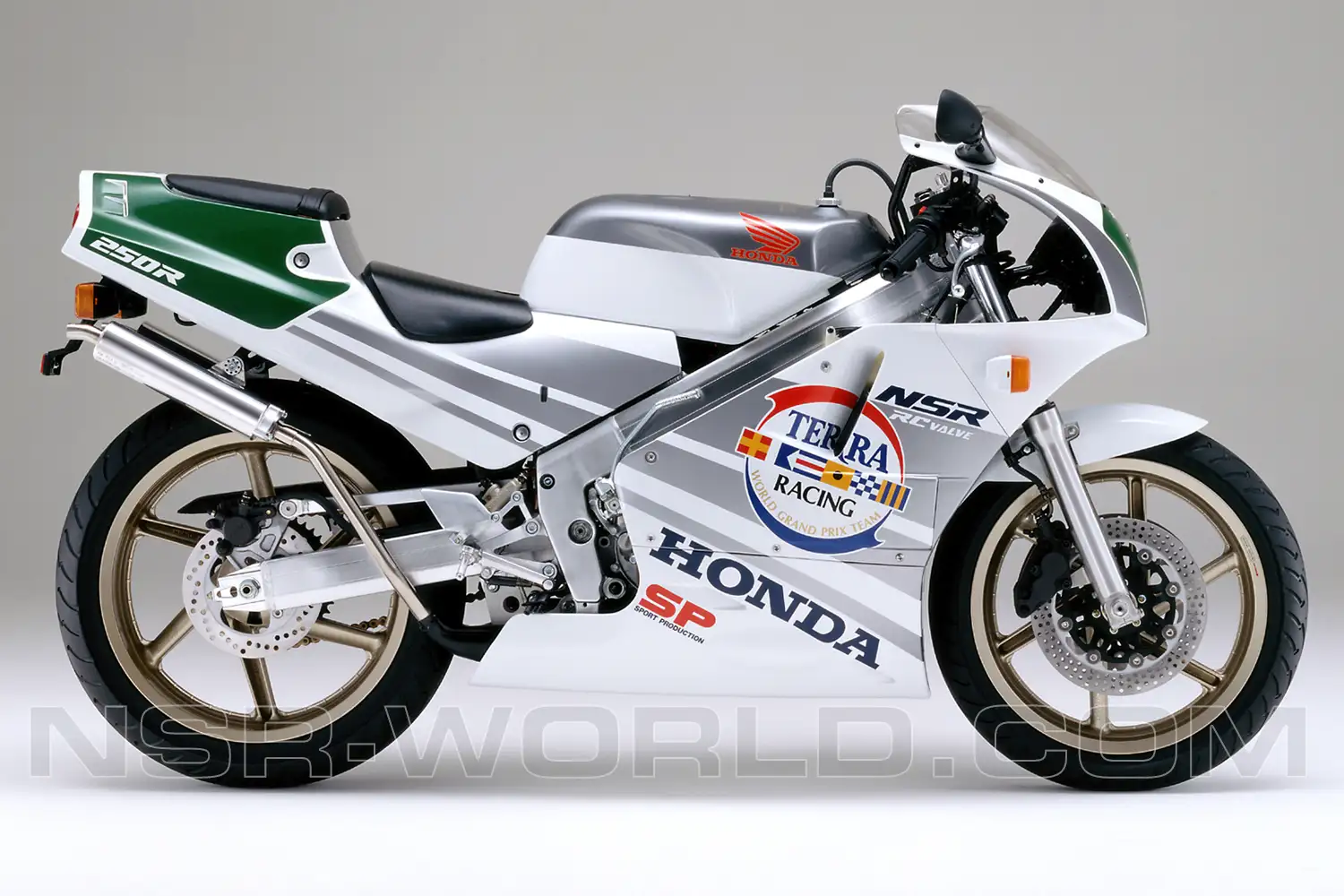
Released of the 10th of February 1989, the third generation of NSR250R was an evolution model of the 1988 MC18 R2/4J.

In keeping with its older sibling the 1989 model is often referred to by its internal code "MC18 PGM-2".

1989 NSR250R [MC18-II]

Click to enlarge

A number of improvements came with the introduction of PGM-II. The RC Valve controller was integrated with the CDI into a single unit, and the air correction system now featured two solenoids as opposed to the single setup of the ’89 R2/4J.

Unlike the PGM-I’s pre-programmed ignition map, the PGM-II utilised dynamic maps that take inputs from both throttle position and throttle opening speed, engine speed, and wheel speed [measured at the countershaft], and optimises the ignition for each cylinder independently. The RC Valve was now also mapped to engine speed and throttle position.

Once again, as with the PGM-I, the 2T oil pump delivery is also optimised by triggering the solenoid attached to the pump body.

Several chassis updates made their way on to the 1989 MC18 to further sharpen the handling.

Steering angle is tightened up yet further, from the 1988’s 24° to 23.15°, and the front tyre was upgraded to a radial for the first time, matching the radial rear from the previous year.

A new swingarm, formed for a similar pentagonal extrusions as the frame, now featured a torque arm to reduce shock absorber extension when applying the rear brake. The rear wheel and tyre were increased in width from 4″ to 4.5″ and 140/60R18 to 150/60R18 respectively.

The front fairing and tail were revised, giving a sleaker and more aerodynamic appearance than the 1988 R2/4J, and high level silencers mimicked the 1987 NSR500 NV0D.

The NSR250R-SP [MC18 R6K] was released on the 1st of April 1989, and dressed in the livery of Masahiro Shimizu's All-Japan NSR250 NV1G.

Unlike the previous  ’88 R4J-SP,  the R6K-SP saw more substantial changes.

Magtek wheels were once again immediately noticeable, however the rear width had been increased in line with the R5K’s Enkie to 4.5″.

The SP front forks featured both spring preload and rebound damping, and at the rear, a new fully adjustable shock with preload, rebound, and compression adjustment. The compression adjuster was fitted to a remote oil reservoir secured to the back of the battery tray under the seat.

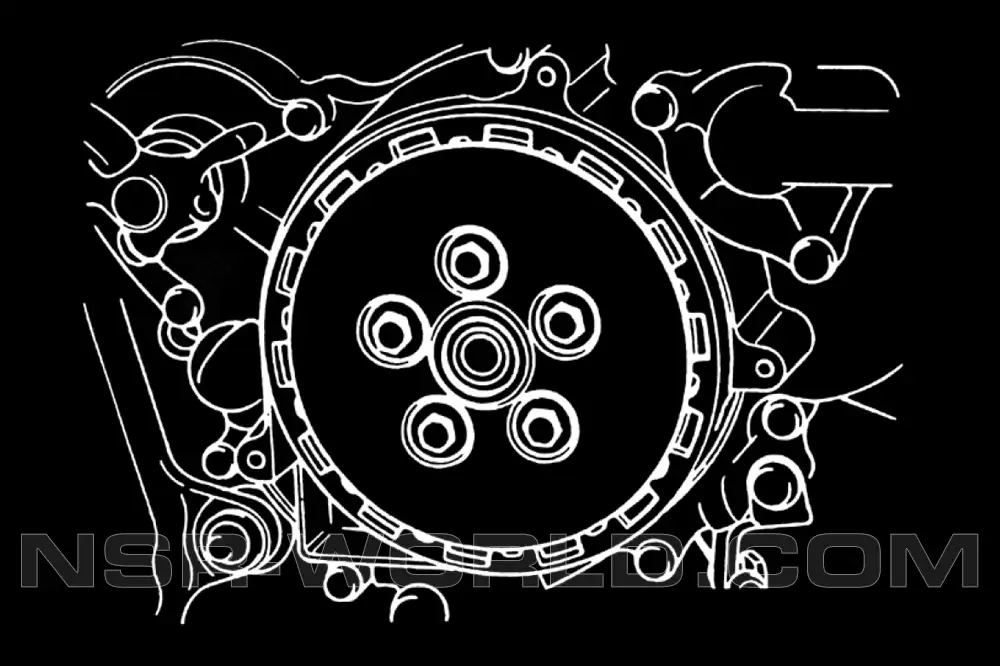
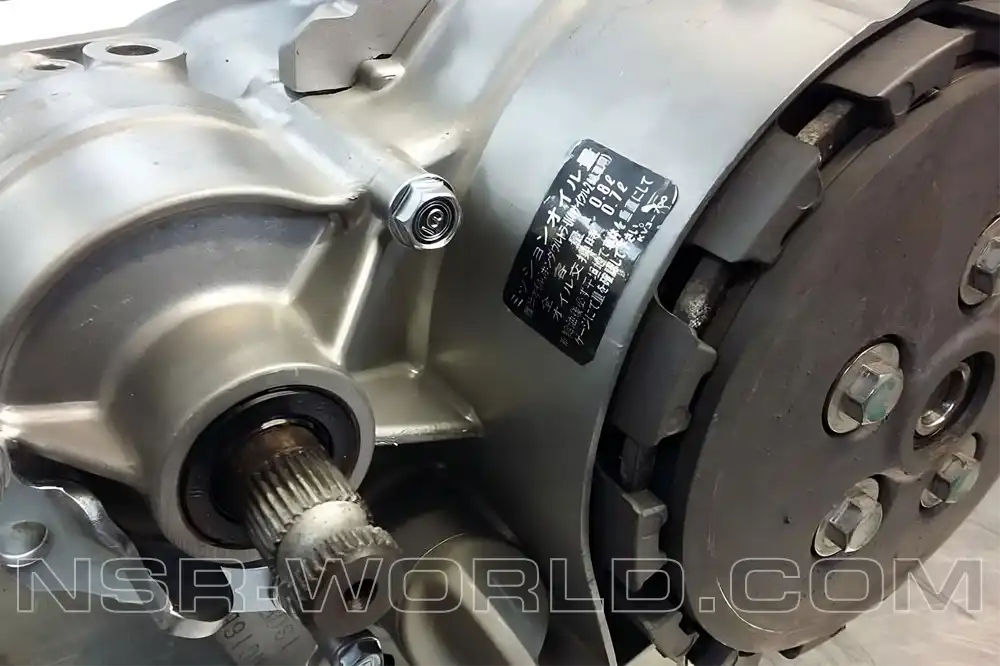
The chassis wasn't the only area enhanced on the MC18 R6K. The infamous dry clutch appeared on the NSR250R-SP for the first time in 1989.

The chassis wasn’t the only area enhanced on the MC18 R6K. The infamous dry clutch appeared on the NSR250R-SP for the first time in 1989.

The NSR250R-SP’s dry clutch increased the efficiency of the transmission as it no longer churned through transmission oil, and enabled rapid changing of the steel and fibre plates without the need to drain the gearbox. It also meant that as the clutch wore, there was no premature contamination of the transmission fluid, which itself could lead to poor performance and missed gear changes.

Whilst more efficient, the dry clutch setup weighs a little more than the conventional wet clutch in other NSR models. Despite the lighter Magtek wheels, the R6K actually weighed 1kg more than the R5K, largely down to the clutch. (A small proportion of the weight increase was also due to the SP’s heavier rear shock.)

SPEC: 1989

NSR250R [MC18-II]

Engine type:  90-degree V-type 2-cylinder
Capacity: 249cc
Bore x Stroke: 54.0 x 54.5mm
Power: 45PS @9,500rpm
Torque: 3.8kg-m @8,000rpm
Weight (Dry): 131kg / 132kg SP
Price ¥599,000 / ¥689,000 SP (1989)

SPEC: 1989

NSR250R [MC18-II]

Engine type:  90-degree V-type 2-cylinder
Capacity: 249cc
Bore x Stroke: 54.0 x 54.5mm
Power: 45PS @9,500rpm
Torque: 3.8kg-m @8,000rpm
Weight (Dry): 131kg / 132kg SP
Price ¥599,000 / ¥689,000 SP (1989)

SPEC: 1989

NSR250R [MC18-II]

Engine type:  90-degree V2
Capacity: 249cc
Bore x Stroke: 54.0 x 54.5mm
Power: 45PS @9,500rpm
Torque: 3.8kg-m @8,000rpm
Weight (Dry): 131kg / 132kg SP
Price ¥599,000 / ¥689,000 SP

Leave a Reply

Your email address will not be published. Required fields are marked *