NSR-WORLD.COM

NSR-WORLD.COM
On November 20th 1987 the MC18 was unveiled. Officially on sale from January 19th 1988, it was completely revised from the previous MC16 model, sharing no common parts.
It's official designation was NSR250R-2J, but is commonly referred to, particularly in Japan, as the MC18 PGM-1.
1988 NSR250R [MC18-I]
Mirroring the rapid development in Grand Prix, the 1988 MC18-I saw a massive overhaul from the previous model.
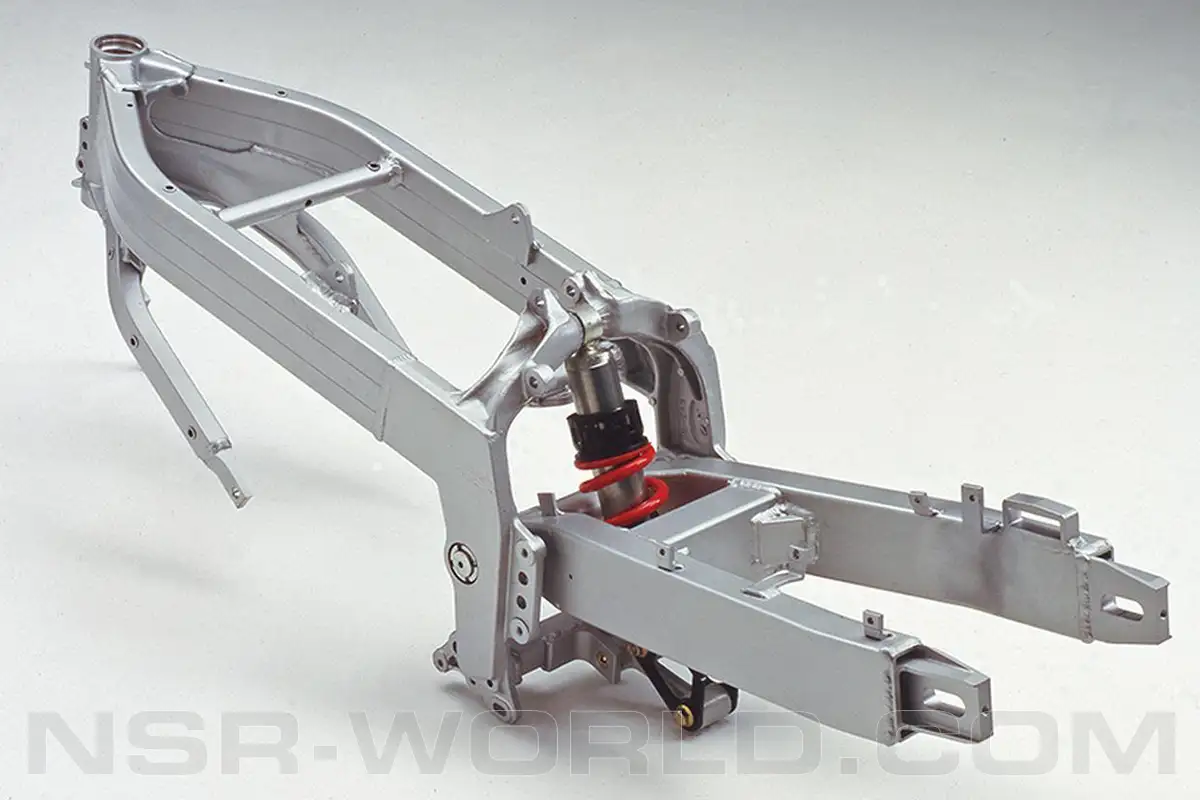
The chassis now sported 6-spoke Enkie alloy wheels (3″ front/4″ rear) and a new stiffer pentagonal section frame based on the GP bikes, but with detachable steel subframe.
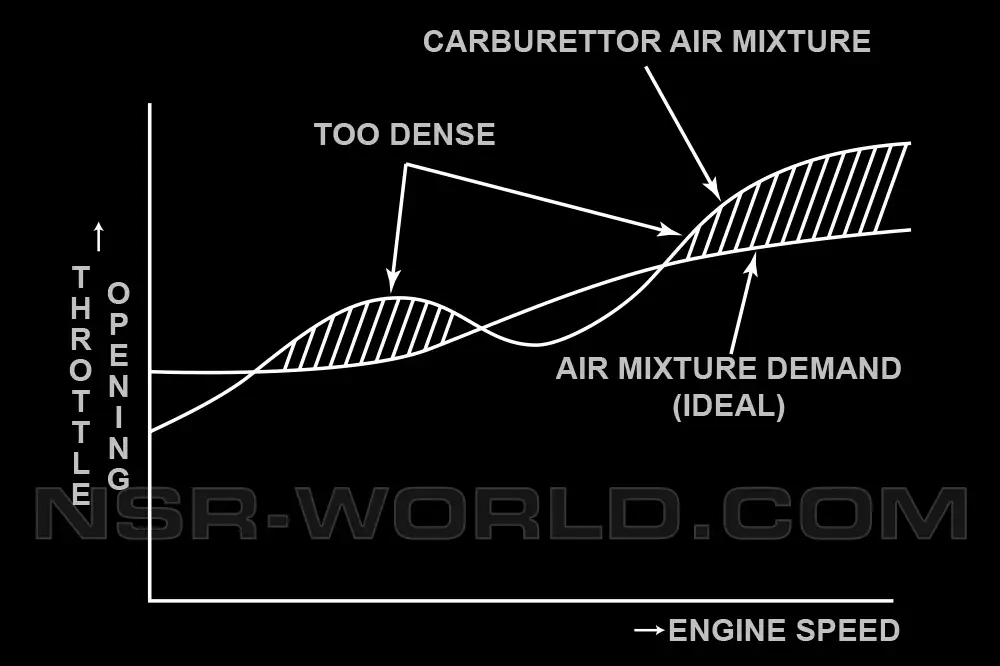
The revised MC18 motor came equipped with new 32mm TA20A carburettors, with a “computer controlled” air correction circuit. The compression and exhaust port area were both increased, with new cylinder heads and barrels, with redesigned RC Valve flaps.
While still limited to 45hp to comply with Japan’s licensing laws, the MC18 R2J (and the later R4J-SP) is the simplest of the NSR’s to delimit, with around 60hp readily available.


Click to enlarge
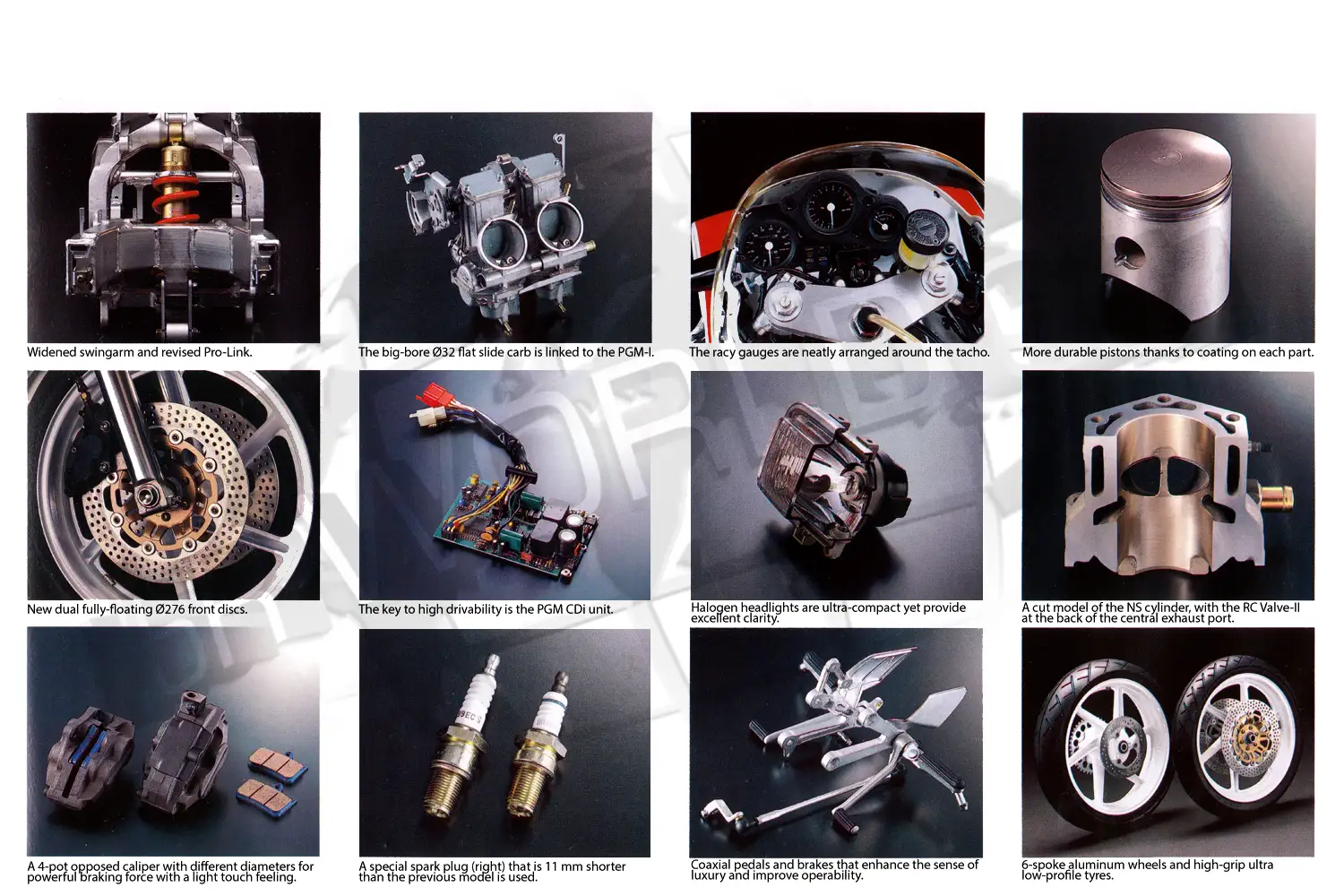



The PGM-I system comprised of three updated elements for the NSR250R MC18R2J.
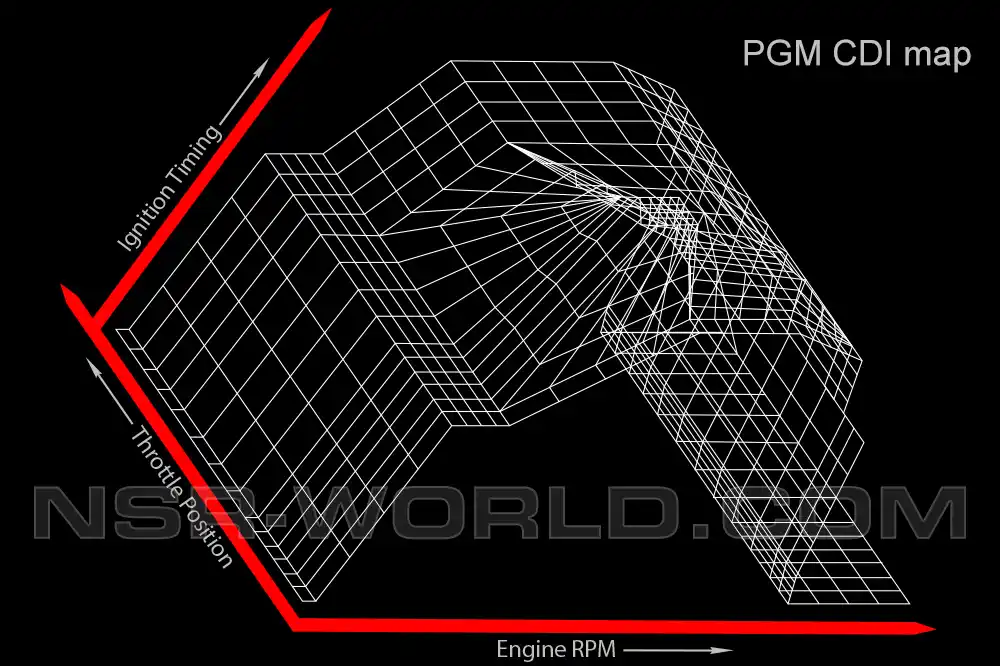
The MC18 no longer sported the twin individual CDIs of the MC16. They were now incorporated into a single “PGM-CDI” unit, with unique ignition maps for both front and rear cylinders.
The new “PGM-Carburetor” system controlled both the air correction and oil pump delivery to tailor the mixture to its optimum levels depending on riding conditions, and the “PGM-RC Valve” adjusted the exhaust valve position to give optimal performance across the entire rev-range.
The 1988 chassis received a complete makeover from the 1987 MC16.
The new frame used the triple box-section pentagonal extrusion similar to that used on the 1987 NSR250 NV1C, increasing stiffness over the previous model. A wider swingarm was added to accomodate the new 4″ wide Enkei 6-spoke wheel, wrapped in a radial tyre for the first time. Increasing the swingarm’s width also increased its torsional stiffness.
An 11mm shorter [BR9ECM] spark plug was employed, allowing more clearance to the new 3″ front wheel (up from the MC16’s 2.5″), and consequently allowed a 2° reduction in rake to sharpen the steering. The new setup also put a little more weight over the front-end, increasing feedback and grip. The fork diameter was increased from 39mm to 41mm, again increasing stiffness, & was equipped with preload adjusters.
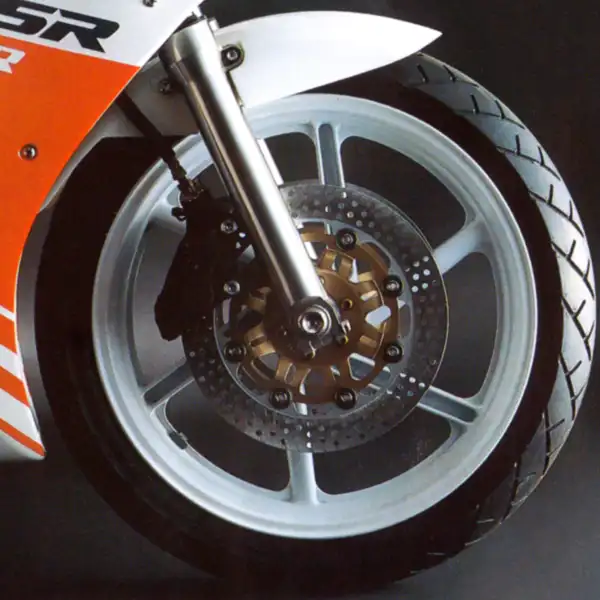
The braking system was a significant upgrade in 1988, particularly at the front. The MC16’s 256mm front discs were replaced with 276mm fully-floating, cross-drilled items, that were now clamped by NISSIN 4-pot calipers, similar to those seen on the 1987 VFR750R RC30. A 220mm rear disk with smaller lighter single-piston caliper was fitted to the R2J’s slightly wider swingarm to accomodate the 4″ wide Enkie 6-spoke alloy wheel.
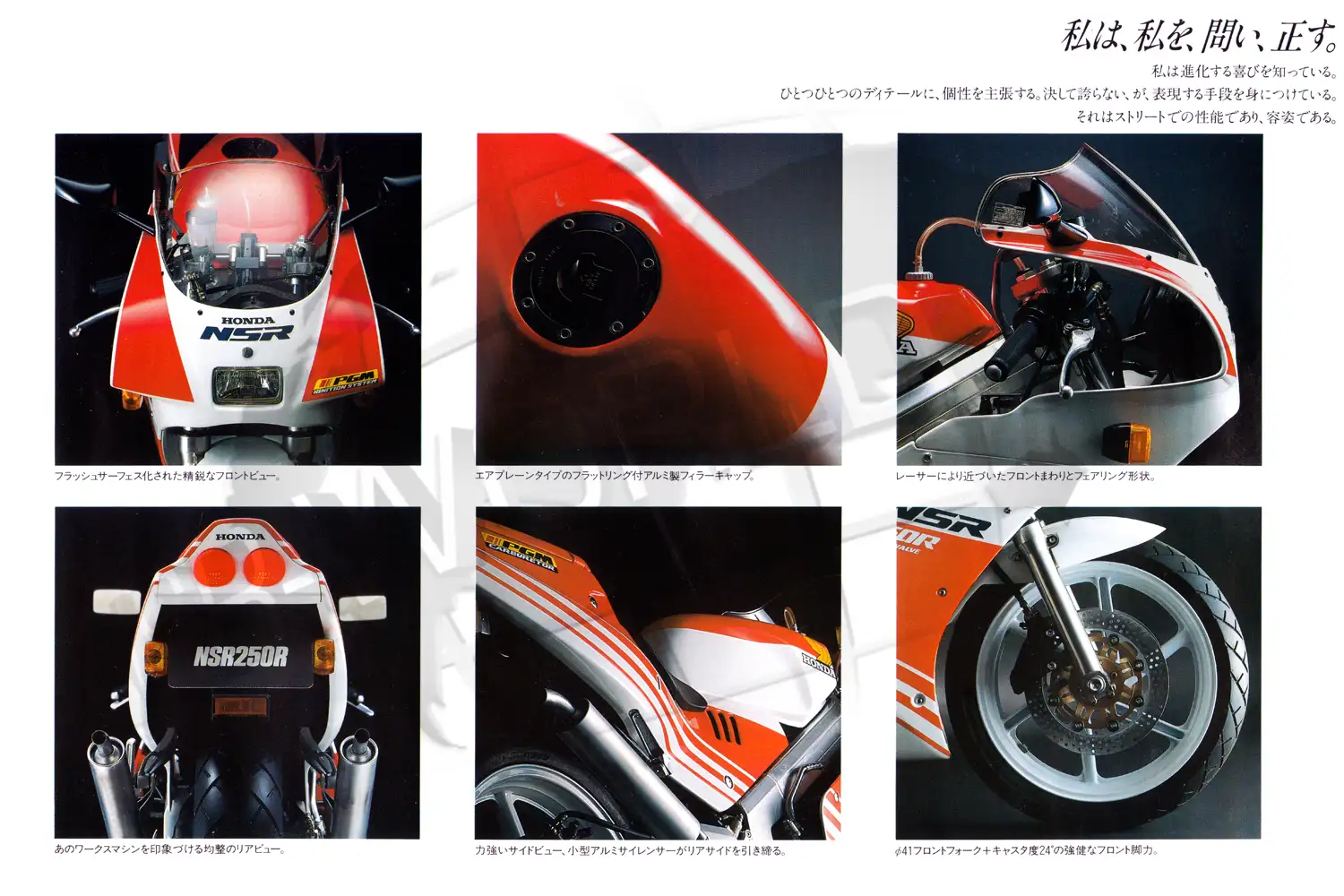

It's racer silhouette, higher swept pipes, and the now familiar 6 spoke Enkei alloy wheels, combine with the almost token gesture of a headlight and mirrors to make it a real racer for the highway!
Sleaker, more aerodynamic bodywork was based on the Grand Prix bikes, with twin round tail lights mimicking 500s upper silencers exiting the seat unit. A tiny multi-focus reflector with 60/55W halogen H4 headlight made the front cross-section of the fairing much lower than the MC16. Once again the model was released in red & white, or blue and white.


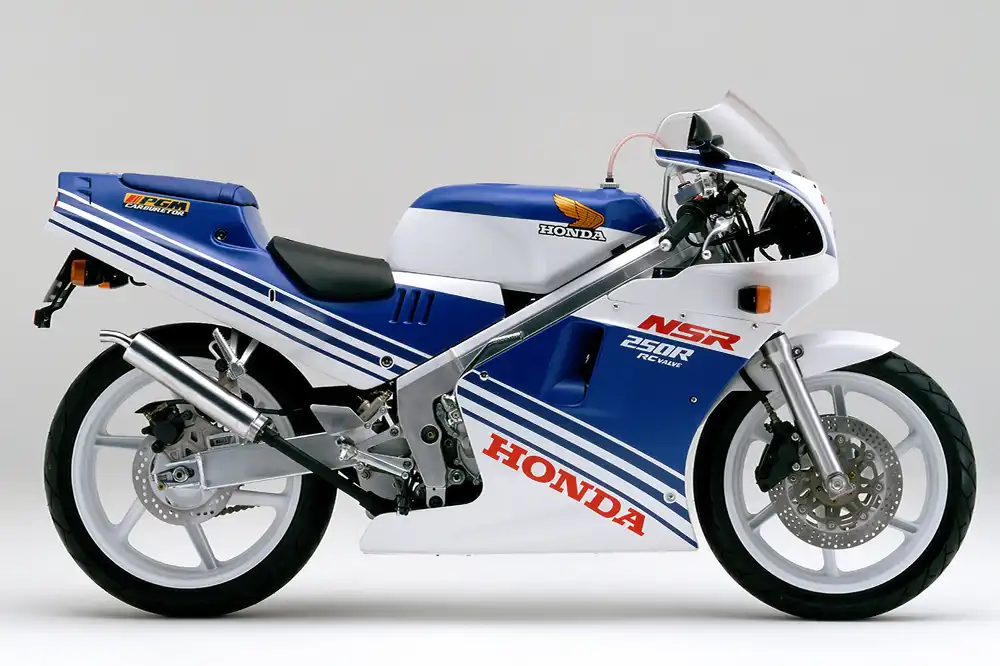
On the 25th of March 1988, the first NSR250R SP "Sports Production" was released, painted in the Rothmans Racing livery of the works HRC NSR500.

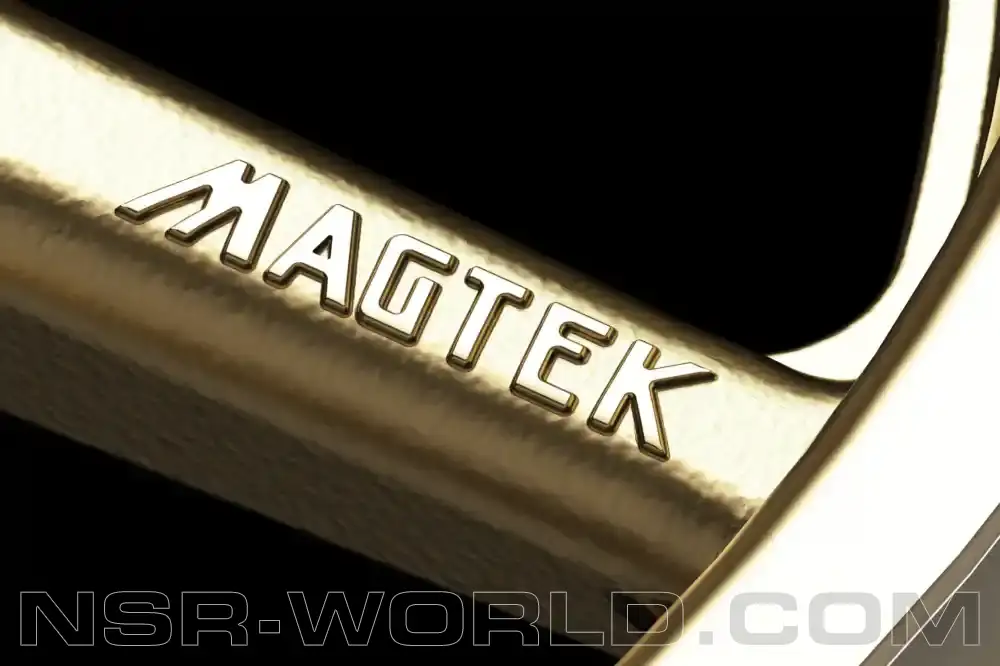
In keeping with its reputation for cutting edge technolody, the NSR250R-SP R4J was the world’s first mass-produced sports bike to be fitted with magnesium wheels front and rear.
The Magtek wheels were a joint development with Nippon Light Metal Co., Ltd. utilising die casting manufacturing to produce a very dense, yet lightweight wheel, with an approximate saving of a claimed* 1.5kg over the R model’s pair of aluminium alloy Enkeis. (*The reality is a saving of 1kg.)
There were no other differences with the initial Sports Production model, but things would certainly change for the upcoming NSR250R MC18 R6K SP model in 1989.
SPEC: 1988
NSR250R [MC18-I]
Engine type: 90-degree V-type 2-cylinder
Capacity: 249cc
Bore x Stroke: 54.0 x 54.5mm
Power: 45PS @9,500rpm
Torque: 3.8kg-m @8,500rpm
Weight: 127kg / 126kg SP (Dry)
Price ¥579,000 / ¥660,000 SP (1988)
SPEC: 1988
NSR250R [MC18-1]
Engine type: 90-degree V-type 2-cylinder
Capacity: 249cc
Bore x Stroke: 54.0 x 54.5mm
Power: 45PS @9,500rpm
Torque: 3.8kg-m @8,500rpm
Weight: 127kg / 126kg SP (Dry)
Price ¥579,000 / ¥660,000 SP (1988)
SPEC: 1988
NSR250R [MC18-1]
Engine type: 90-degree V2
Capacity: 249cc
Bore x Stroke: 54.0 x 54.5mm
Power: 45PS @9,500rpm
Torque: 3.8kg-m @8,500rpm
Weight: 127kg / 126kg SP (Dry)
Price ¥579,000 / ¥660,000 SP


2 Comments
To think these bikes hark from the 1980’s and are almost 40yrs old is crazy. Thank god I grew up in era where we actually got to not only ride them – but raced your mates in clouds of blue smoke on the way home from college or to the local chippie at lunchtime.
Add to that, the engineering and performance of both the 80s~90s 250cc 2-strokes and 250/400cc 4-strokes far outweigh that of the current era!
I would say the only thing the modern bikes have in their favour is fuel injection and electronics.