RC Valve is Honda's exhaust powervalve technology, and the key to the NSR250R's near legendary flexibility.

Setting of the RC Valve is absolutely crucial to peak performance of the NSR250R, and a valve too far open can be as disruptive as one not open enough!

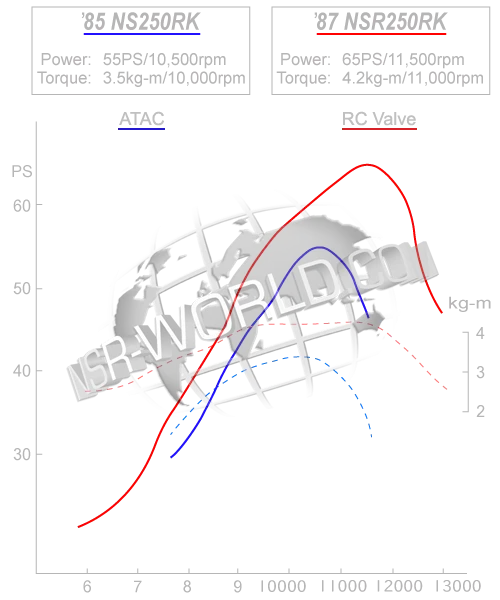
1985 NS250RK vs 1987 NSR250RK dyno graphs
RC Valve adjustment
Follow these simple steps to adjust the RC Valves for your particular model:

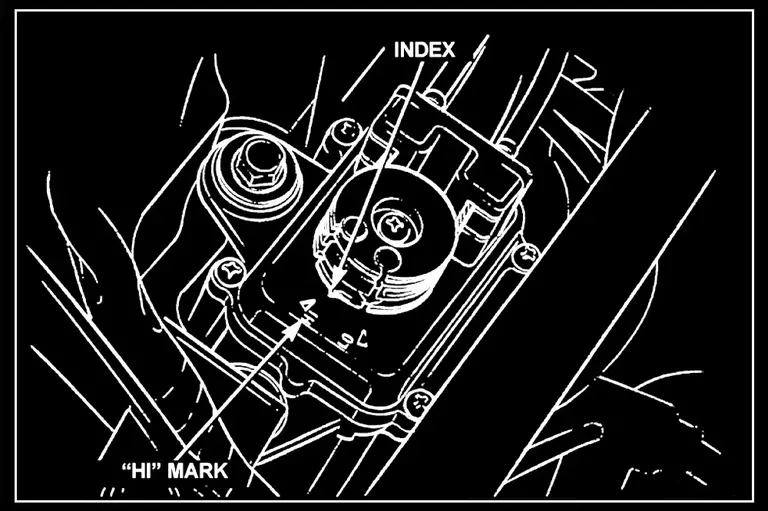
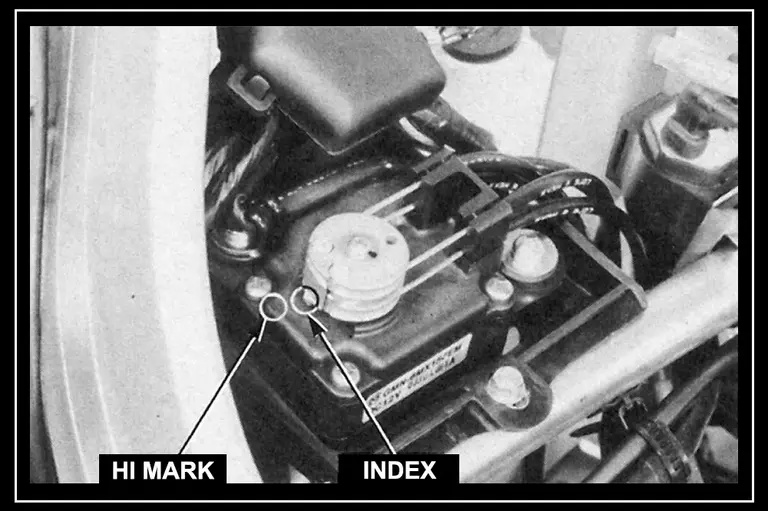
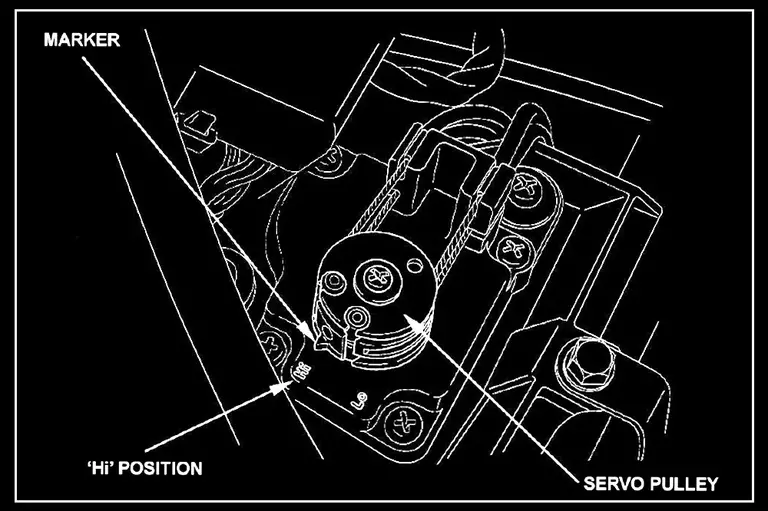
Start the engine, and slowly increase the engine speed. At approximately 2000rpm the RC Servo pulley will rotate to the “HI” position. Stop the engine with the kill switch.

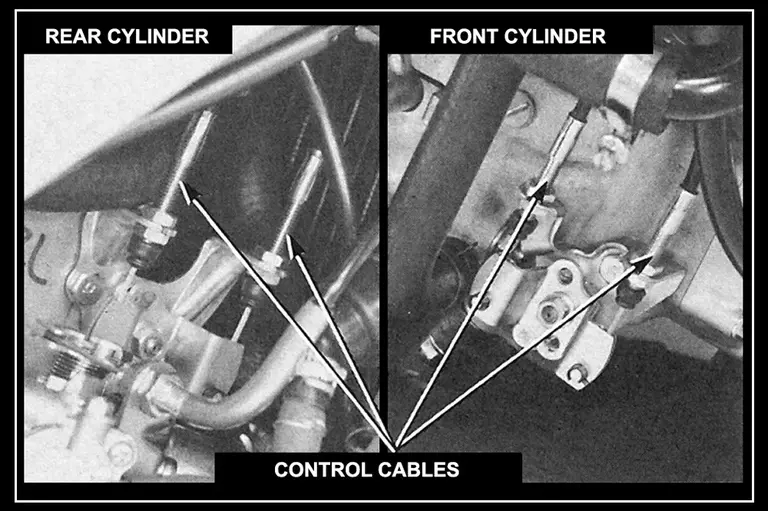
Loosen the cable locknuts, and slacken the actuator cables.

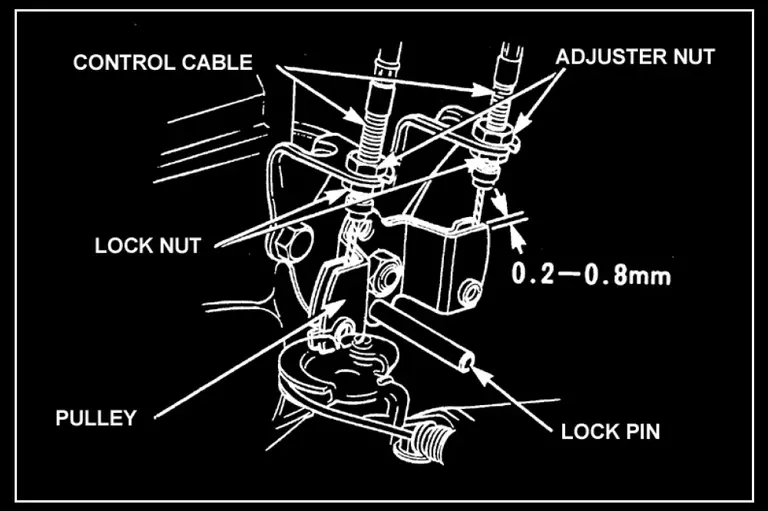
Insert knock pins into the RC Valve pulleys to lock them in the open position.

Adjust the cables so the pulleys have 0.5mm of free play. Tighten the locknuts securely.

Torque: 0.9 – 1.2 kg-m

Start the engine and slowly increase the engine speed to
around 2,000 rpm and check that the pulley moves clockwise
to a stop. Increase the engine speed to 3,000 rpm and check
that the pulley moves counter-clockwise to a stop.

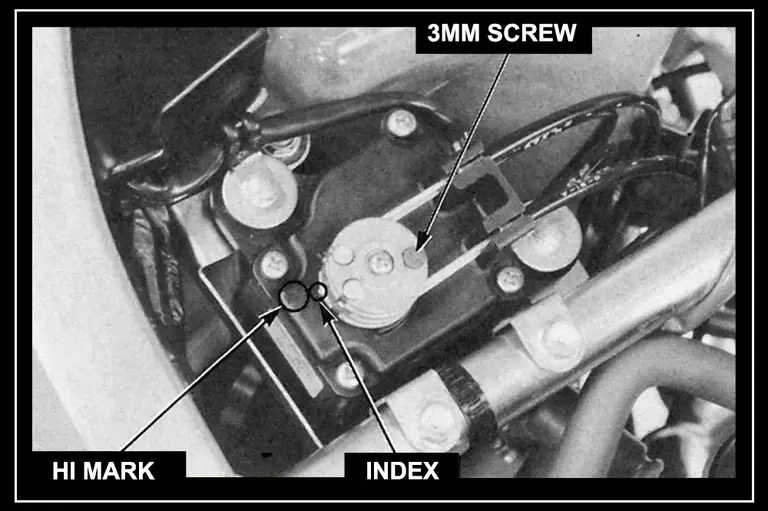
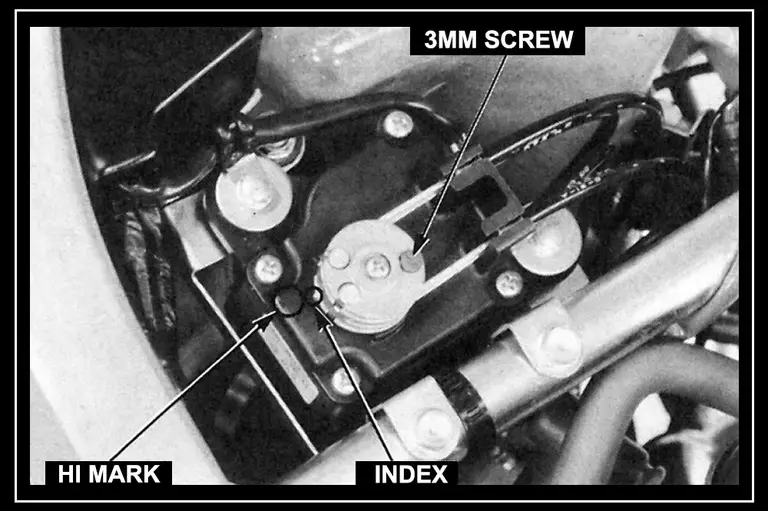
Start the engine, and slowly increase the engine speed. At approximately 2000rpm the RC Servo pulley will rotate to the “HI” position. Stop the engine with the kill switch. Using a 3mm screw, tighten the screw in the pulley to prevent the pulley from moving.

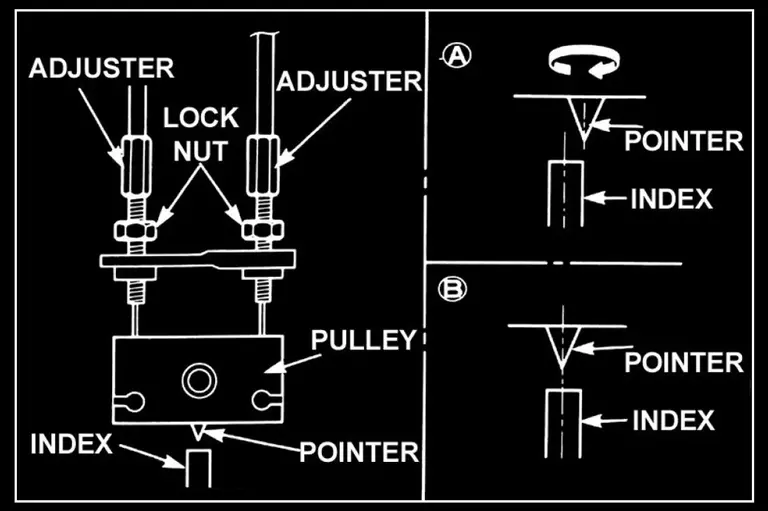
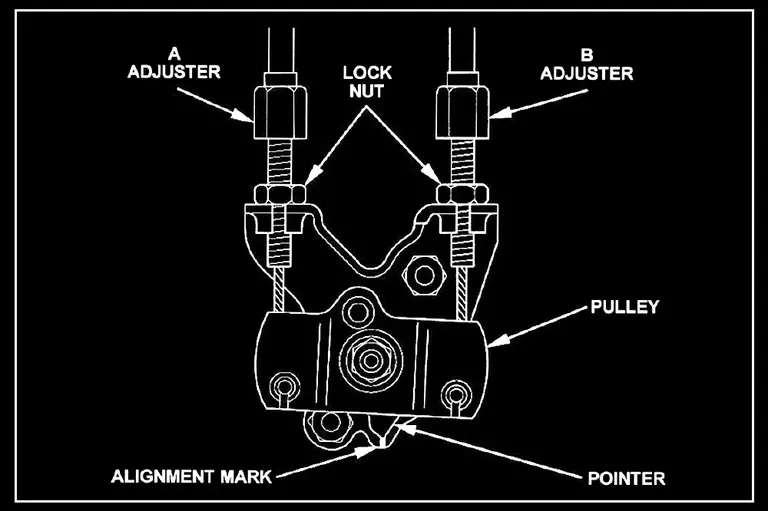
Loosen the lock nuts on both adjuster cables. Adjust the cables at the pulley end so the pointer aligns with the alignment mark on the back plate.

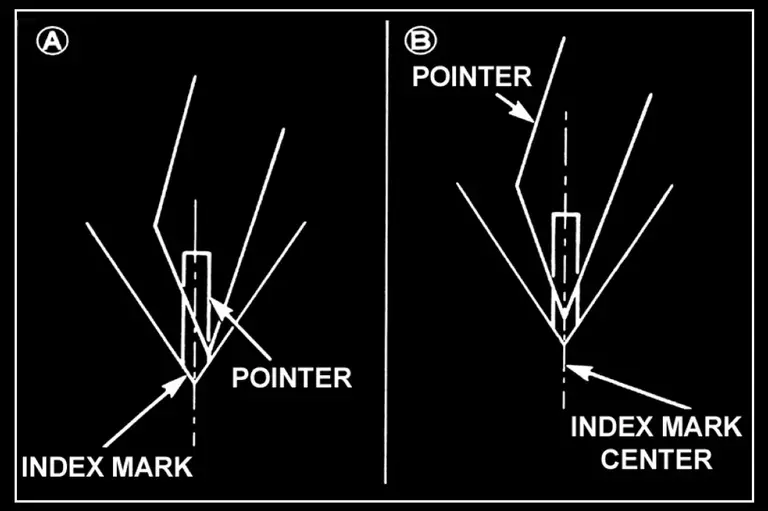
Turn the right adjuster cable so the pointer aligns with the right side of the adjustment mark as shown in (A).

Turn the left adjuster cable until the pointer aligns with the centre of the adjustment mark as shown in (B).

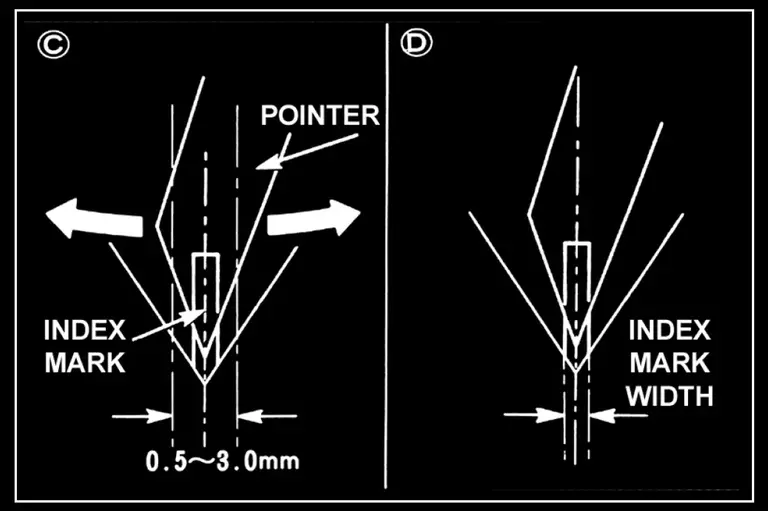
The pulley free play should be 0.5-1.0mm of free play. Adjust the left and right adjuster cables to allow for the proper free play. 

Tighten the lock nuts on the left and right adjuster cables with the pointer aligned in the middle of the alignment mark as shown in the diagram.

Start the engine, and slowly increase the engine speed. At approximately 2000rpm the RC Servo pulley will rotate to the “HI” position. Stop the engine with the kill switch. Using a 3mm screw, tighten the screw in the pulley to prevent the pulley from moving.

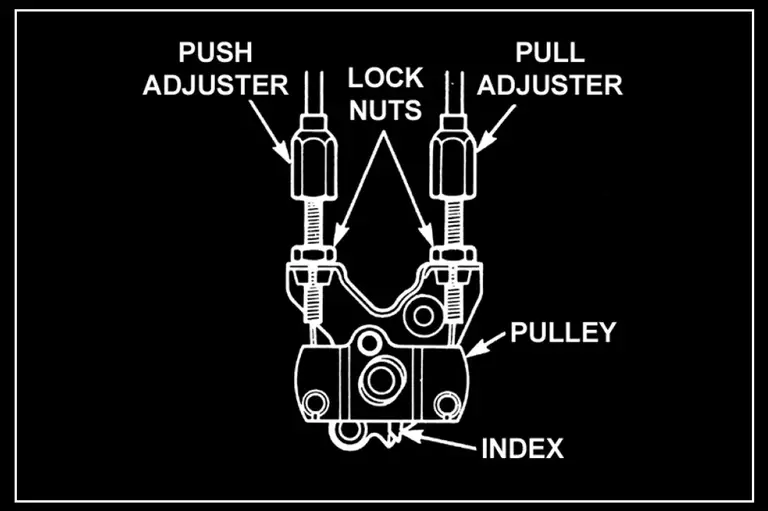
Loosen the cable locknuts, and slacken the actuator cables. Adjust the cables at the pulley end so the pointer aligns with the alignment mark on the back plate as shown in (B).

Turn the pull adjuster cable so the pointer aligns with the right side of the adjustment mark as shown in (A).

Turn the push adjuster cable till the pointer aligns with the centre of the adjustment mark as shown in (B).

The pulley free play should be 0.5-3.0mm of free play as shown in (C). If the pulley free play is less then 0.5mm (cable is too tight) or over 3.0mm (cable too loose) follow the previous steps until properly adjusted

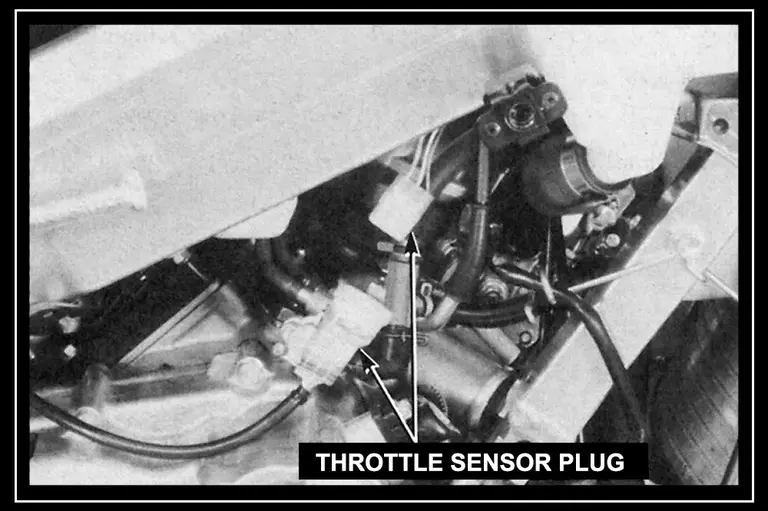
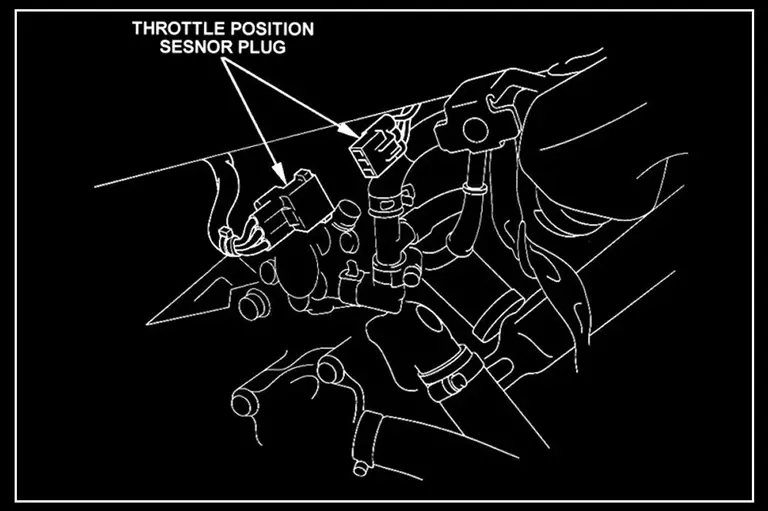
Turn the ignition off and switch the kill switch to the OFF position. Disconnect the Throttle Position Sensor plug. Turn the ignition switch ON, and check that the RC valve servo marker rotates to the “HI” position.

Loosen the lock nuts on the push/pull adjuster cables. Adjust the cables at the pulley end so the pointer aligns with the alignment mark on the back plate.

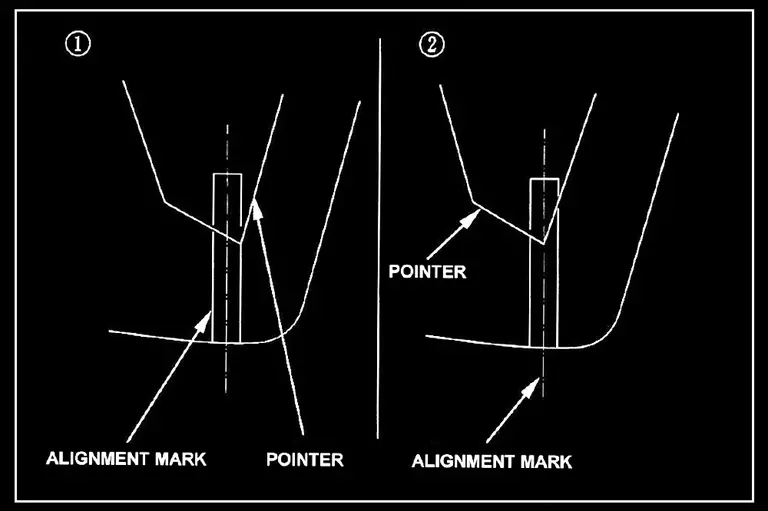
Turn the pull adjuster cable so the pointer aligns with the right side of the adjustment mark as shown in diagram 1.

Turn the push adjuster cable till the pointer aligns with the centre of the adjustment mark as shown in diagram 2.

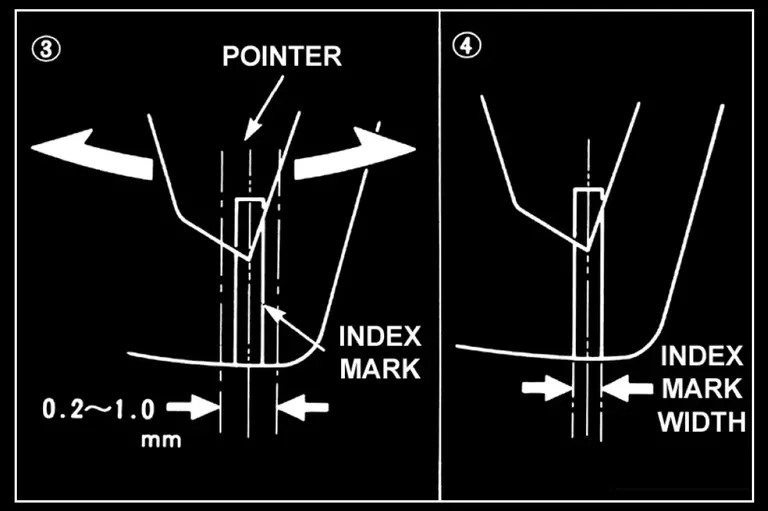
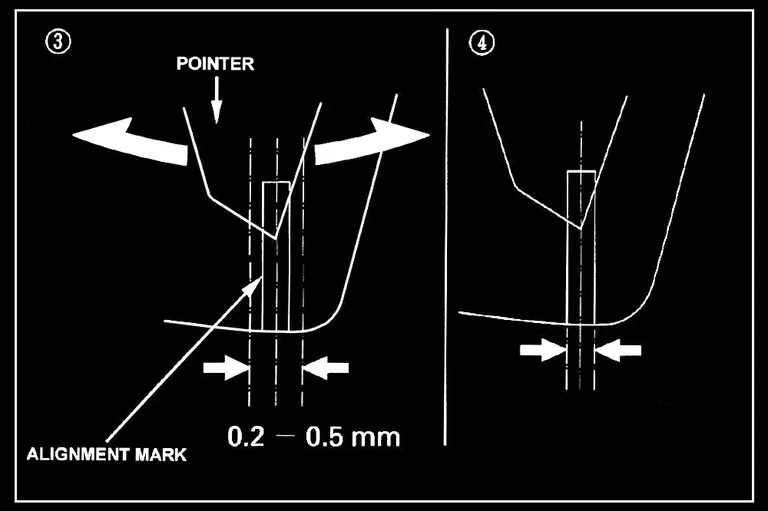
The pulley free play should be 0.2-1.0 mm as shown in diagram 3. Follow steps 1 and 2 until properly adjusted.

Tighten the lock nuts on the push and pull adjuster cables with the pointer aligned in the middle of the alignment mark as shown in diagram 4.

Adjust the other cylinder following steps 1, 2, 3 and 4.

Turn the kill switch to the OFF position. Connect the throttle position sensor connector/coupler.

With the PGM card removed, and the engine stop switch in the OFF position, disconnect the throttle position sensor plug. With the PGM card installed turn the engine stop switch to the RUN position.

The RC servo will rotate so the servo marker points to the open ‘Hi” position. Turn the engine stop switch to the OFF position.

Loosen the lock nuts on the A/B adjuster cables. Adjust the cables at the pulley end so the pointer aligns with the alignment mark on the back plate.

Turn the B adjuster cable so the pointer aligns with the right side of the adjustment mark as shown in diagram 1.

The pulley free play should be 0.2-0.5 mm as shown in diagram 3.

Adjust the A and B adjuster cables to allow for 0.2-0.5mm of free play. Follow steps 1 and 2 till properly adjusted.

Turn the A adjuster cable till the pointer aligns with the centre of the adjustment mark as shown in diagram 2.

Tighten the lock nuts on the A and B adjuster cables with the pointer aligned in the middle of the alignment mark as shown in diagram 4. Adjust the other cylinder following steps 1-4.

With the PGM card removed, and the engine stop switch in the OFF position, connect the throttle position sensor plug.

WARNING:

Correct adjustment of the RC Valve cables is critical to the health of the ’87-’88 RC servo controller and later PGM units.

Any strain arising from tight cables will cause the control circuit to overload and burn out the transistors, and potentially damage the RC servo motor too.