NSR-WORLD.COM

NSR-WORLD.COM
NSR500 & RS250R: The inaugural years.
In 1983 Honda won the world championship title with the NS500 V3, but in the same year they had already started development of a V4, the first-generation NSR500, which debuted in 1984.
1984 NSR500 [NV0A]
Unlike the rather unconventional triple-cylinder layout of the NS500 V3, HRC knew the optimum configuration for the all-new 1984 NSR500 NV0A would need to be a V4.
This however presented the engineers with a conundrum, as Yamaha were already running a YZR500 V4*, and HRC’s policy was always to ensure their solution differed significantly to the other manufacturers and lead by innovation, even though it often resulted in flawed designs… and as with the NR500 that came before it, the NV0A would come to be remembered as one of HRC’s classic flawed failures!
HRC decided to go radical with the chassis, and it was determined that the fuel tank should be moved under the engine, with an electric fuel pump feeding a small header tank up behind the headstock. Individual lines then lead off the header tank to the bank of gravity fed bespoke Keihin magnesium carburettors sat behind the top two cylinders. This in turn would require the exhausts to be routed up and over the engine. A fake cover in the form of a fuel tank, with a substantial amount of heat shielding, gave the rider some level of protection from the extreme temperature of the four titanium expansion chambers.
The frame itself was Honda’s first departure from the square box tubing of the earlier NS500, with twin beams running from the headstock down to the swingarm pivot, and square box tubing supports running under the motor in a cradle format.
The layout was an attempt to place the centre of gravity [CoG] low for stability, but in reality, as fuel was burned off, the rising CoG made the handling somewhat unpredictable, unstable, and disconcerting, and results fell short of expectations.
With the majority of the weight low in the chassis, the rider was unable to sufficiently compress the suspension and “load” the front wheel under braking, which in turn would lead to seriously reduced braking efficiency, tending to push the front-end deep into the braking zone. The engine, however, with its claimed output of [in typical HRC fashion] “over 140PS” @11,500rpm was top-class, and displayed the NSR500 V4’s potential. However, while HRC reverted to a conventional configuration for 1985, the NV0A wouldn’t be the NSR500 that would be plagued with handling issues.
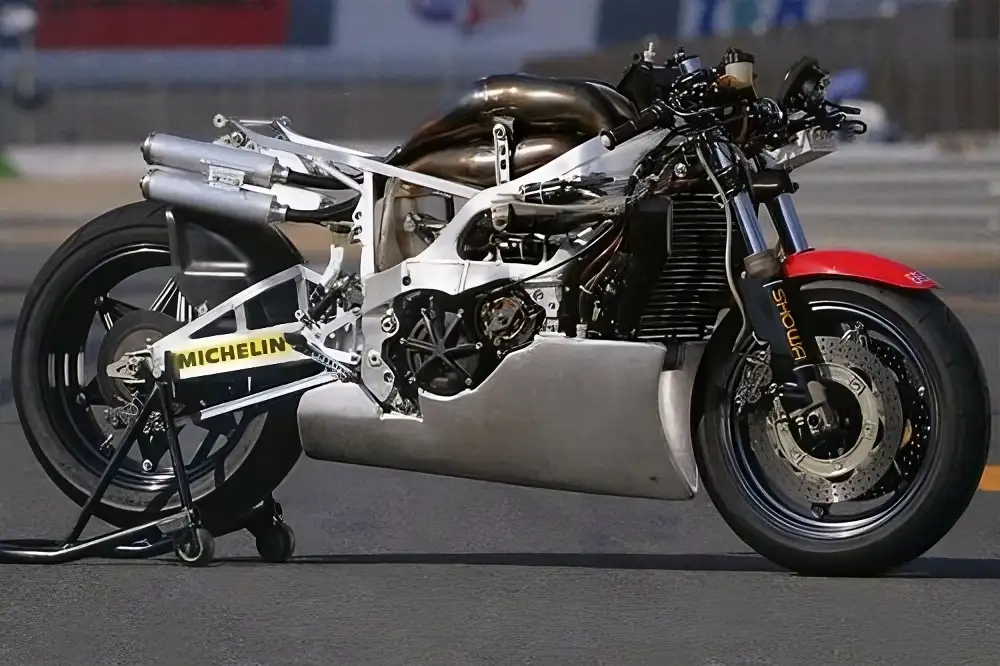
1984 NSR500 [NV0A]
An all-new 90° V4 motor and a radical frame design saw in the first of the NSR500s.
Many of the chassis components of the NV0A were inherited from the previous NS500 [NS2B] so HRC could focus their attention on the development of the V4 powerplant.
Whilst unable to match the success of Honda’s previous generation of triple cylinder bikes, the new V4 motor was a leap forward for HRC and showed huge potential.
Many of the chassis components of the NV0A were inherited from the previous NS500 [NS2B] so HRC could focus their attention on the development of the V4 powerplant.
Whilst unable to match the success of Honda’s previous generation of triple cylinder bikes, the new V4 motor was a leap forward for HRC and showed huge potential.
The 1984 NSR500 NV0A was the first Grand Prix motorcycle to run Michelin's new radial slicks.
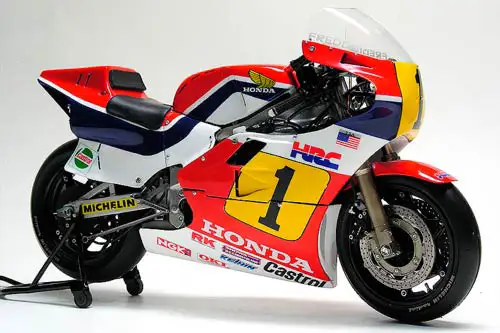
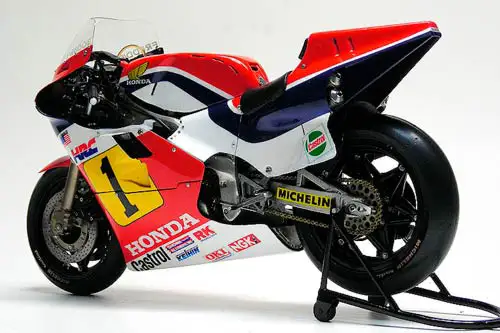
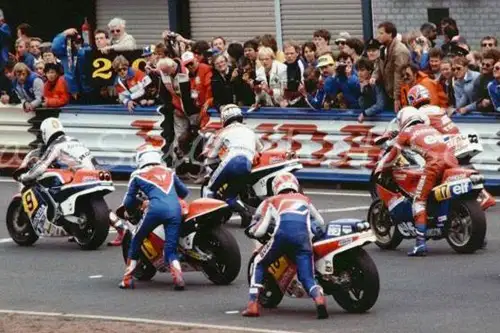
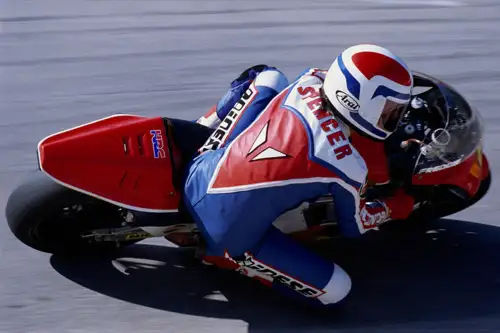
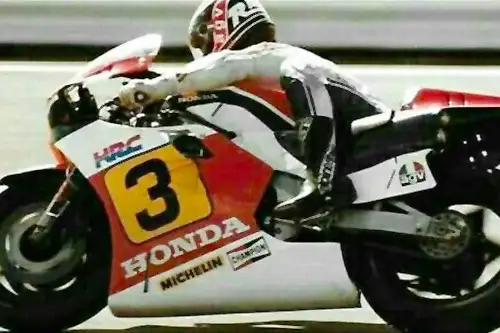
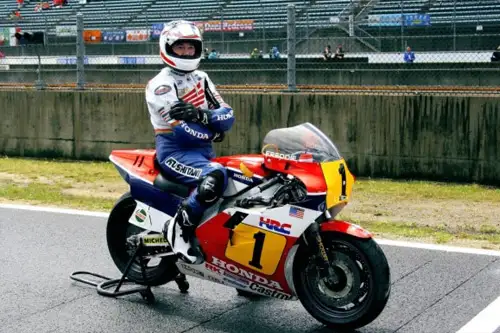
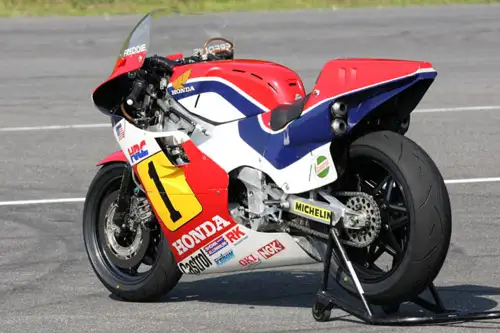
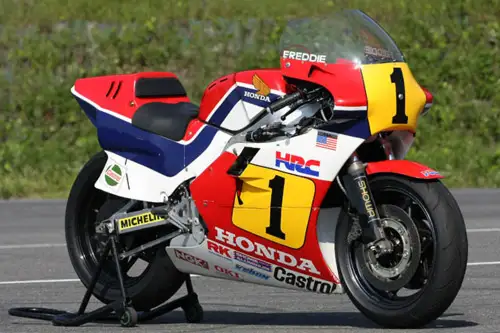
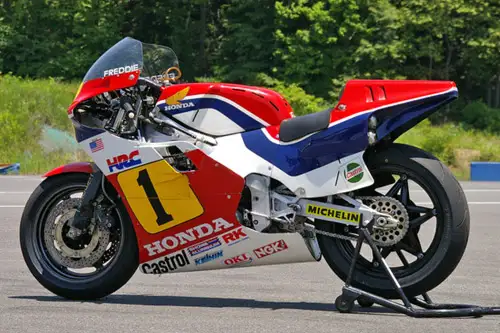
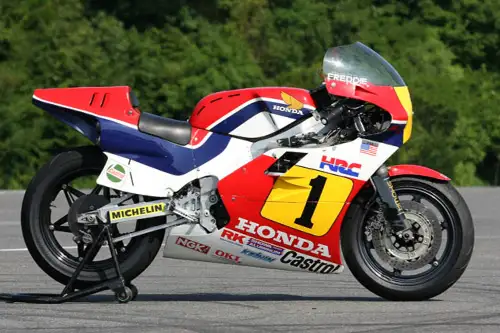
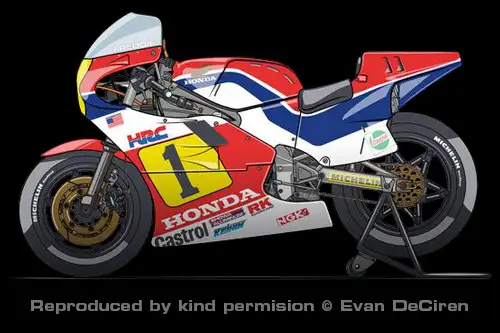
Despite the groundbreaking tyre construction resulting in the development of greater contact patches and cooler running than the crossplies used on the NS500, it wasn’t enough to overcome the new V4’s handing deficiencies.
In addition to the handling problems, the layout of the motor also provided additional complications for the technicians. Unlike the later V4s, where the carburettors would eventually be situated at the front of the motor in the “vee” between the upper and lower cylinders, the 1984 NSR500 motor had the bank of four magnesium Keihin PE-derived 34mm carburettors located behind the top two cylinders.
This would’ve been fine if they weren’t shrouded by the exhpansion chambers, but the excessive heat generated by the exhausts made not only jetting and spark plug changes labourious, but also dramatically effected the intake air temperature. This caused power to drop off significantly and the carburetion to become erratic.
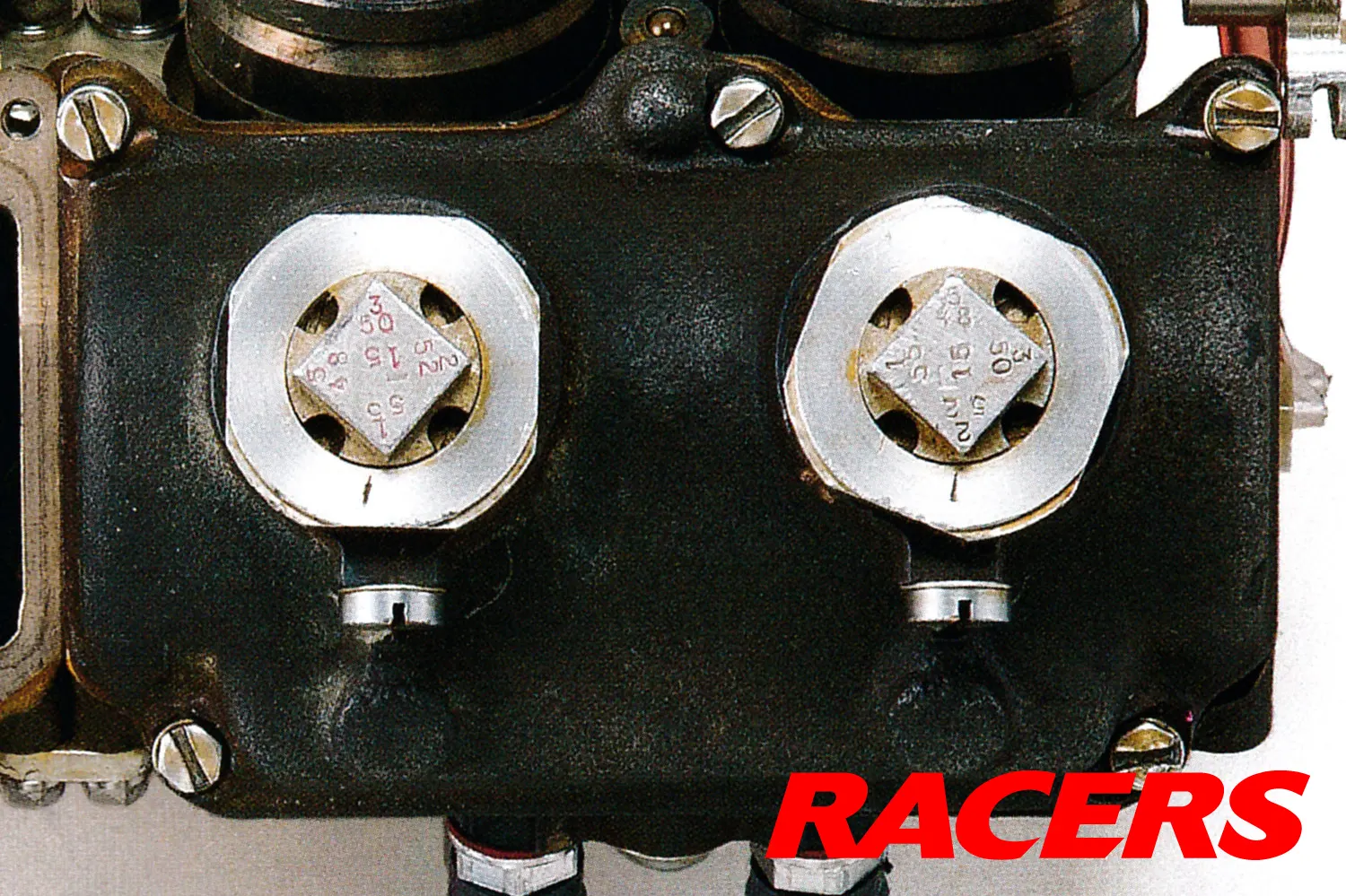
The HRC engineers devised an ingenious rotating multi-position main jet especially for the NV0A that had four positions [ranks] of adjustment, so the jetting could be tweaked with the carbs in situ.
Despite this “solution” to a problem of their own making, the technicians still opted to pull the carbs to rejet them each time, due to a feeling of uncertainty regarding the main jet’s position. Even a task as simple as a “plug chop” [crucial to 2-strokes] became a major operation, requiring time to allow the expansion chambers to cool suitably before they could be removed to check the colour of the spark plugs. A scenario in itself that became highly frustrating for the technicians, especially when the results of the plug chop didn’t indicate a requirement to change any settings!
Given it’s challenging handling characteristics and inconsistent power output, under great protest by HRC and Honda top brass, Freddie Spencer would eventually revert back to an NS500 V3 for the latter part of the season.
The NSR would still make an appearance at Silverstone with Randy Mamola onboard, where he took the win, as HRC tried to iron out the handling problems and further develop the new 500c V4 2-stroke engine.
Despite its flaws, Fast Freddie still managed three wins on the 1984 NSR500 [Misano, Paul Ricard, & Automotodrom Grobnik], and with the aforementioned win by Randy at the British GP, they accounted for a third of the season’s number one step of the podium. Both riders also won two races each aboard the 1983 NS500 throughout the season.
The 1984 Riders’ Grand Prix Championship was ultimately won by Eddie Lawson on the Marlboro Yamama YZR500, although Spencer and Mamola’s combined tally of 8 wins, ten additional podiums by Honda riders Raymond Roche & Ron Haslam, and even a third place by Wayne Gardner on the Honda Britain NS500 at the Swedish Grand Prix, saw Hondas domintate the rest of the grid.
SPEC: 1984
NSR500 [NV0A]
Power: 145.4PS @11,500rpm
Torque: 9.2kgm @11,000rpm
Weight: 124.1kg
1984 RS250R [ND5A]
HRC’s first 250cc 2-stroke racer debuted in the All Japan Road Race championship in 1984.
Derived from the NS250R production bike, the racer would become the very first RS250R, and was given the internal designation of ND5A.
Both the frame and the motor were lifted directly from the NS250R production bike. The motor was then modified and tuned by HRC. The cylinder porting was optimised, the heads adapted for race fuel, and a small lightweight flywheel with adjustable stator was fitted, firing a custom CDI module provided by Kokusan Denki. The modified motor was finished off with a close ratio transmission and dry clutch reminiscent of that used on the RS and NS500. A notable feature was a pass-through shifter shaft facilitating either a left-hand side or right-hand side shift lever, as was quite common for 1970s and early ’80s competition bikes.
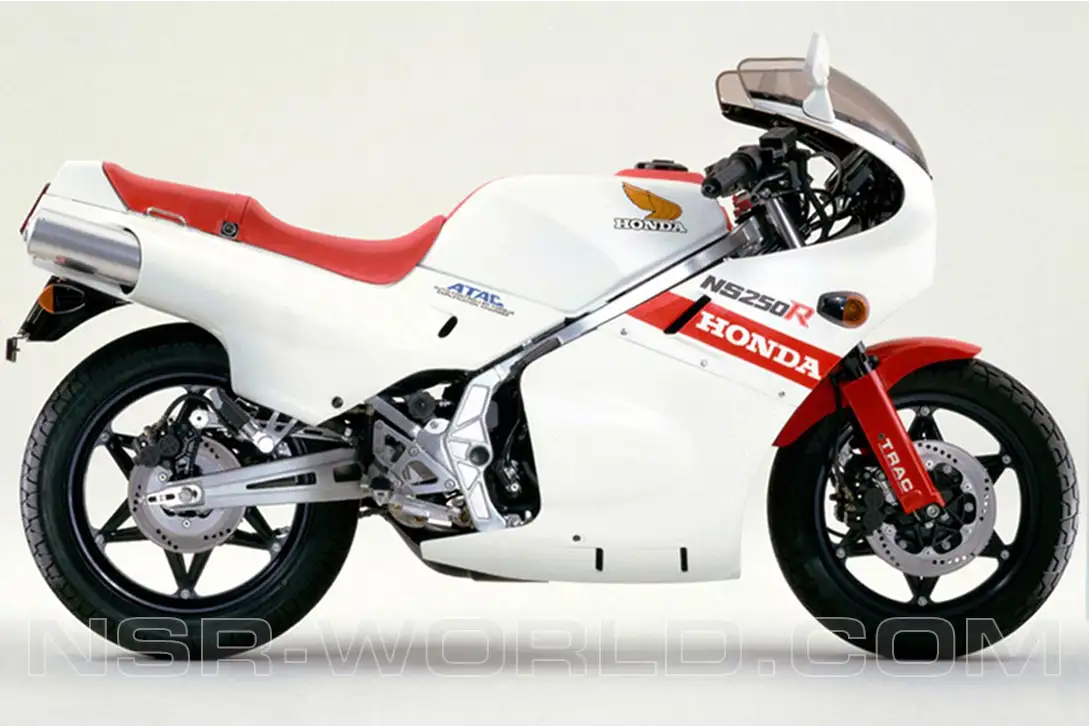
1984 NS250R [MC11]
Production bike.
- Bore/stroke : 56x50.6mm
- Power : 45PS @9,500rpm*
- Torque : 3.6kg-m @8,500rpm
- Carburettor: TA06/TA07 26mm
- Exhaust valve: ATAC
- Ignition: CDI
- Clutch: Wet Multi plate
- Fr. fork: Air assisted with TRAC
- Rr. shock: Pro-Link monoshock
- Weight: 144kg
*Limited to 45PS by Japanese licensing law.
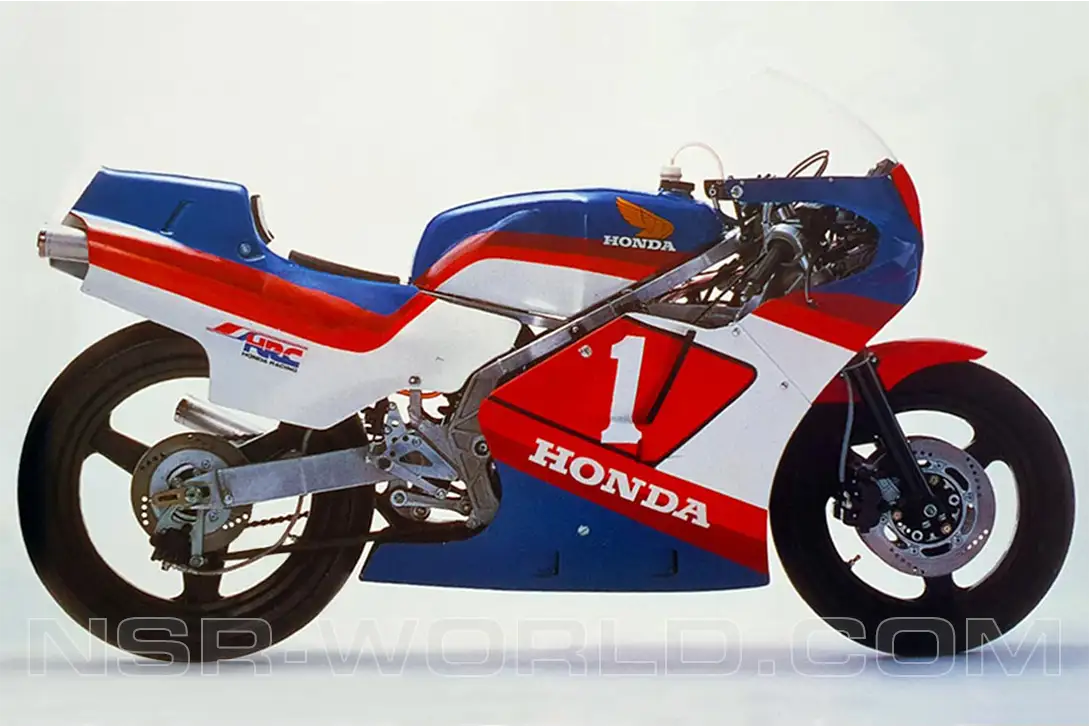
1984 RS250R [ND5A]
HRC Racer.
- Bore/stroke : 56x50.6mm
- Power : 67PS @11,750rpm*
- Torque : 4.08kg-m/11,500rpm*
- Carburettor: Keihin PE 34mm
- Exhaust valve: N/A
- Ignition: CDI - Total loss
- Clutch: Dry Multi plate
- Fr. fork: Air assisted with TRAC
- Rr. shock: Pro-Link monoshock
- Weight: Under 104kg
Both the frame and the motor were lifted directly from the NS250R production bike.
HRC fabricated a new lighter and stronger box-section swingarm to replace the cast alloy NS arm to accommodate a wider rear wheel, and small underslung lightweight scooter caliper was fitted. To further lighten the package, the NS’s Comstar wheels were substituted for 16″ & 18″ magnesium 3-spoke items front and rear respectively.
The chassis was shrouded in lightweight carbon fibre bodywork, that still closely followed the lines of the NS250R, and was finished off with a low profile alloy fuel tank with NS500 style breather.
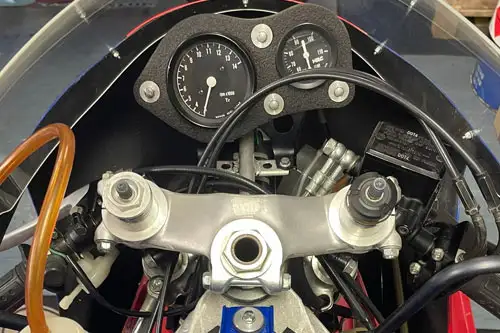
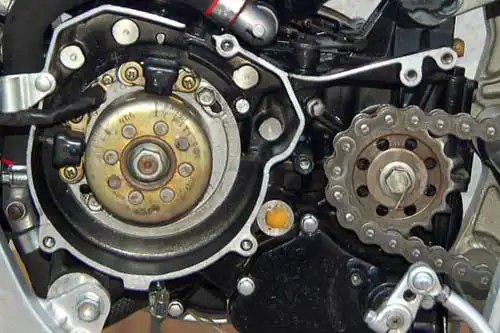
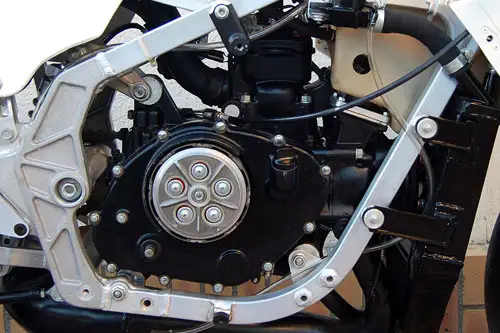
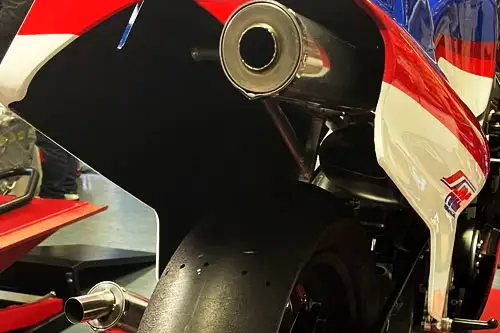
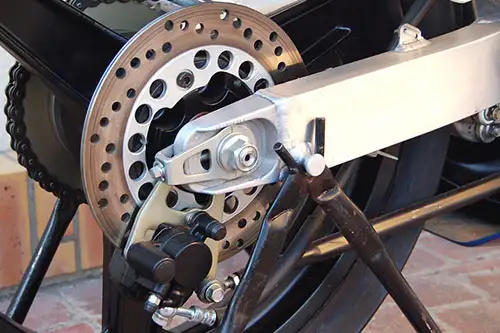
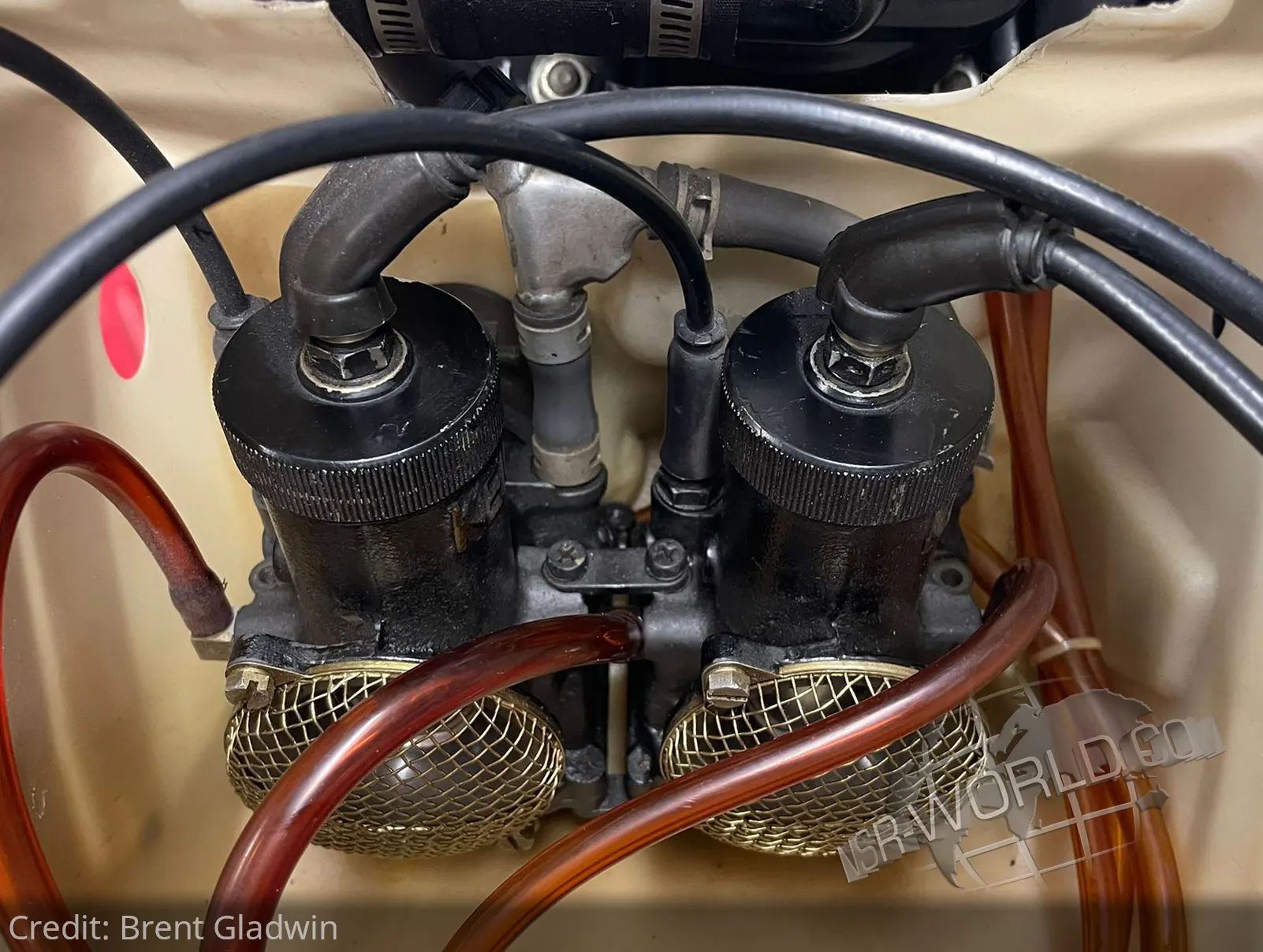
HRC works rider Masaru Kobayashi rode the new MC11 based RS250R ND5A for the first half of the season, but the bike didn’t perform as well as expected, so mid-way through the season ATAC was fitted, and the front wheel diameter increased to 18″, to match the rear and increase stability.
Six RS250Rs in total were fielded but mechanical issues and crashes saw many DNFs, and the motor lacked the outright power of the Yamaha TZs.
An RS250R did take a win at Suzuka and a second place at Sugo however, finishing 8th in the championship. Mid-way through the season the ND5A of Takao Abe was dismantled for spares for the other bikes, as he was promoted to riding a works RS250RW prototype.
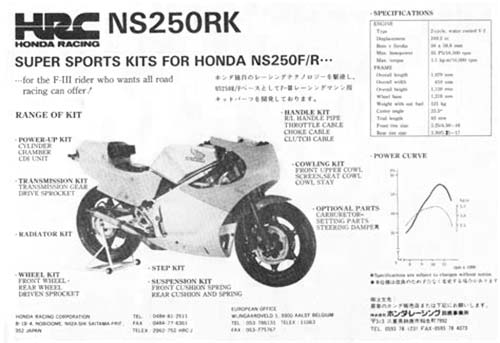
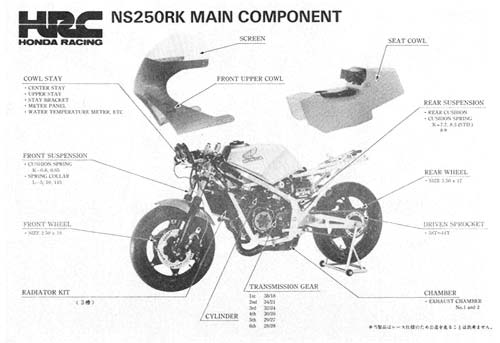
1984 NS250RK [NE8]
Due to their strong similarities, a number of the RS250R ND5A engine parts were made available for the NS250R MC11 for TT-FIII in 1985.
The production racer was designated NS250RK NE8, and Shoji Amada took the sole NS250RK of Technical Sports Kantoh to 7th overall in ’85. A total of six NS250RKs were fielded in 1986, with Masumitsu Taguchi on the Endurance Racing Team’s MC11 the highest placed at the end of the season in 6th position overall.
SPEC: 1984
NS250RK [NE8A]
Bore & Stroke: 56×50.6mm
Power: 55PS @10,500rpm
Torque: 3.5kg-m @10,000rpm
Weight: Under 125kg
RS250R [ND5A]
Bore & Stroke: 56×50.6mm
Power: 60PS @11,500rpm*
Torque: N/A
Weight: Under 125kg
*Estimated
1984 RS250RW Prototype
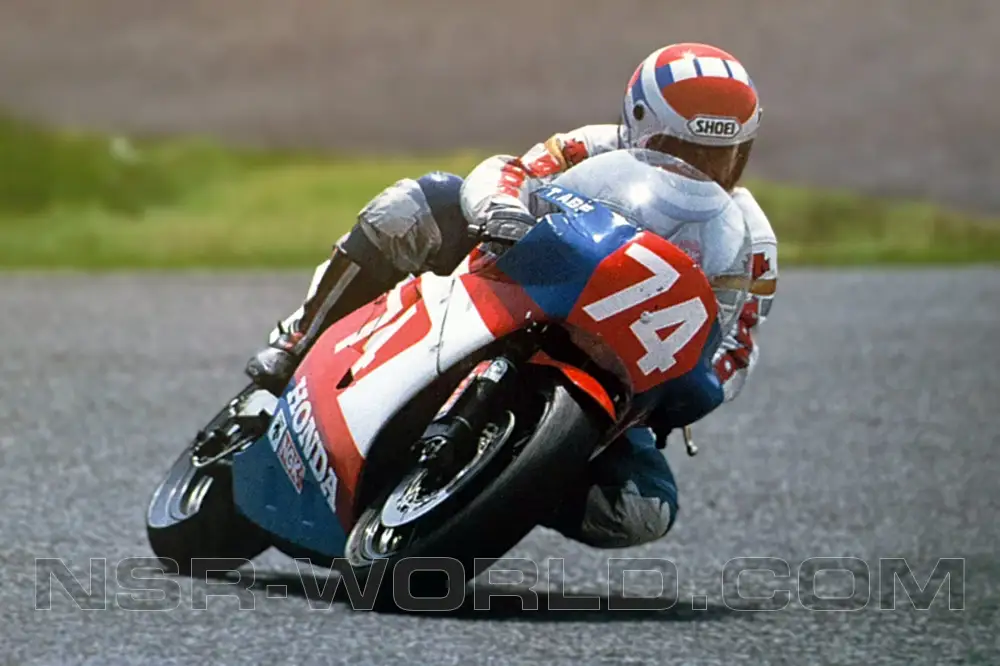
The second half of 1984 saw the emergence of an all-new RS250R Works prototype, designated RS250RW.
Covertly developed in plain sight, during the domestic All-Japan Road Racing series, it was the forerunner of Freddie Spencer's 1985 World Championship winning machine.
Built entirely from the ground up by HRC as a bespoke pure-bred GP machine, Takao Abe was chosen to take on the primary development role.
The poor performance of the MC11 based ND5A was problematic commercially for the Honda brand, so a new plan of action was sanctioned. First, a new RS250R [ND5B] was commissioned for the following season, but more importantly, work began on a dedicated factory prototype racer.
The RS250RW was conceived from an entirely clean slate. It featured a new frame, named “ULF” (Ultra Light Frame), comprising of cast swingarm pivot & headstock sections, and triple-cavity extrusions, that would become the common format for almost all future HRC 2-stroke road racers. Suspension was similar to the preceeding model, with a Pro-Link setup at the rear, and TRAC anti-dive forks up front.
The motor was the shining star of the package though, and completely brand new. It was based heavily on the NSR500, and the first Honda 250 to feature the NSR500’s 54×54.5mm “square” bore & stroke and crankcase reed valve induction. Unlike the ND5A, the barrels were both forward-facing, with the expansion chambers routed conventionally under the motor. ATAC also reappeared, but only on the lower cylinder, driven mechanically via a take-off from the primary drive located on the clutch cover.
With Abe’s feedback over the remainder of the season, further refinements were made to the chassis and suspension. A change from a 16″ to a 17″ front wheel improved handling and stabilised turn-in speed, and a second ATAC chamber was included on the upper cylinder. The upper ATAC butterfly was linked and synchronised to the lower chamber by a pushrod system, and greatly improved low-to-mid speed flexibility.
1984 RS250RW
The first RS250RW was a pure prototype, and had no internal model code designated to it.
It’s most notable for Honda’s first use of the 54×54.5 bore & stroke [of the NSR500 NV0A], crankcase reed valve induction, and its twin-spar “ULF” alloy frame.
The RS250RW was taken to its maiden win by Abe at Sugo on only its second outing [Round 6]. Another win, this time by Masaru Kobayashi, followed in round 9, again at Sugo, and he would go on to take the 1984 All-Japan 250cc Road Racing Championship title in the RS250RW’s debut season, beating the TZ250 of Masatake Kikuchi by 18 points.
It’s most notable for Honda’s first use of the 54×54.5 bore & stroke [of the NSR500 NV0A], crankcase reed valve induction, and its twin-spar “ULF” alloy frame.
The RS250RW was taken to its maiden win by Abe at Sugo on only its second outing [Round 6]. Another win, this time by Masaru Kobayashi, followed in round 9, again at Sugo, and he would go on to take the 1984 All-Japan 250cc Road Racing Championship title in the RS250RW’s debut season, beating the TZ250 of Masatake Kikuchi by 18 points.
NOTE
By the end of 1984, HRC would eventually be running three RS250Rs in All Japan 250. All three bikes were painted in near identical livery in an attempt to disguise the fact they were agressively developing bikes for the 1985 season.
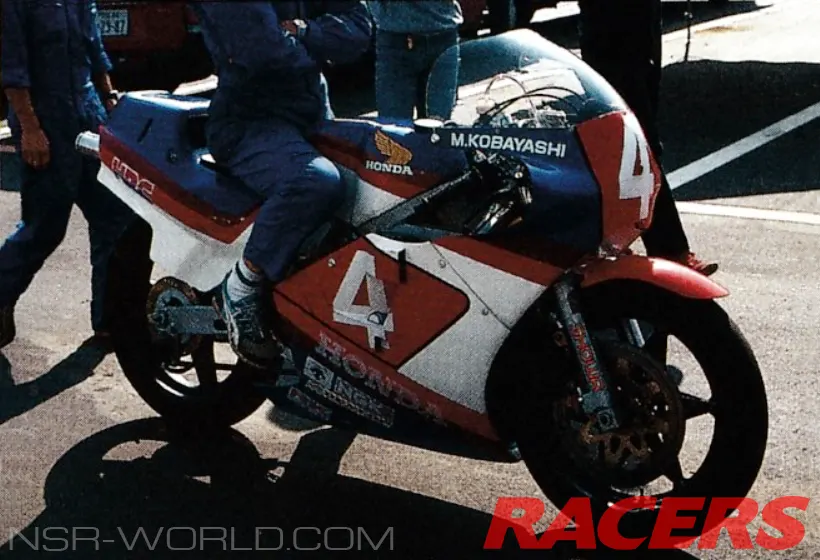
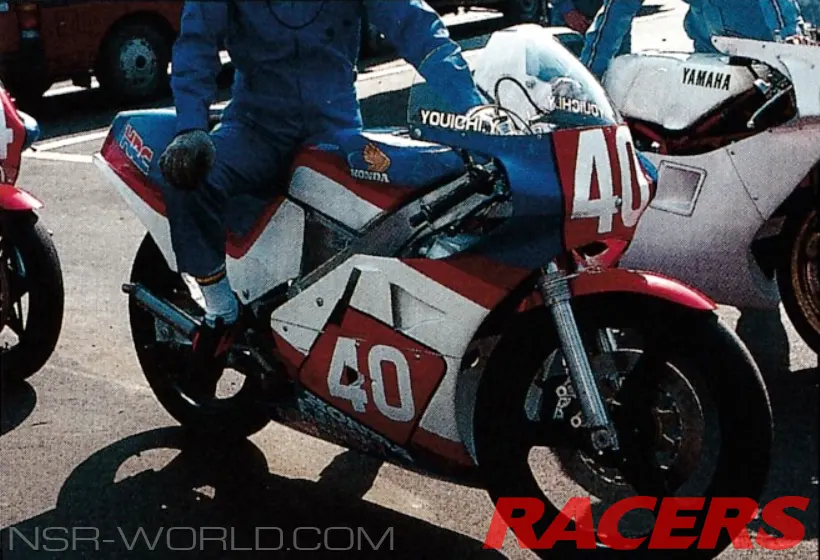
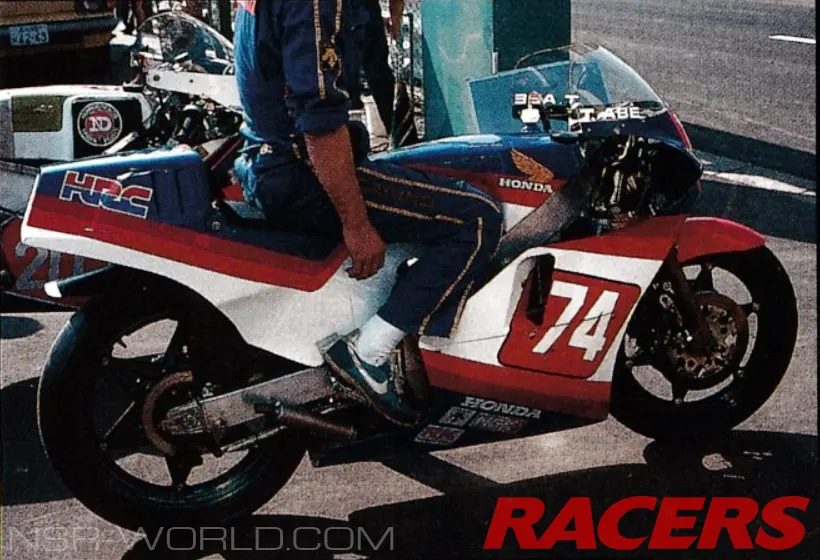
SPEC: 1984
RS250RW [Prototype]
Bore & Stroke: 54×54.5mm
Power: 71.5PS @11,500rpm*
Torque: N/A
Weight: 95kg*
*Estimated
The ULF concept wasn't only new to the RS250RW.
An NS500 ULF was also covertly developed and tested by Abe, despite HRC already moving forward (although some may have said sideways!) with the NSR500 V4.
A carbon fibre version of the ULF frame was also covertly developed with the cooperation the McDonnell Douglas aircraft company, but it was dismissed as too rigid. The ULF concept formed the foundations for Honda’s twin spar frame technology, and would be the standard employed by HRC for the following three decades.
A carbon fibre version of the ULF frame was also covertly developed with the cooperation the McDonnell Douglas aircraft company, but it was dismissed as too rigid. The ULF concept formed the foundations for Honda’s twin spar frame technology, and would be the standard employed by HRC for the following three decades.
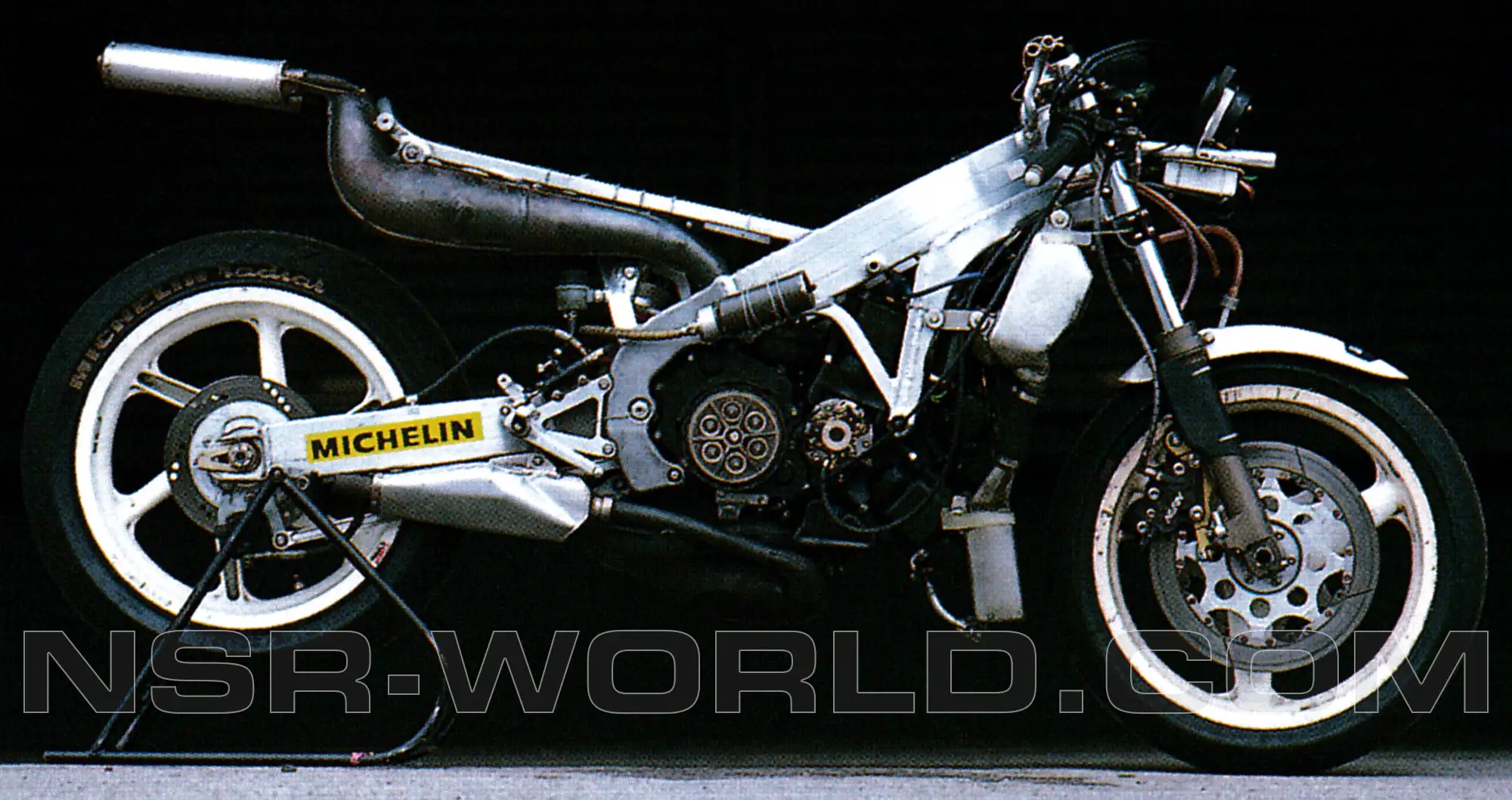
1984 NS500 ULF
An NS500-ULF was secretly tested by Takao Abe in 1984. A carbon fibre version of the ULF frame was also covertly developed and tested.
An NS500-ULF was secretly tested by Takao Abe in 1984. A carbon fibre version of the ULF frame was also covertly developed and tested.
An NS500-ULF was secretly tested by Takao Abe in 1984. A carbon fibre version of the ULF frame was also covertly developed and tested.
1984 Model Overview
250cc
NSR500 [NV0A]
RS250RW Prototype
RS250R [ND5A]
NS250RK [NE8]
NS250R [MC11]
250cc
NSR500 [NV0A]
RS250RW Prototype
RS250R [ND5A]
NS250RK [NE8]
NS250R [MC11]
Note
*While the YZR motor was already utilising HRC’s preferred layout, despite Yamaha’s claim that it was the first V4 2-stroke in WGP, it can be argued the twin-crank motor was actually a “square four” with a 90 degree cylinder bank angle. The NSR however, with its single crankshaft, was a true V4.