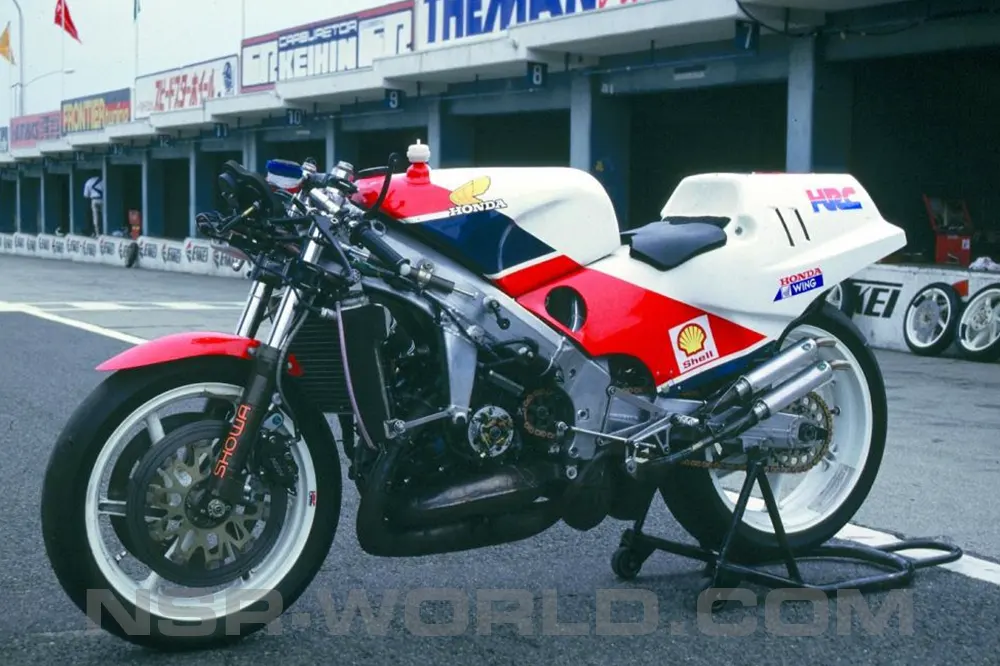
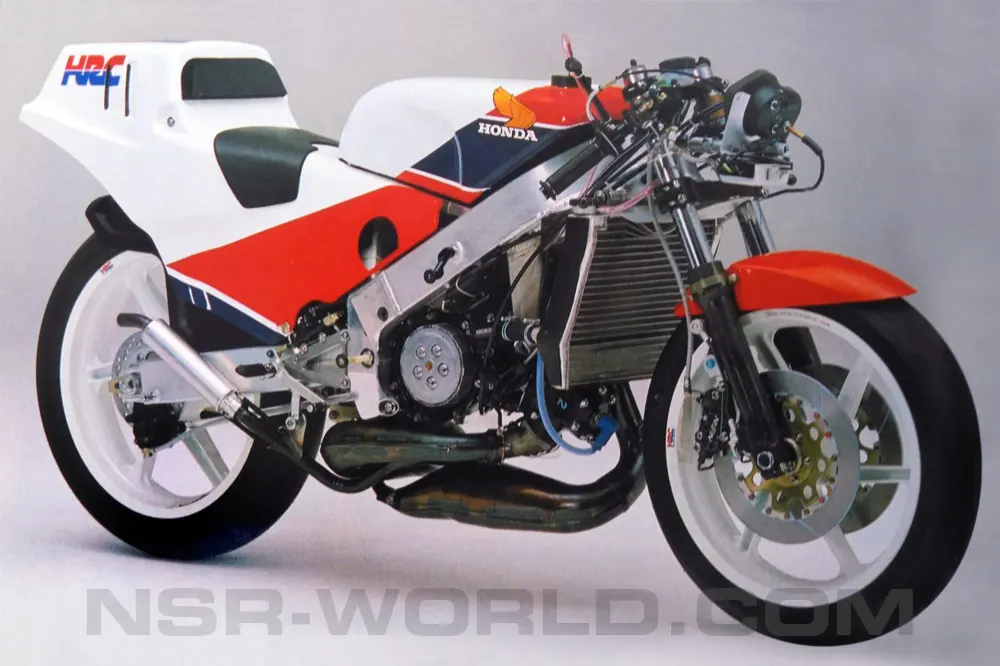
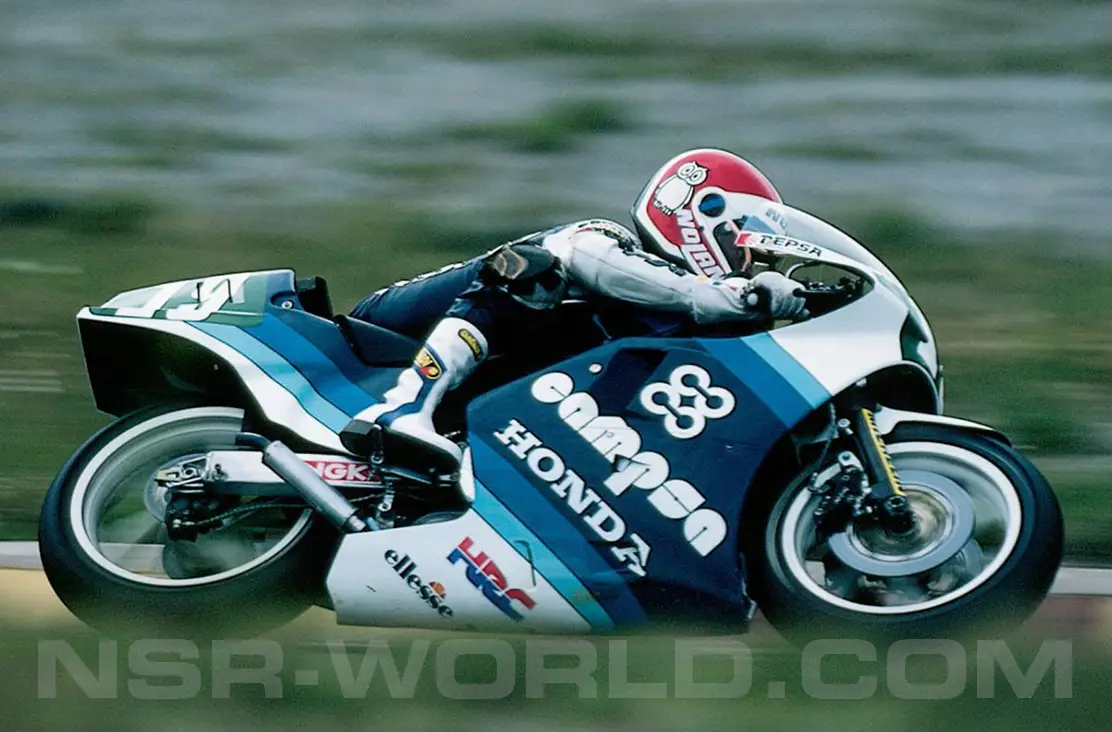
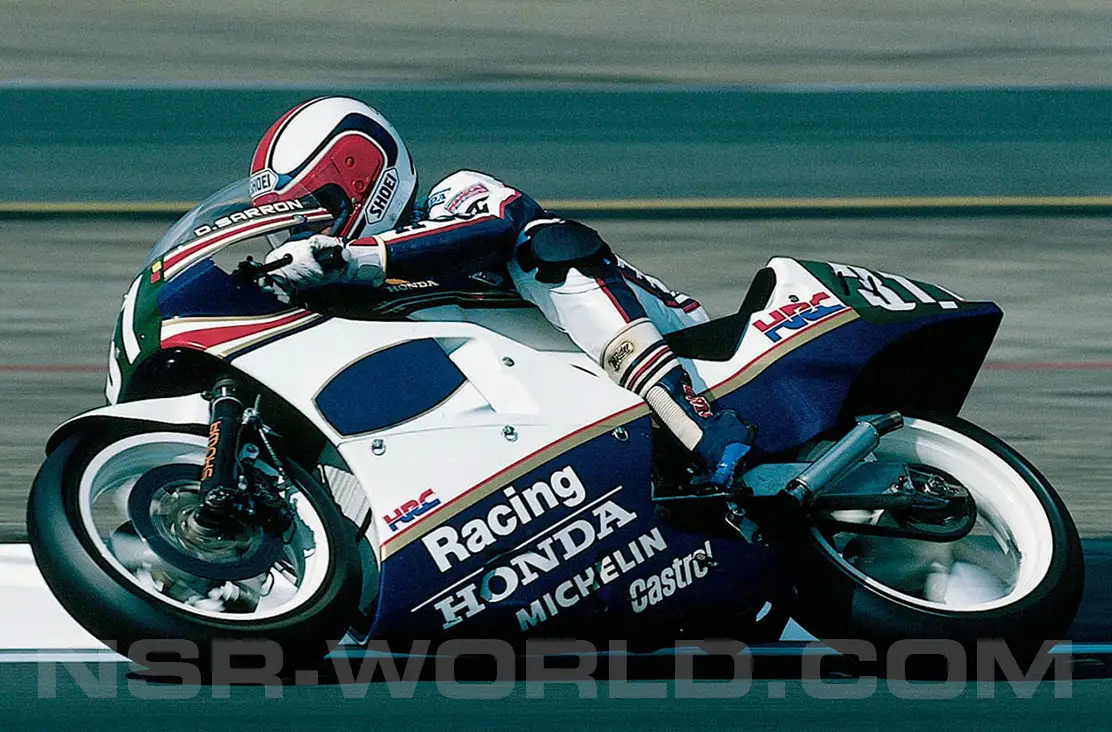
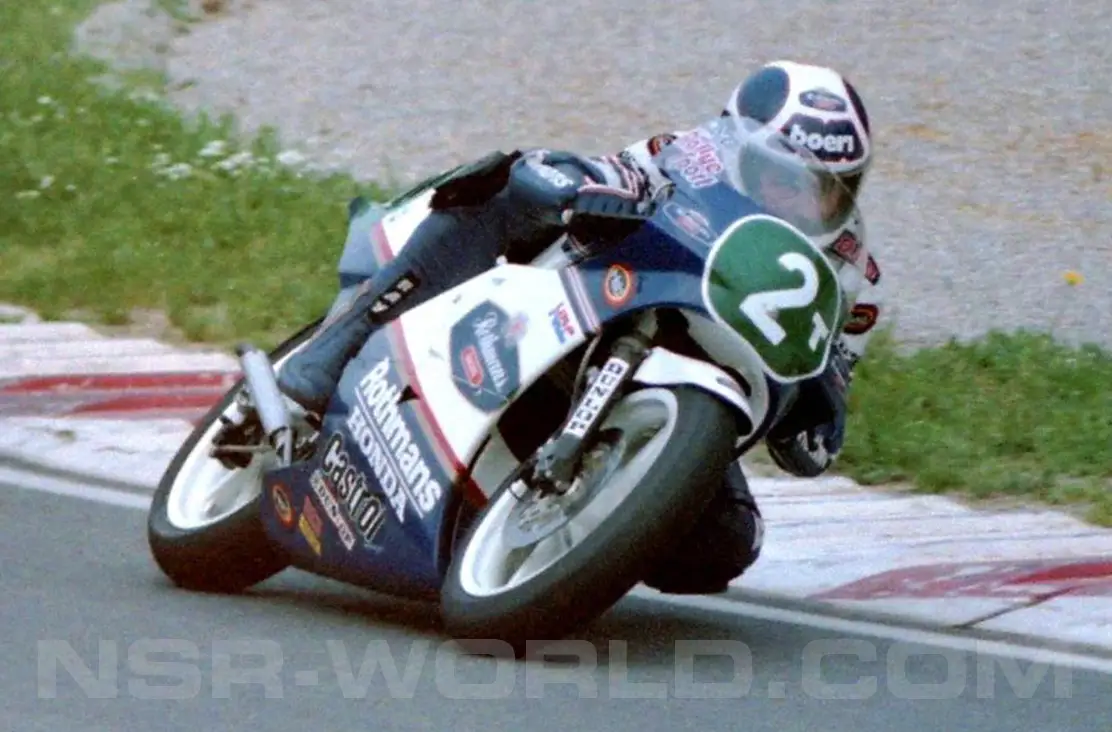
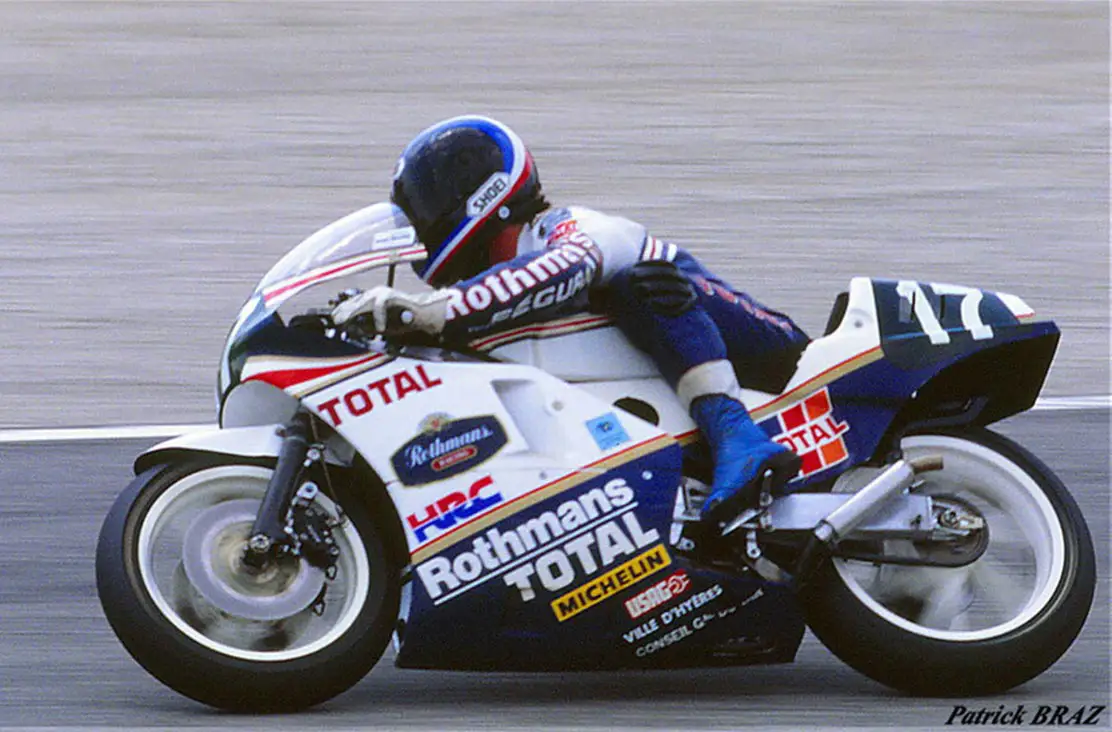
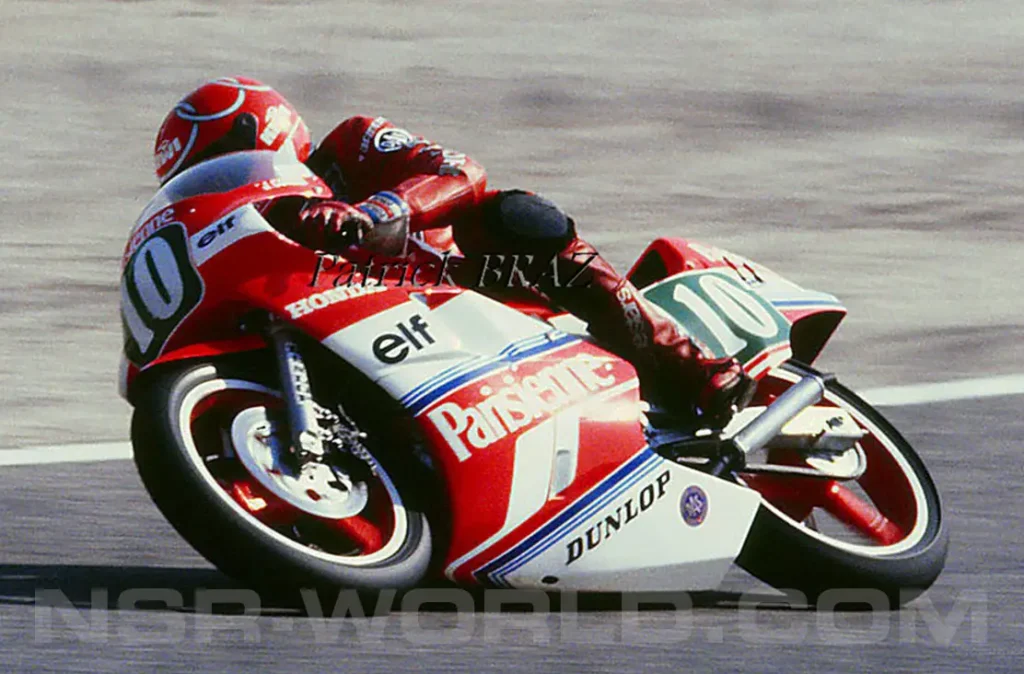
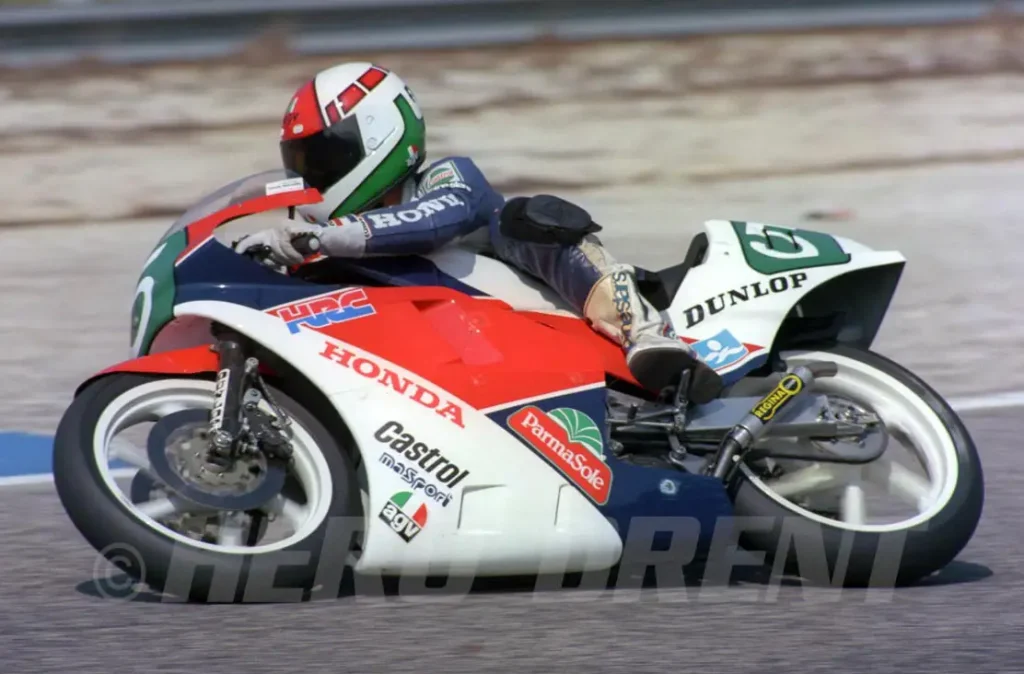
1986 was a groundbreaking year for HRC, and the official birth of the NSR250.
However, after unparalled success in 1985, Freddie Spencer suffered an injury in the opening 500GP round in Spain, and failed to finish the race.
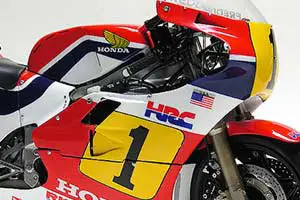
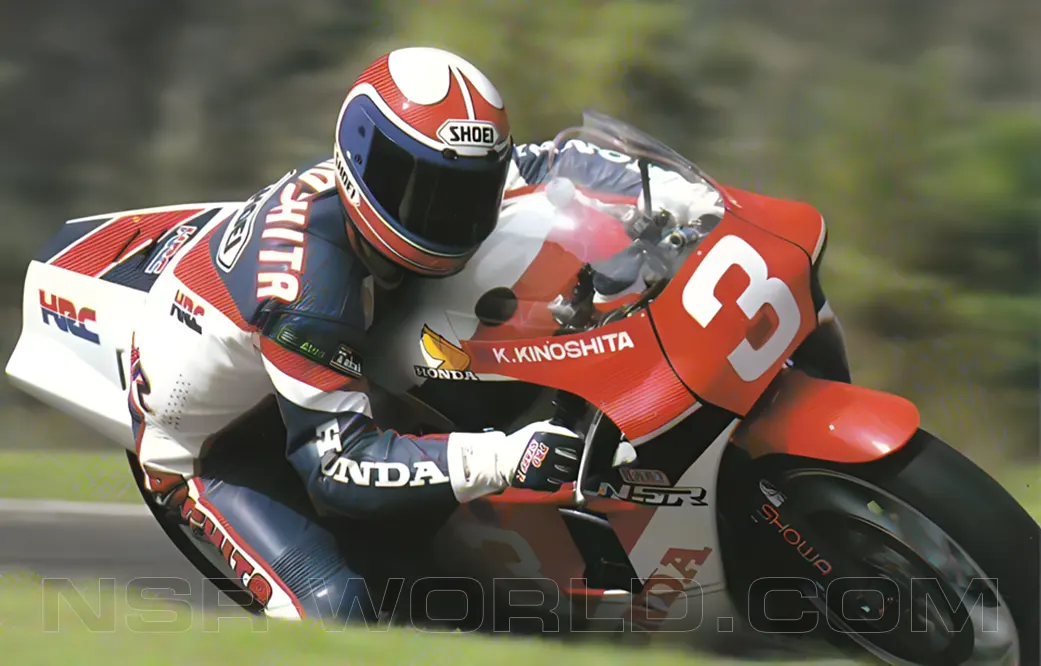
1986 NSR500 [NV0C]
It fell upon Wayne Gardner's shoulders to carry the NSR500 through 1986 to a new championship title.
In free practice at the first GP of the season in Spain, Spencer was 1/2 a second quicker than the newly signed Wayne Gardner, and almost a full second faster than Eddie Lawson. At the start of the race Spencer had pulled out a lead of 5 seconds over the first 7 laps, and Honda’s hopes were high for a second successive championship. It wasn’t to be though, and Spencer retired on lap 14 complaining of tendonitis and a lack of feeling in his right hand. He was never able to fully recover from the condition, and only completed one race the entire season. He was classified “+1 lap” in Austria, finishing in 18th position.
Freddie was unable to capitalise on neither the updated NSR500 or the newly introduced NSR250, and consequently was unable to retain either the 500cc or 250cc crown.
Despite Honda not retaining the championship in 1986, the NSR500 NV0C was far from a bad bike. However, it had been developed around Freddie Spencer, and it didn’t suit Gardner’s riding style. While Spencer had shown huge promise at the season opener, Gardner struggled to tame the NSR in his first ever season as a factory rider. He still managed three wins; the season opener at Jarama, the Dutch TT at Assen, and at Silverstone, where the NSR500 was raced with an all-new top-end for the first time, but more of that later!
1986 NSR500 [NV0C]
Most of the changes to the championship winning bike of 1985 were made to the chassis, to try and cure its tendency to push the front.
The motor was moved forward in the frame slightly, and the swingarm lengthened, in an effort to put more weight over the front-end, however, the overall wheelbase remained unchanged at 1370mm. Power from the 90° V4 was now claimed to be “around” 147hp. The rear shock mount was stiffened, as was the rear subframe, with a section being made removable to aid with pulling the carbs for jetting changes.
The 500cc World Championship was won, once again, by Eddie Lawson on the Yamaha YZR500, and Carlos Lavardo the 250cc championship on a Yamaha YZR250.
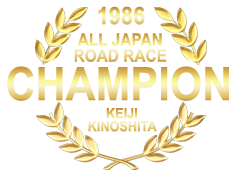
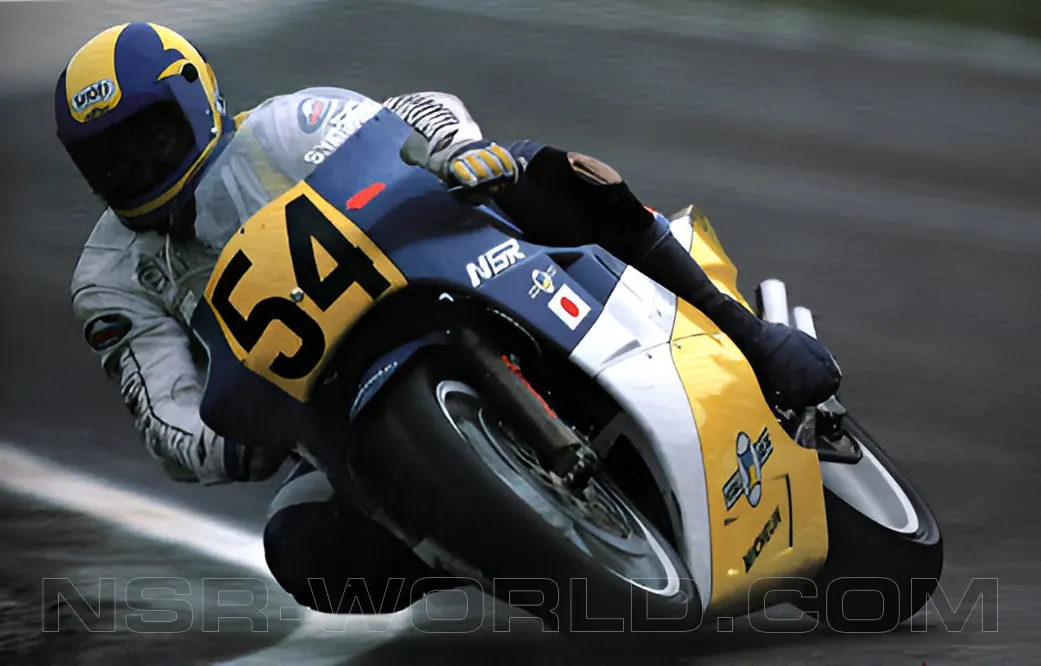
Keiji Kinoshita won the All Japan Roadracing Championship on the NSR500 NV0C, with Shunji Yatsushiro as runner-up on the Moriwaki NSR500.
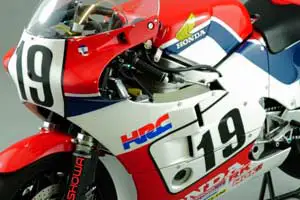
To tie in with the works NSR500, & to distinguish it from the commercially available RS250R, the all-conquering Factory RS250RW was officially designated NSR250 in 1986.*
In 1986 HRC created the SWS [Special Works Support] division, and effectively established the first factory satellite teams.
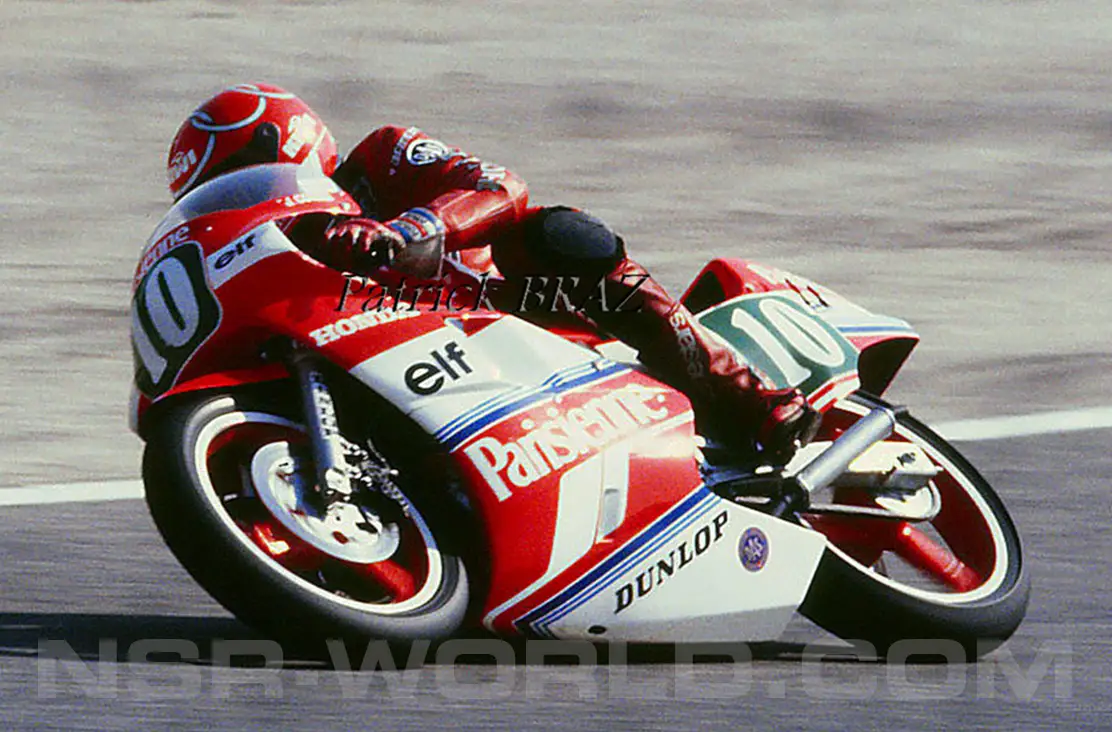
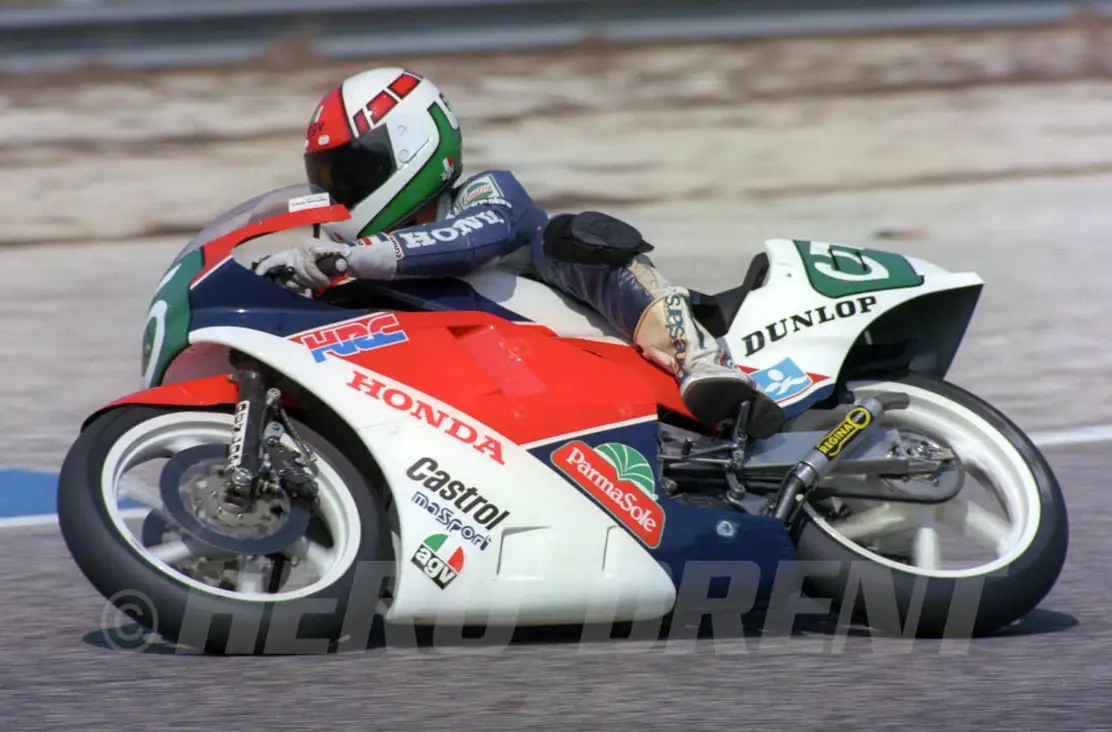
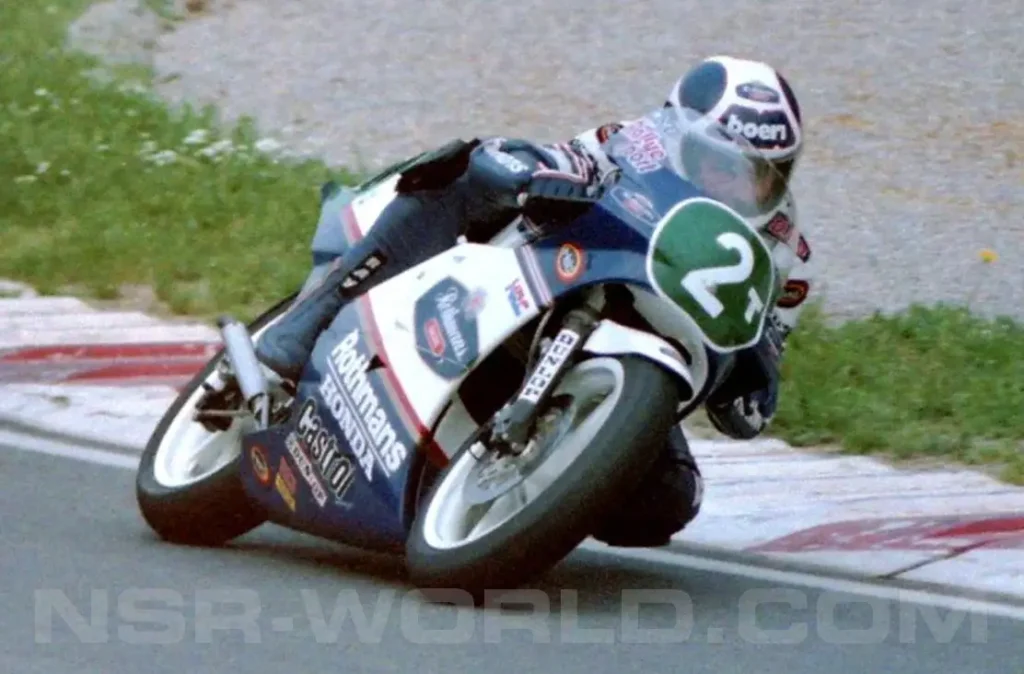
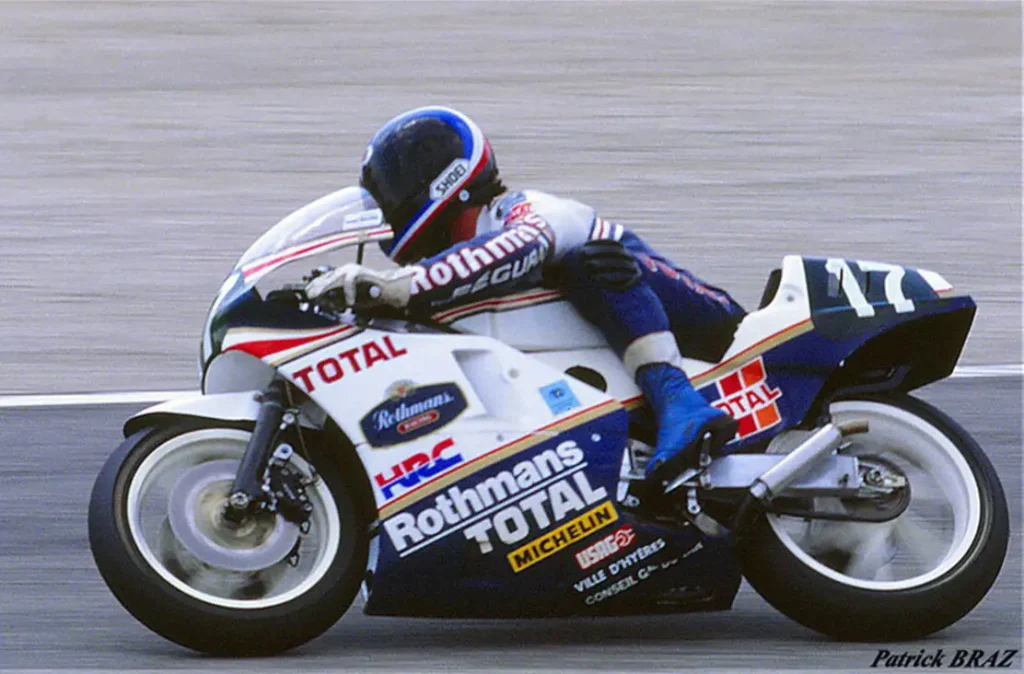
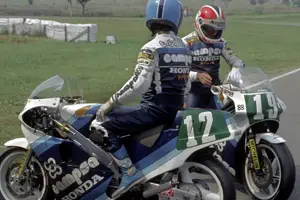
In an inspired move by HRC, the new NSR250 NV1B was loaned to five riders in World Grand Prix, and two more [for Masaru Kobayashi & Masahiro Shimizu] for use in the All-Japan 250GP domestic series.
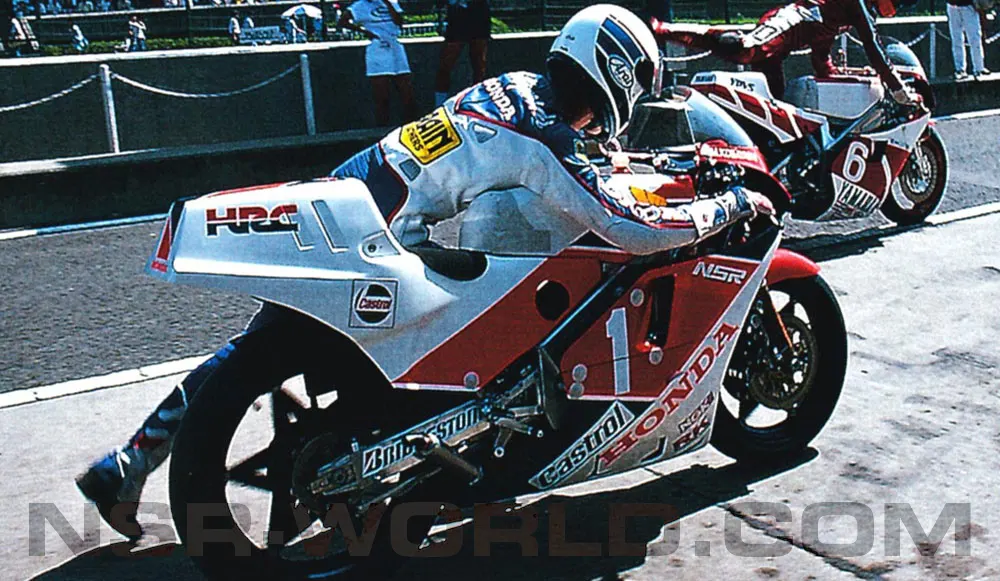
1986 NSR250 [NV1B]
To tie in with the works NSR500, & to distinguish it from the commercially available RS250R, the all-conquering Factory RS250RW was officially designated NSR250.
The 1986 NSR250 was essentially a repackage of Freddie Spencer’s RS250RW NV1A, but built with more replicable components that could be produced in larger numbers to support multiple riders.
Eight NSR250 NV1Bs in total were loaned out free of charge in 1986, in return for development and setup data. While the NSRs were factory bikes, there was no physical works support for them in this first year, and teams had to undergo all their own testing and development, just reporting back to HRC during the season. The NSRs remained the property of HRC, and were subsequently returned at the end of the season.
The motor was essentially the same as the RS250RW, with crankcase reed valve induction and ATAC exhaust valves, sharing the same 54×54.5mm bore and stroke. Smaller aluminium alloy Keihin PJ36 carbs were fitted [PE38s were fitted the RS250RW], feeding directly into the crankshaft cavity via side-by-side intakes just above and forward of the quick-change cassette-type transmission.
The configuration formed the basis of almost every RS250R and NSR250 until the end of the 2-stroke era. Only with the third generation NSR250 NV3 in ’98 was there a slight deviation from this configuration, where HRC briefly flirted with a twin-crank motor.
The NSR250 NV1B weighed around 3kg more than the RS250RW NV1A due to aluminium components such as the crankcases and carburettors that replaced the RS250RW’s magnesium items, and a revised, heavier rear shock top mount on the frame to increase its stiffness and further refine the geometry.
The longer 54.5mm stroke [over the ND5’s 50.6mm stroke] permitted greater port duration and more efficient cooling (less heat retention due to the smaller diameter pistons, and a thicker water jacket), two key factors that resulted in greater power potential of the new design. The new engine configuration wouldn’t filter down to the consumer RS250R NF5A in its entirety until 1988, but the NSR250R MC16 production bike would also utilise the new design.
The 1987 RS250R NF5A engine would be heavily influenced by both the 1986 works NSR250 and NSR250R MC16 production bike motor, receiving the NSR’s square bore and stroke and “cassette” style transmission, but a key technology borrowed from the NSR250R MC16 would give the 1986 factory racers that all important edge, which the RS250R NF5 series wouldn’t receive for another 2 seasons…
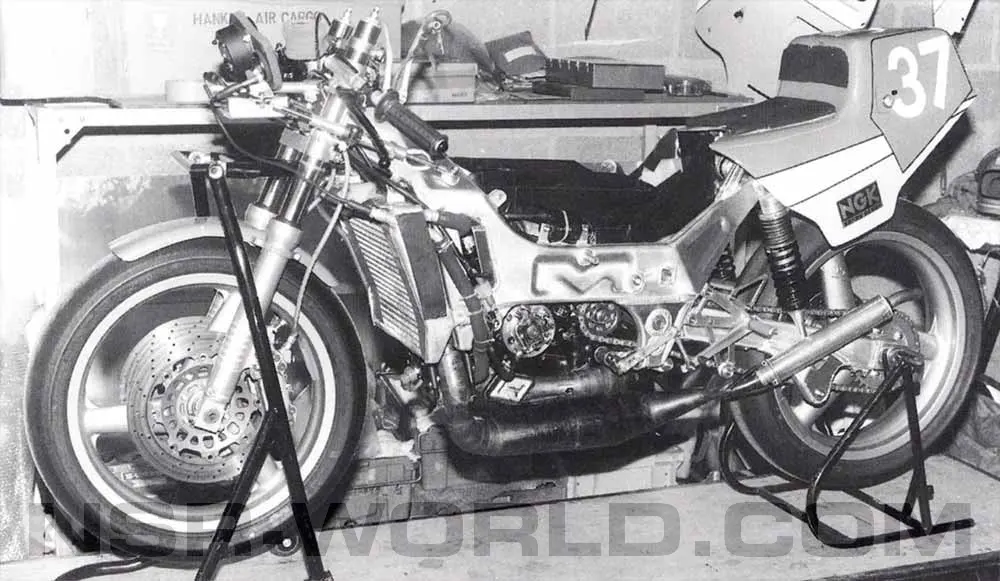
Moriwaki Zero Z-250
An eighth NV1B motor was assigned to Moriwaki, and fitted to their “Z” chassis. The bike was designated Zero Z-250, and was ridden by Osaru Hiwatashi in the All Japan Roadrace series & the British GP at Silverstone, where he finished 13th.
1985 NSR250* [NV1A]
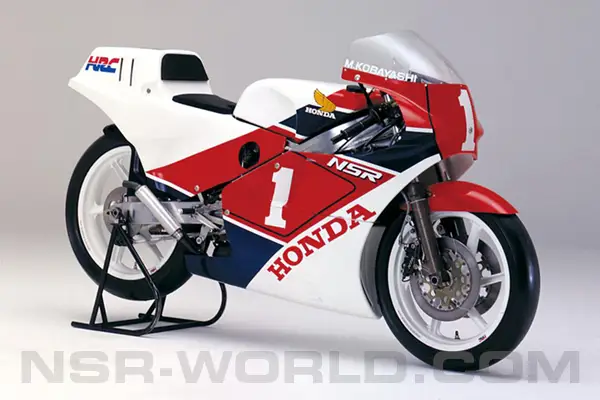
*Although only officially dubbed NSR250 in 1986, Masaru Kobayashi rode the NV1A emblazoned with the “NSR” logo at the concluding round of the 1985 All Japan Championship at Suzuka, finally revealing the RS250RWs true identity.
1987 NSR250R [MC16]
Conceived by Honda in 1986 as an "exact replica" of Freddie Spencer's 1985 championship winning RS250RW, the NSR250R production bike was so successful that HRC "borrowed" a key technology for both the NSR250 NV1B and NSR500 NV0C Grand Prix machines!
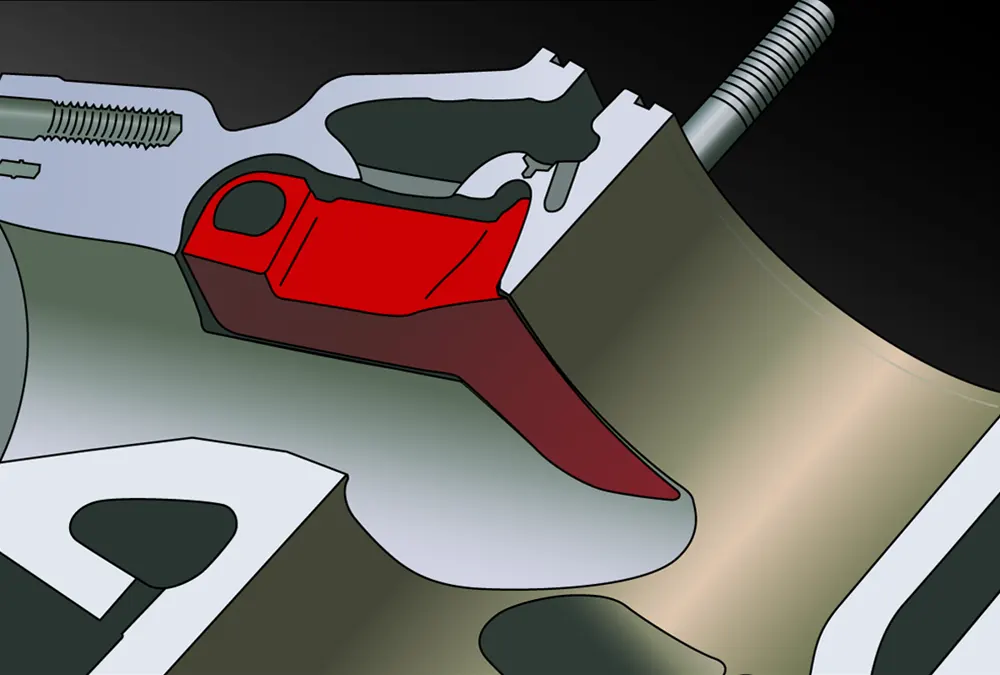
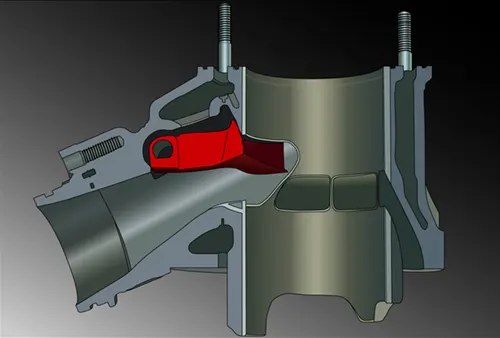
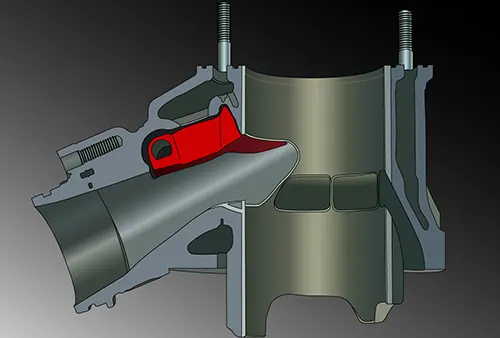
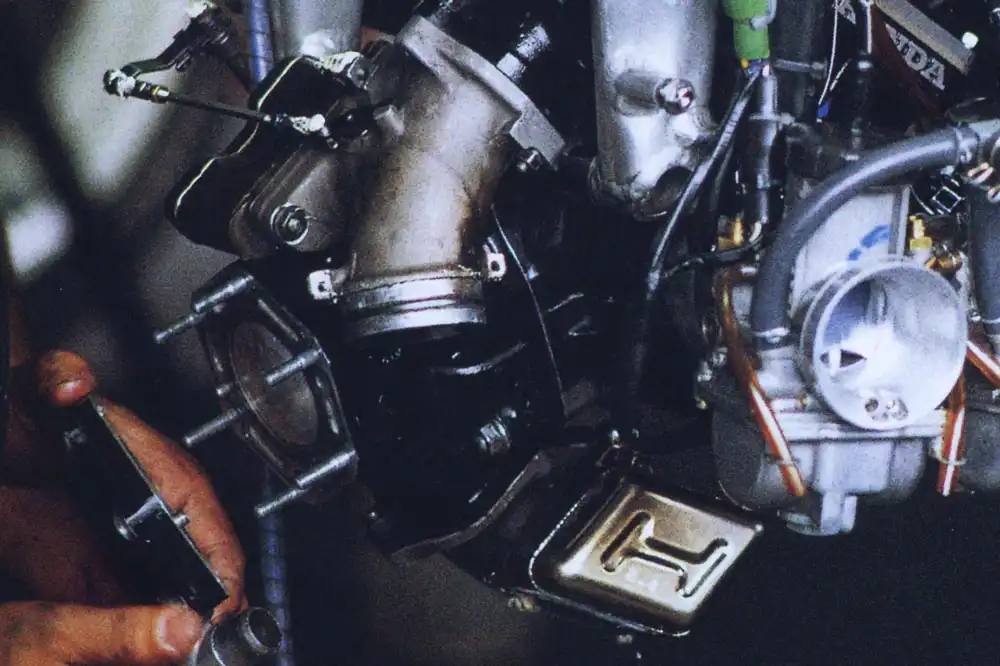
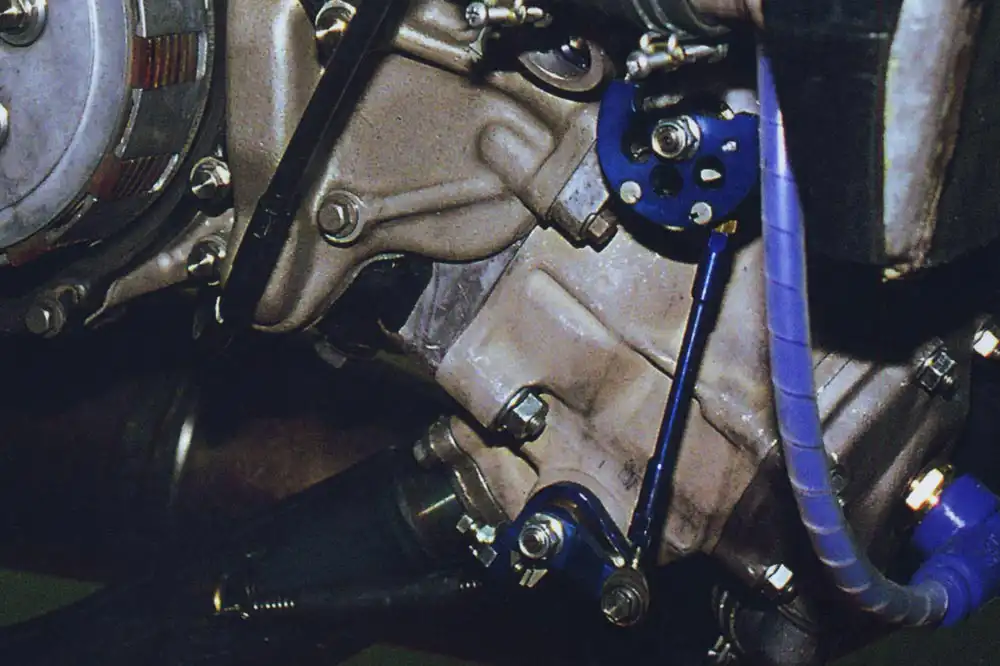
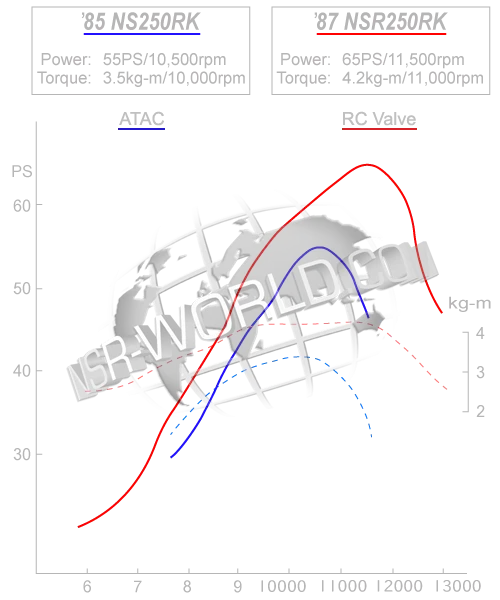
The innovative feature of the [1987 model year] NSR250R MC16 that caught the HRC engineers attention was a brand new servo assisted, cable driven, electronically controlled exhaust powervalve system, designated "RC Valve". [Revolutionary Controlled Valve]
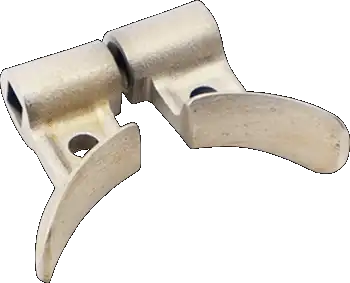
The RC Valve system was a far more efficient, effective, and elegant solution than ATAC, with drawbridge style “flap valves” that [initially] adjusted the exhaust port timing relative to RPM. Where ATAC was simply an on-off device, with a simple butterfly opening and closing a venturi feeding into a chamber attached to the exhaust header, RC Valve ultimately permitted an infinitely variable exhaust port timing. The first iteration was simply linked to RPM, but as the system was refined, and following the introduction of the “PGM” digital engine management, it could be linked to various factors including gear position, throttle position, acceleration, and even the rate at which the throttle was opened.
The technology, according to the NSR250R’s head designer [and future president of HRC] Yasuo Ikenoya, was heavily influenced by Yamaha’s TZR250 YPVS system*. The valves were cable-driven by a servo motor, and a variable resistor within the servo, controlled by a microcomputer, regulated the speed and position of the servo depending on engine speed.
At the fully open position the flaps sit flush with, and form the roof of the exhaust port, while at low RPM the valve would substantially lower the exhaust port window, increasing bottom-end torque. The design makes for a very smooth and free-flowing passage for the exhaust gasses at high RPM, resulting in minimum exhaust port turbulence and increased power. Each set of RC Valve flaps were hand finished to a specific barrel, and as such each set was unique.
*Credit: Young Machine
The RC Valve system used in the NSR250R, due to mass production, featured simplified forged internal components and pressed steel actuator parts with notably greater fitting tolerances than the equivalent HRC NSR250 items.
The factory valve flaps were cast from stainless steel using the “lost-wax” method, and then each individually hand-finished.
RC Valve was so efficient compared to its ATAC predecessor, which was still at that time being used on the NSR GP racers, that it was adopted by HRC mid way through the 1986 season.
While both iterations of the racer retained the same model code, they would be referred to internally as NV1B-ATAC and NV1B-RC. RC Valve debuted on the NSR250R MC16 a full year before the NF5B commercial racer!
The RC Valve parts for the RS250R would eventually become a middle ground between the two, with machined flaps requiring minimal finishing, but with greater tolerances over the factory NSR250 items. The concept was a great success and employed in every Honda 2-stroke road racing engine thereafter. The RC Valve was vastly superior to its ATAC predecessor, and took the MC16 production bike to levels of engine flexibility previously unseen in a 250cc 2-stroke engine.
1986 NSR250 [NV1B] ATAC
Power: 75PS@11,500rpm
Torque: 4.7kgm@11,000rpm
Weight: 93.2kg
1986 NSR250 [NV1B] RC Valve
Power: 73.5PS@12,000rpm
Torque: 4.55kgm@11,500rpm
Weight: 93.2kg
1987 NSR250 [NV1C] RC Valve
Power: 83.5PS@12,500rpm†
Torque:4.82kgm@12,000rpm
Weight: 93.1kg
†Claimed
Although the initial introduction of RC Valve saw a minor drop in power for the NV1B, the higher peak RPM gave an insight into its potential, which would be fully realised in 1987.
Despite the marginally lower peak power and torque, the increased drivability out of turns made up for the minimal deficiencies.‡
The graph demonstrates the increased efficiency of both RC Valve, and the new 54×54.5mm crankcase reed valve generation motors in TT-F3 configuration.
The NSR250 GP bike and NSR250R production bike utilised a similar cassette style transmission, truly demonstrating the MC16E engine’s race derived heritage, although the NSR250R employed a wet clutch and street focussed gearing with wider spaced ratios. The HRC TT-F3 NSR250R however, was retrofitted with a close ratio transmission and dry clutch almost identical to that of the works NSR and later RS250R NF5s.
NOTE
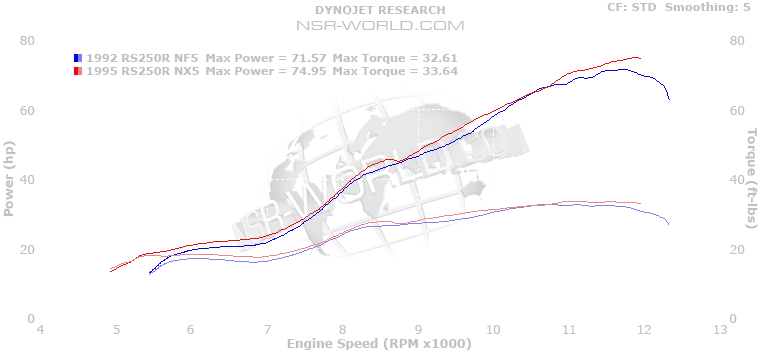
‡From around ’87-’88, quoted power figures for the NSR250 and RS250R Grand Prix machines saw a significant jump that doesn’t correlate with RWHP dyno numbers we have witnessed here at NSR-WORLD. The transition from ATAC to RC Valve initially resulted in minimal differences, but a jump of 10PS from ’86 to ’87 cannot simply be due to the HRC engineer’s understanding and exploitation of the new system. Given our experience and significant amounts of data collected in-house relating to NSR250R, NSR250RK, RS250R NF5/NX5/NXA, and NSR500V, this would lead us to believe figures quoted switched to “crankshaft PS” for marketing purposes.
This is further backed up by early [stock] NF5 dyno results at NSR-WORLD.COM showing low to mid 70s PS, and the first NX5s mid to high 70s PS, where it is common to see Honda literature claim well over 80PS for them.
Speaking to Wilco Zeelenberg’s technician, he claimed that in 1990 HRC had obtained drivtrain losses as low as 10% for the NSR250 NV1H. We generally tend to assume losses of approximately 12-12.5% for consumer models.
Where possible, we will quote actual tested RWHP alongside Honda/HRC quoted figures found in official sales media and trusted publications.
1986 Model Lineup
NSR250 [NV1B]
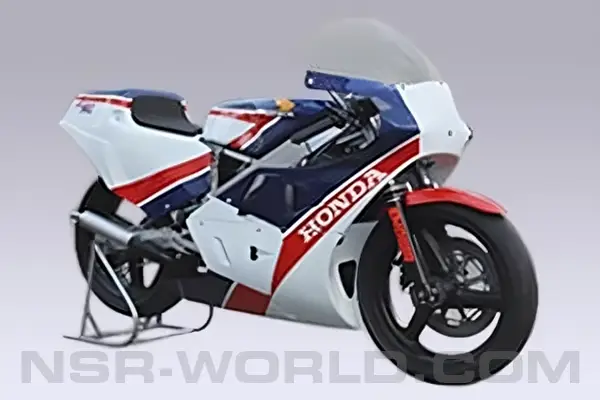
HRC Factory machine, usually around 12 months ahead in development.
RS250R [ND5B]
Consumer racer originally derived from the NS250R MC11.
SPEC: 1986
NSR250 [NV1B]
ATAC
Power: 75PS @11,500rpm
Torque: 4.7 @11,000rpm
Weight: 93.2kg
NSR250 [NV1B]
RC Valve
Power: 73.5PS @11,500rpm
Torque: 4.55 @11,500rpm
Weight: 93.2kg
1986 NSR250 Results
Carlos Lavado won the 250cc rider's championship on the Yamaha YZR250 OW82 in 1986.
Sito Pons and Dominique Sarron took the second & third steps of the championship podium respectively, on the new NSR250 NV1B.
In 1986 the top Honda and Yamaha WGP riders were invited to race against the All Japan competitors at the Fuji Super Sprint.
WGP riders could be identified by their entry number being prefixed with a zero.
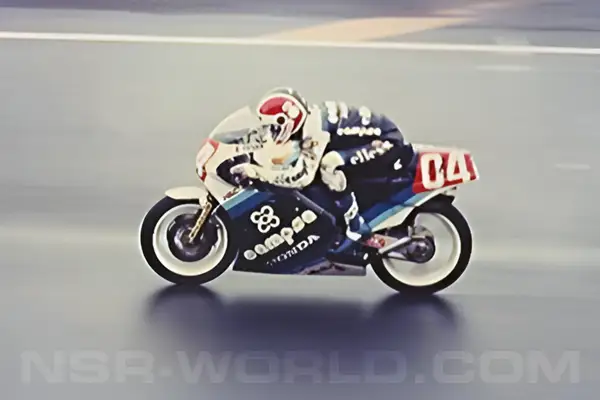
With a 3rd and 2nd in the two races respectively, Sito Pons [#04] won the 1986 Fuji Super Sprint event on his Campsa Honda NSR250 NV1B, beating the Team Venemotos YZR250 of arch rival Carlos Lavado [#02].
Wayne Gardner [#02] won the 500 event on the Rothmans Honda NSR500 NV0C with a 2nd and a 1st in the two races, scoring 37 points. He beat Randy Mamola [#04], on the Team Roberts Marlboro Yamaha YZR500, who took 1st and 2nd respectively, tying Gardner for points, but losing out on overall elapsed time.
Note:
Until deregulation in 1992, bikes running in various championship could be identified by their number board colours.
250s & 500s running in the All Japan Road Racing Championship can be identified by red number boards.
250s running in World Grand Prix can be identified by green number boards.
500s running in World Grand Prix can be identified by yellow number boards.
250s & 500s running in F1 & 200km races can be identified by white number boards.
From 1992 the individual championship background colours were dropped, with the stipulation that race numbers simply had to clearly contrast their background.