NSR-WORLD.COM

NSR-WORLD.COM
The 1994 NSR250R MC28 R and SE models were announced on November 10th 1993, with the SP version coming just a month later on December 10th.
Infamous for its single-sided Pro-Arm swingarm and "smart card" ignition , the MC28 was the final version of the NSR250R.
Concept

The MC28 was conceptualised as a showpiece of 90s Honda engineering, and the last word in race-replica styling.
The striking design of the NSR250R MC28 was inspired by the 1992 Rothmans Racing NSR500 NV1P of Mick Doohan and Wayne Gardner, and NSR250 NV2B of Tadayuki Okada.
Subtle hints of the 500 could be seen in the seat cowl shape and vent details, and of the 250’s nose fairing ram-air intakes and low angle raked screen.
Concept
The MC28 was conceptualised as a showpiece of 90s Honda engineering, and the last word in race-replica styling.
The striking design of the NSR250R MC28 was inspired by the 1992 Rothmans Racing NSR500 NV1P of Mick Doohan and Wayne Gardner, and NSR250 NV2B of Tadayuki Okada.
Subtle hints of the 500 could be seen in the seat cowl shape and vent details, and of the 250’s nose fairing ram-air intakes and low angle raked screen.
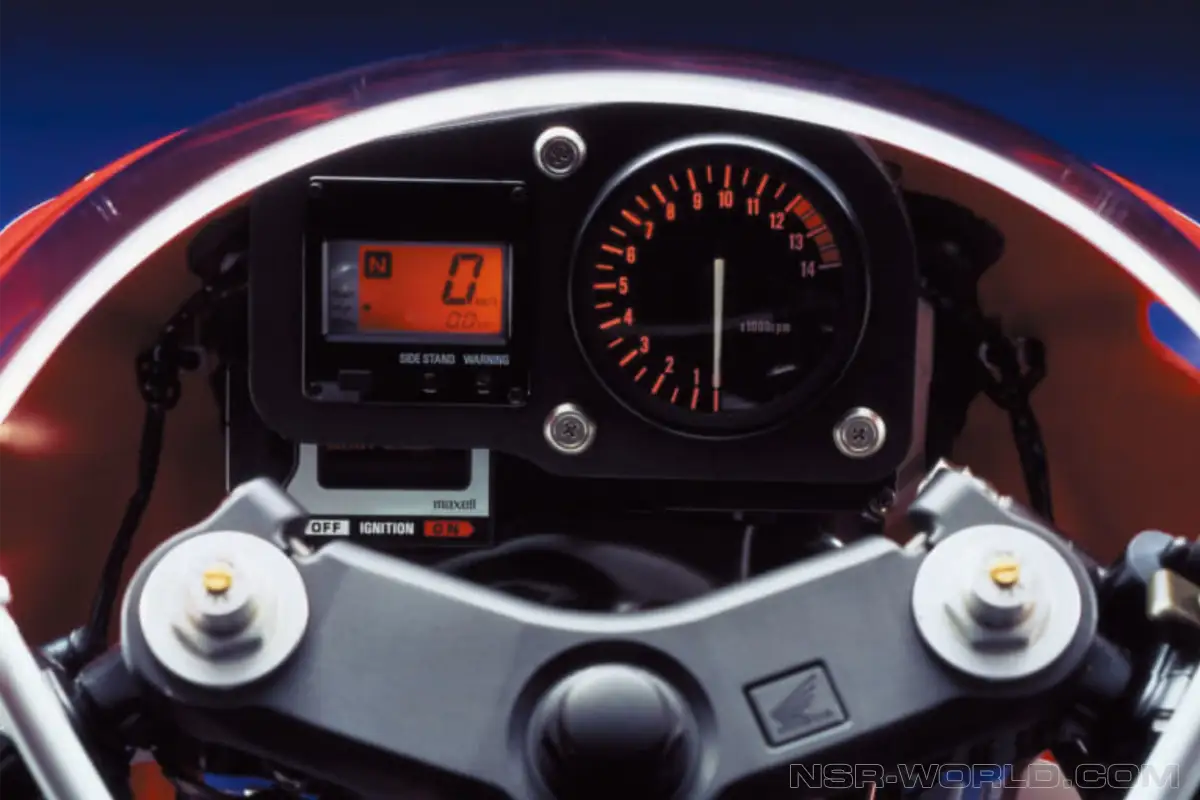
The NSR250R MC28 was the world's first production motorcycle to feature an LCD display, and the only one to ever feature a keyless electromagnetic "smart card" system to control the electronic functionality.
PGM-IV

The 1994 NSR250R received the all-new PGM-IV.
The MC28s PGM-IV hardware and software was upgraded to 16bit for the first time, allowing superior control over the various elements of the ignition, carburation, and exhaust valve systems.
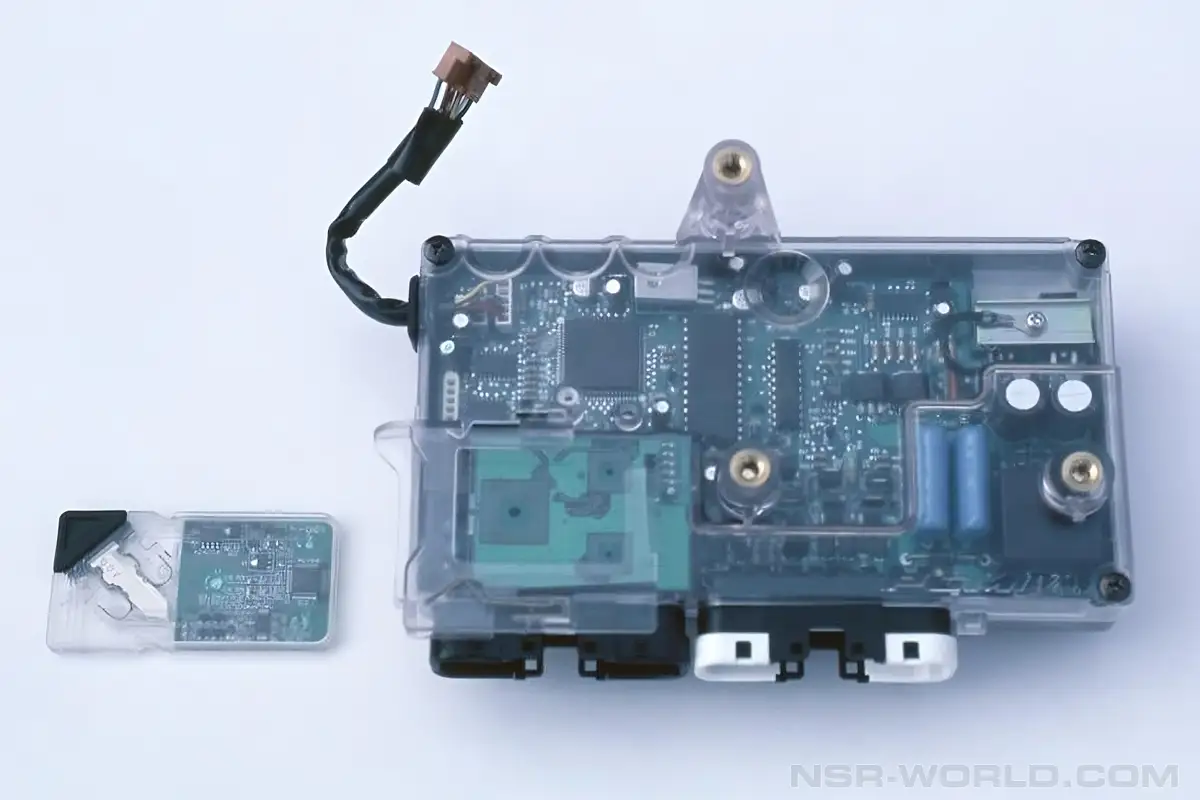
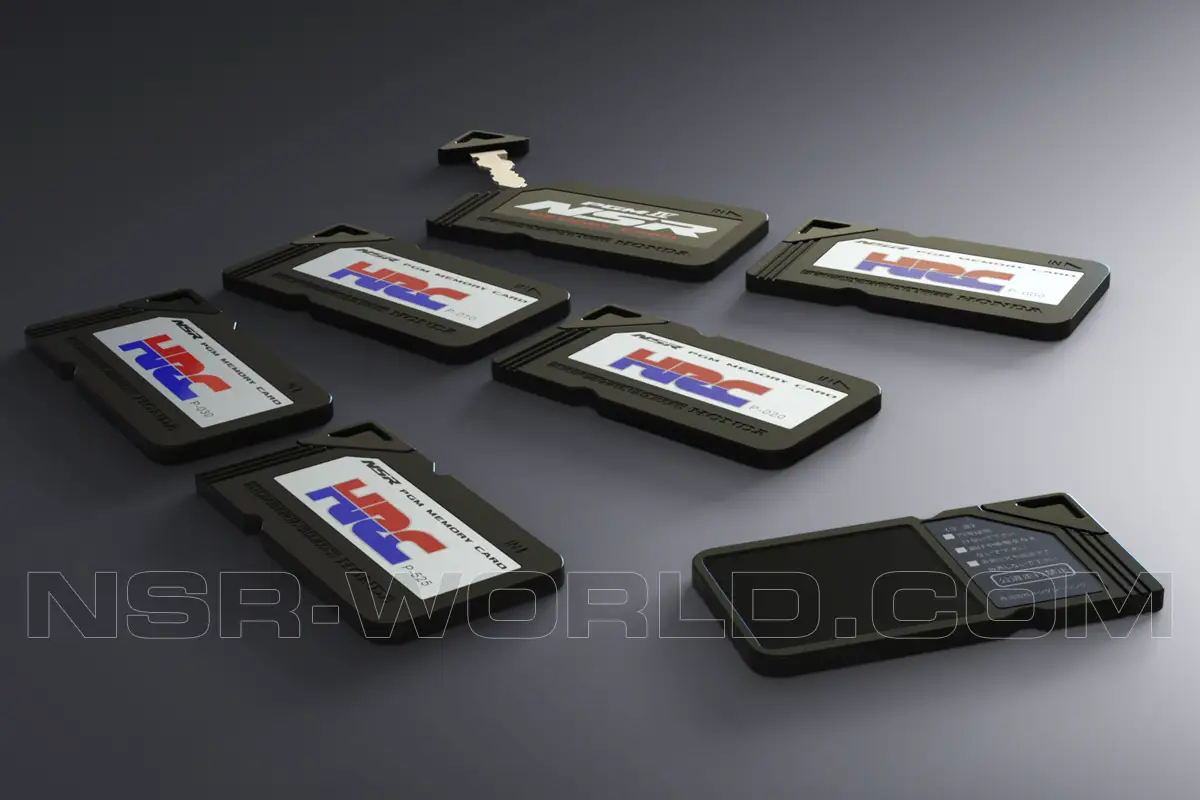
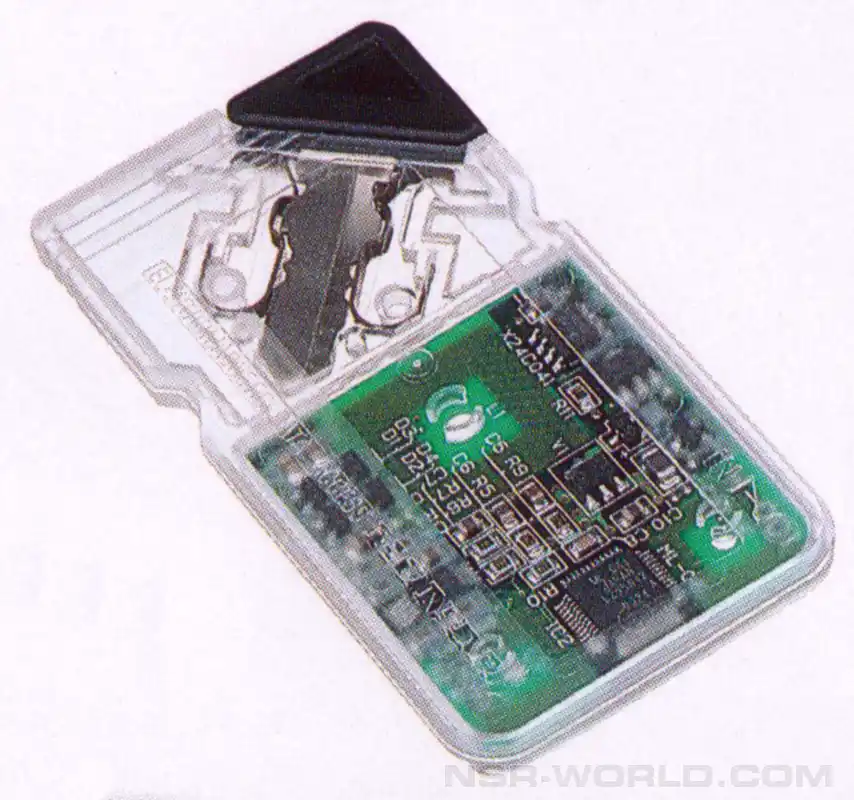
Initially designed as a security measure, the keycard and PGM-IV were coded to one another to help prevent theft. Upon inserting the correctly coded card into the receptor behind the LCD display, power was supplied to the PGM and electronically controlled steering lock. Housed in one corner of the card was a convetional key for the fuel filler cap.
Aside the security implications, the system was soon adapted to also control various ignition parameters, thereby allowing its use “unlock” or delimit the PGM-IV for circuit use. However, the standard card cannot simply be replaced by an HRC card to delimit the ECU and release full power. Despite it’s new advanced technology, both power and torque of the MC28 was reduced over that of the MC21.


Pro-Arm
Arguably, the stand-out feature most notable for the final incarnation of NSR250R was the adoption of the elf Pro-Arm.
Originally fitted to the VFR750R RC30 for endurance racing, the Pro-Arm had also been adopted by the NSR250 NV1B in 1992.
Additionally, the MC28 chassis now featured cartridge style front forks, revised rear shock absorber and linkage, and updated 4-pot Nissin calipers, similar to those seen on the CBR900RR Fireblade.


The steering geometry remained unchanged from the previous MC21 models, however there was a provision for an electronically controlled steering lock within the headstock, and small lugs on the rear of the frame for the seat unit to mount.
Michelin tyres were seen for the first time on the 1994 NSR250R MC28SP Rothmans edition.
As with previous SP models, the wheels were magnesium Magteks, in 3″ and 4.5″ front/rear respectively, but were now shod in Michelin [front] TX-11B and [rear] TX-23B tyres.
Pro-Arm
Arguably, the stand-out feature most notable for the final incarnation of NSR250R was the adoption of the elf Pro-Arm.
Originally fitted to the VFR750R RC30 for endurance racing, the Pro-Arm had also been adopted by the NSR250 NV1B in 1992.
Additionally, the MC28 chassis now featured cartridge style front forks, revised rear shock absorber and linkage, and updated 4-pot Nissin calipers, similar to those seen on the CBR900RR Fireblade.
The steering geometry remained unchanged from the previous MC21 models, however there was a provision for an electronically controlled steering lock within the headstock, and small lugs on the rear of the frame for the seat unit to mount.
Michelin tyres were seen for the first time on the 1994 NSR250R MC28SP Rothmans edition.
As with previous SP models, the wheels were magnesium Magteks, in 3″ and 4.5″ front/rear respectively, but were now shod in Michelin [front] TX-11B and [rear] TX-23B tyres.
Pro-Arm
Arguably, the stand-out feature most notable for the final incarnation of NSR250R was the adoption of the elf Pro-Arm.
Originally fitted to the VFR750R RC30 for endurance racing, the Pro-Arm had also been adopted by the NSR250 NV1B in 1992.
Additionally, the MC28 chassis now featured cartridge style front forks, revised rear shock absorber and linkage, and updated 4-pot Nissin calipers, similar to those seen on the CBR900RR Fireblade.
The steering geometry remained unchanged from the previous MC21 models, however there was a provision for an electronically controlled steering lock within the headstock, and small lugs on the rear of the frame for the seat unit to mount.
Michelin tyres were seen for the first time on the 1994 NSR250R MC28SP Rothmans edition.
As with previous SP models, the wheels were magnesium Magteks, in 3″ and 4.5″ front/rear respectively, but were now shod in Michelin [front] TX-11B and [rear] TX-23B tyres.
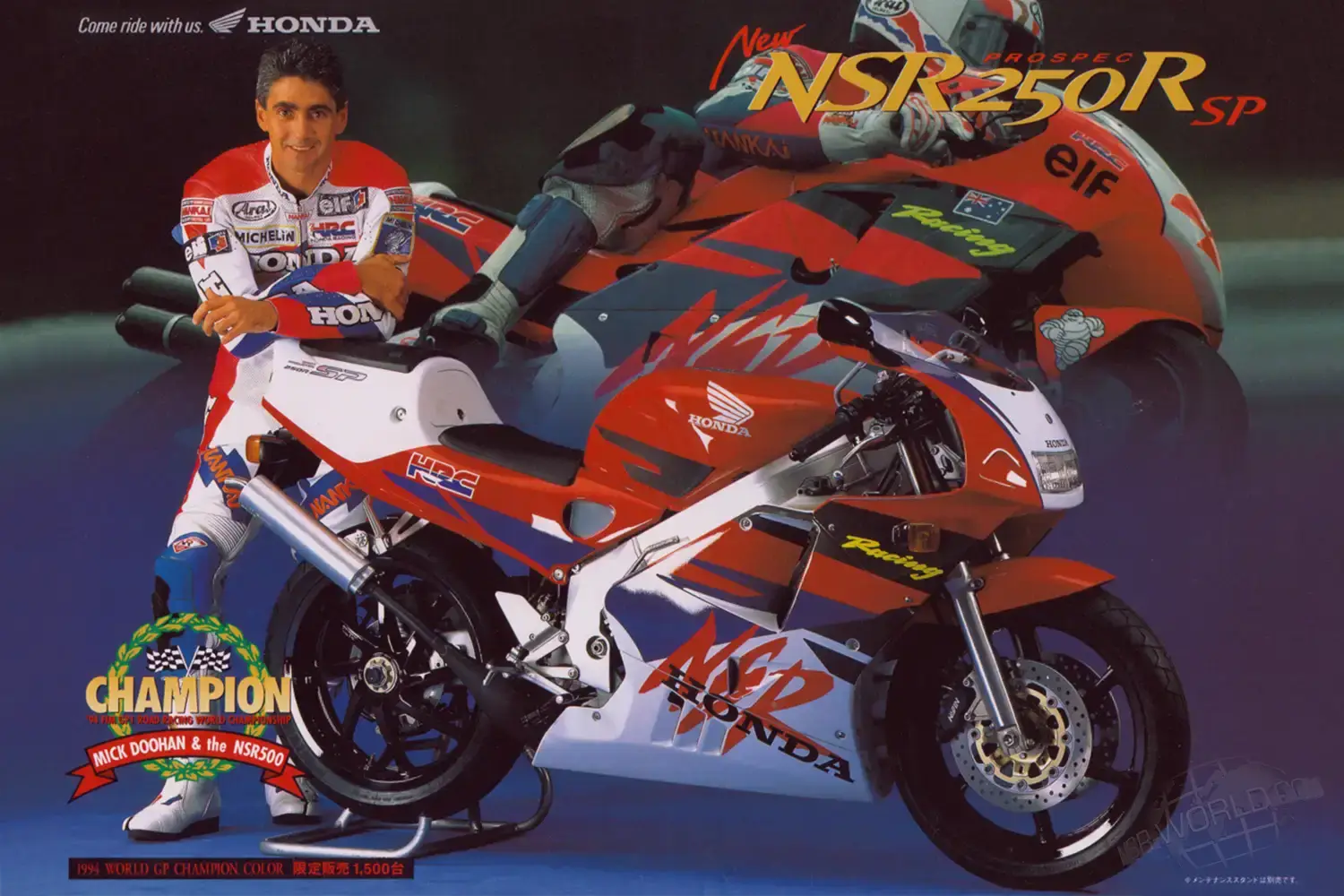
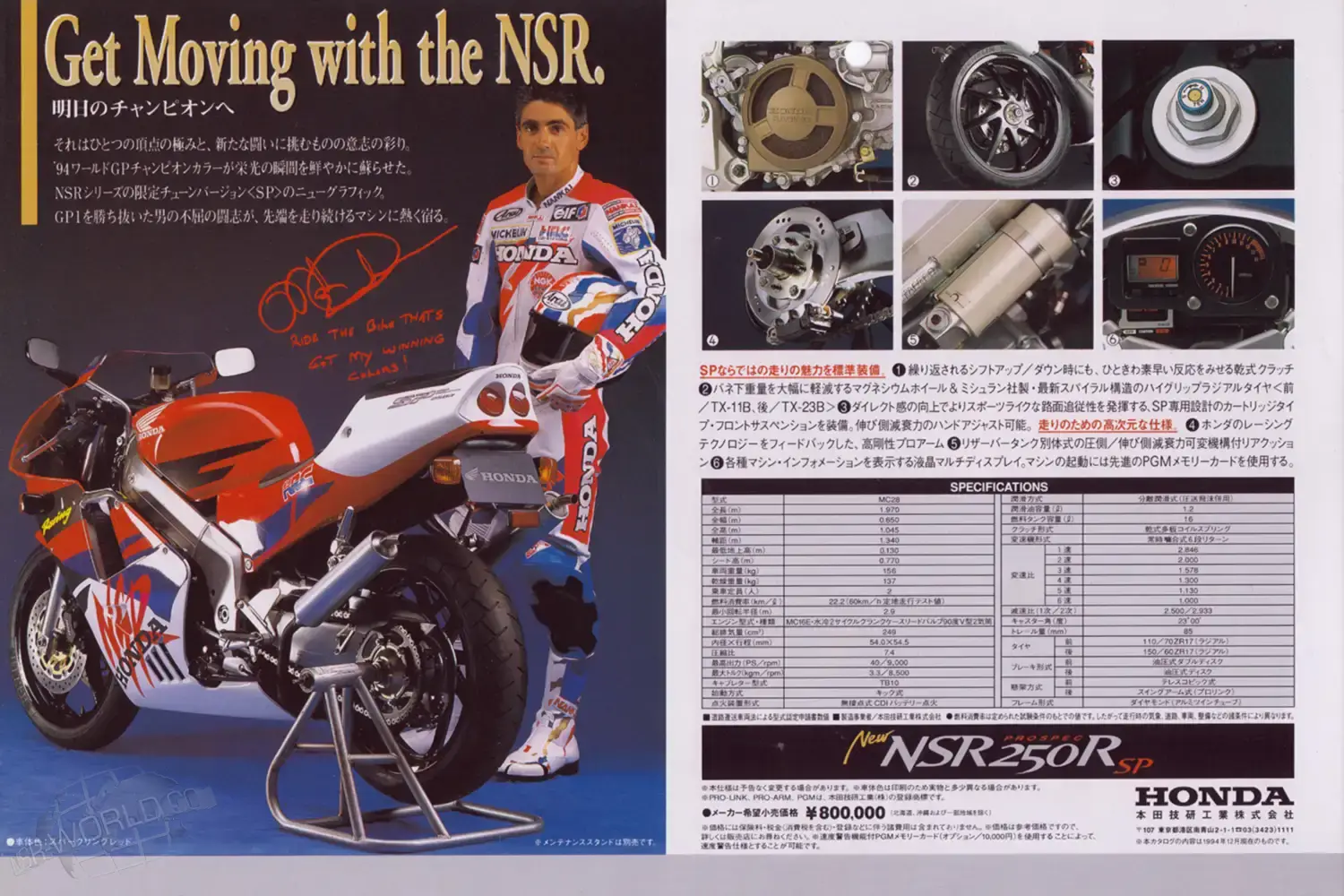
The 1995 NSR250R was released on January 25th.
Just 1500 units were scheduled for production, all SP models in Mick Doohan/HRC replica world championship winning livery.

Info
Only an SP model was produced in 1995, and while 1500 units were scheduled, only 900 frame numbers were actually ever allocated. 900 SPs equalled the number of 1993 HRC edition MC21-SPs, making the ’93 & ’95 HRC edition SPs the rarest NSR250R models, and the 1995 MC28 the rarest of all NSR250Rs by model year.
A full frame and engine number list can be found in the Workshop Section, or in our new NSR250R Style Guide.
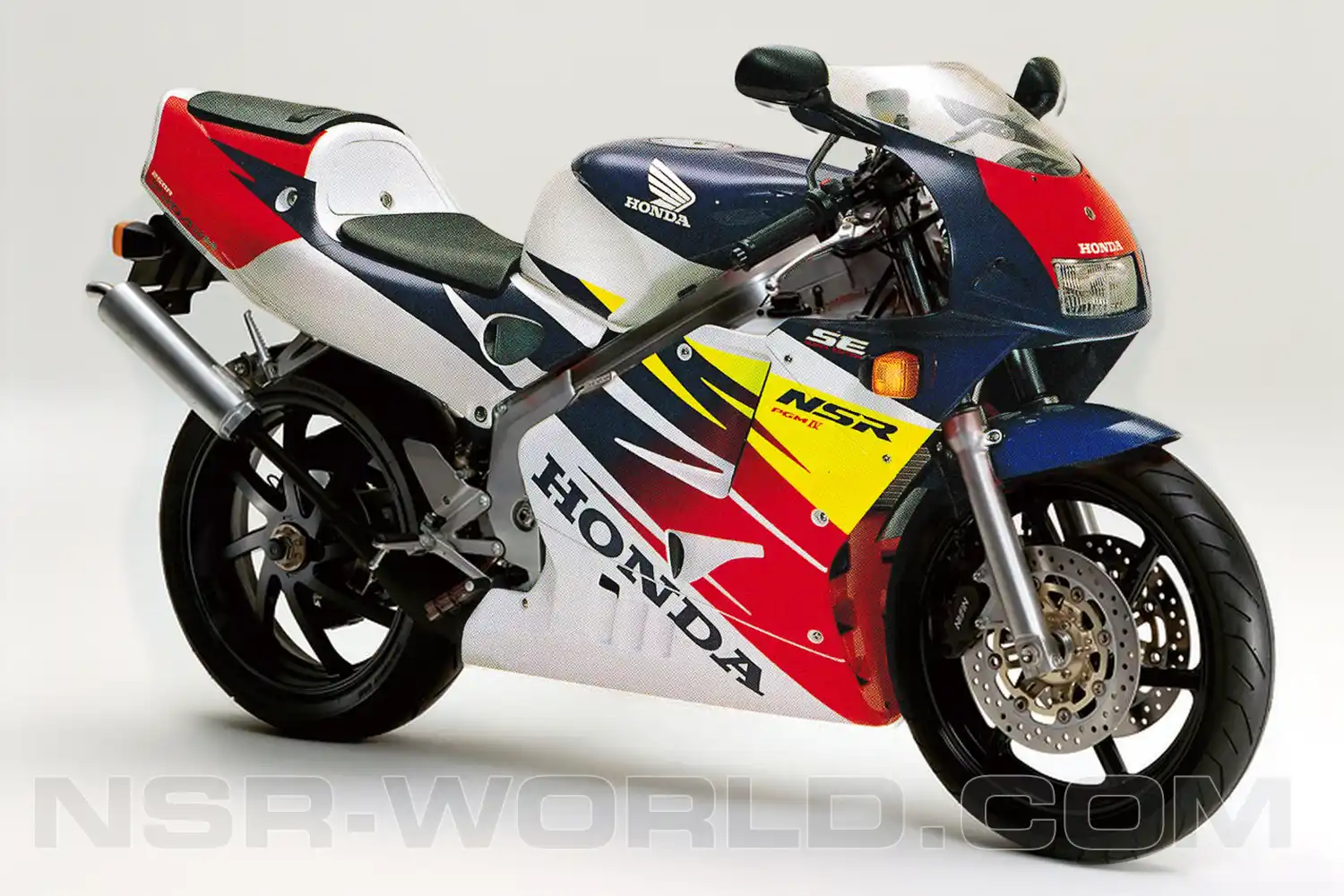
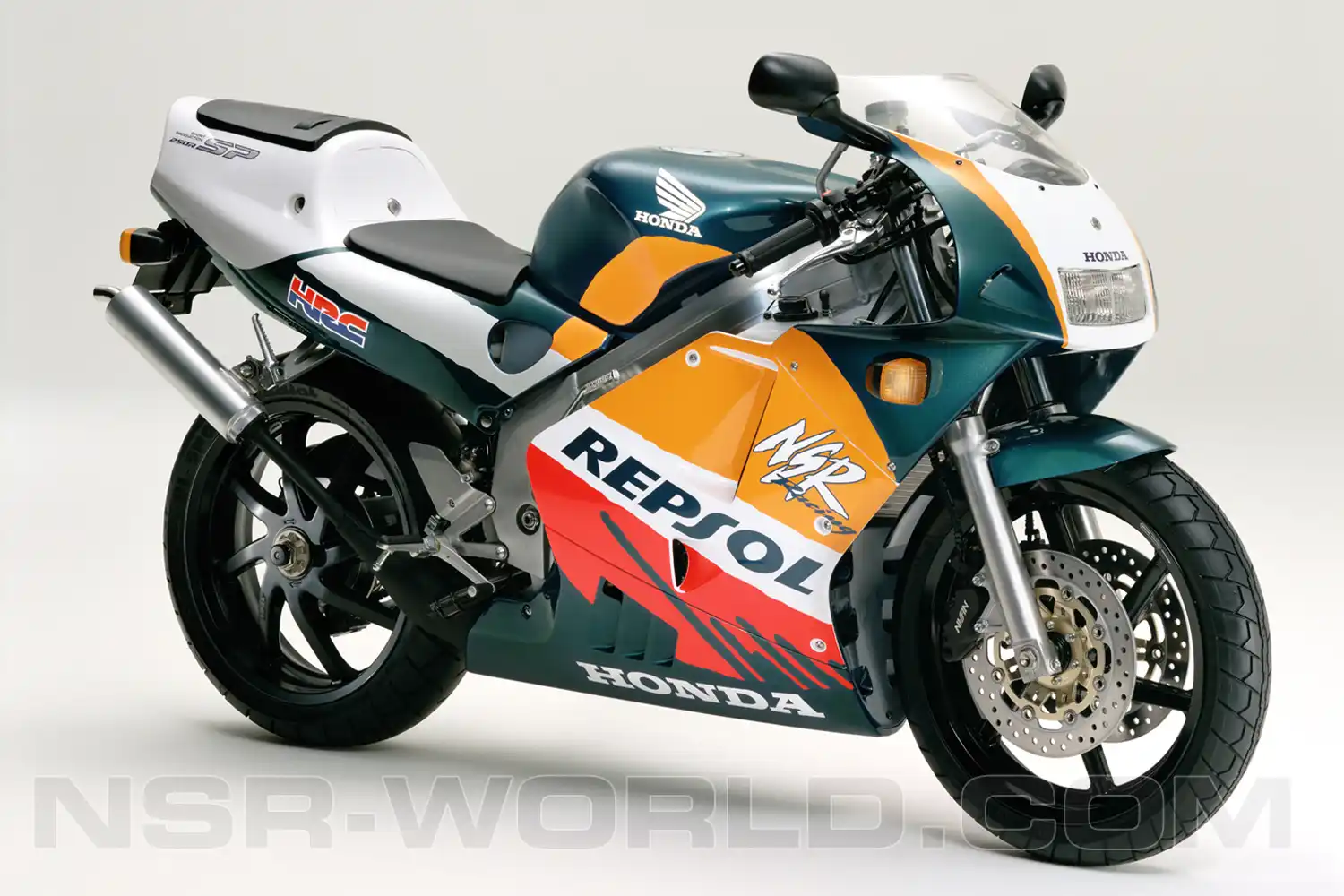
1996 was the final year of the MC28, and the end of the NSR250Rs illustrious production run.
The SE [Super Edition] was reinstated for 1996, available in two liveries, and 1000 SP [Sports Production] models were released in Repsol colours, commemorating Mick Doohans championship win in the 500cc class.

Apart from the discontinuation of the R model at the end of 1994, the specifications of the NSR250R MC28 remained unchanged throughout its 3-year production run.
SPEC: 94-96
NSR250R [MC28]
Engine type: 90-degree V-type 2-cylinder
Capacity: 249cc
Bore x Stroke: 54.0 x 54.5mm
Power: 40PS @9,000rpm
Torque: 3.3kg-m @8,500rpm
Weight (Dry): 134kg/138kg/137kg [SP]
Price:¥680,000/¥720,000/¥800,000 [R/SE/SP]
SPEC: 94-97
NSR250R [MC28]
Engine type: 90° V2
Capacity: 249cc
Bore x Stroke: 54.0 x 54.5mm
Power: 40PS @9,000rpm
Torque: 3.3kg-m @8,500rpm
Weight (Dry): 134/138kg/137kg
Price:
¥680,000 [R]
¥720,000 [SE]
¥800,000 [SP]